


Tour du Limousin - Cortisol level tests
This Tuesday, August 18 2016, in Le Lonzac, start of the 3rd stage, 15 team members registered for the Tour du Limousin submitted 45 riders to a cortisol level test as part of their commitment to the Movement for a Credible Cycling (MPCC).
These voluntary tests have been performed in collaboration with French Cycling Association (FFC) and French Cycling League (LNC). All values were above the voluntary MPCC norm. The Board notes with satisfaction that the riders of these MPCC member teams registered for the Tour du Limousin have scrupulously respected the clauses of their standing orders.
Background on cortisol tests by the Mouvement pour un Cyclisme Crédible (MPCC)
The objective of the MPCC and its member teams is to contribute to restoring the credibility of cycling. One of the organisation’s activities are voluntary cortisol tests amongst the riders of the member teams of the MPCC. In case the results of the test present an abnormally low value, the rider concerned will not race for a period of minimum eight days until the cortisol value has recovered again above that minimum value.
For the sake of clarity: it concerns a voluntary norm and the test does not concern an anti-doping control. Under WADA rules, athletes across all sports, with a cortisol level abnormally low, are entitled to perform their sport in competition (unless an anti-doping test has revealed the unauthorized use of the cortisol hormone).
The reason for the MPCC member teams to introduce this voluntary norm (below which the rider concerned will withdraw from competition for that minimum period of eight days), is an effort towards all stakeholders and fans of the sport of cycling and to confirm its commitment to clean sport and to show that cycling and MPCC member teams wish to be a frontrunner in that.
Why cortisol tests ?
Although cortisol hormones are an allowed medicine when pre-scribed by a physician, the use of that medicine has frequently been abused in the history of sports (including in cycling) for the purpose of increasing the performance. Besides, a low level of cortisol can potentially endanger the health of athletes in certain circumstances when he/she is in competition while the athletes perform under high intensity or under stress.
For both reasons and with the objecitve to contribute to restoring the credibility of cycling, the Mouvement pour un Cyclisme Crédible and its member teams have introduced that voluntary norm below which its riders will temporarily withdraw from competition.


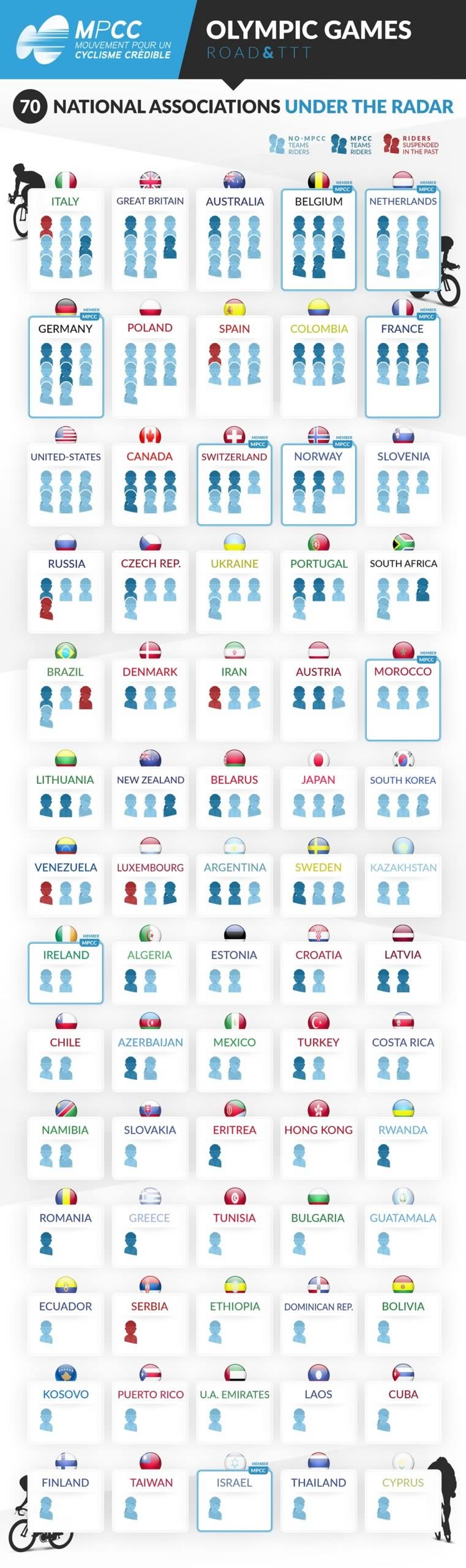
Olympic Games: 70 national cycling associations under the radar
Through an infography, we have represented the 70 nations which have took part in the Rio’s Olympic Games cycling road races. We have highlighted the athletes according to their affiliation with a MPCC national association or team, but also their doping ban history.
On the eve of the Tour de France, the MPCC identified the starting riders who had been banned for doping in the past (See infographic). It was the case with 6 out of them ; all were members of non-MPCC teams. The idea was to do the same work with the Olympic Games in order to know if the national associations do efforts by only selecting athletes with no doping ban history or not.
We have highlighted the national associations and the athlete’s teams by their MPCC membership, but also their doping ban history. Men and women combined, there have been 8 starting athletes suspended in the past. One of them won a medal.
Since its inception in 2007, the MPCC determined that all the national associations members of the movement on a voluntary basis committed not to entry in championships athletes having been suspended in the past. In 2012 and now in 2016, the IOC and WADA expressed that they didn’t intend to see these athletes competing in the Olympic Games but they failed to require it to the national associations. However, all the national associations which are part of MPCC supported this philosophy.
Tour de France : Cortisol level test in Megève
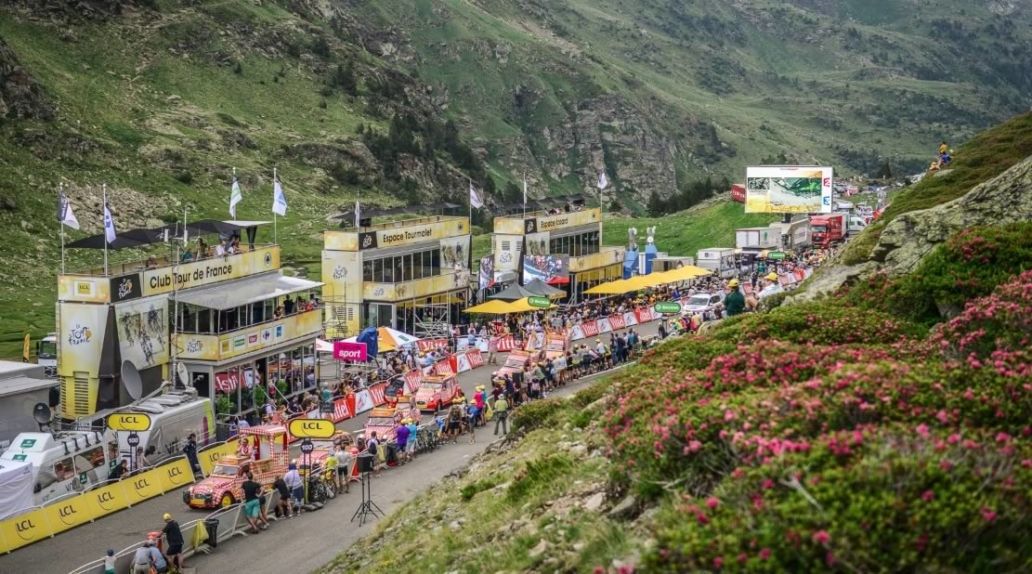
This Saturday 23 July, at the start of the 20th stage, 11 team members registered for the Tour de France submitted 33 riders to a cortisol level test as part of their commitment to the Movement for a Credible Cycling (MPCC)
- AG2R La Mondiale
- Cannondale-Garmin
- Dimension Data
- Équipe FDJ
- Giant-Alpecin
- IAM Cycling
- Lotto-Soudal
- Bora-Argon 18
- Cofidis
- Direct Energie
- Fortuneo-Vital Concept
These voluntary tests have been performed in collaboration with French Cycling Association (FFC) and French Cycling League (LNC). It was found that no cortisol level were below the voluntary MPCC norm.
Background on cortisol tests by the Mouvement pour un Cyclisme Crédible (MPCC)
The objective of the MPCC and its member teams is to contribute to restoring the credibility of cycling. One of the organisation’s activities are voluntary cortisol tests amongst the riders of the member teams of the MPCC. In case the results of the test present an abnormally low value, the rider concerned will not race for a period of minimum eight days until the cortisol value has recovered again above that minimum value.
For the sake of clarity: it concerns a voluntary norm and the test does not concern an anti-doping control. Under WADA rules, athletes across all sports, with a cortisol level abnormally low, are entitled to perform their sport in competition (unless an anti-doping test has revealed the unauthorized use of the cortisol hormone).
The reason for the MPCC member teams to introduce this voluntary norm (below which the rider concerned will withdraw from competition for that minimum period of eight days), is an effort towards all stakeholders and fans of the sport of cycling and to confirm its commitment to clean sport and to show that cycling and MPCC member teams wish to be a frontrunner in that.
Why cortisol tests ?
Although cortisol hormones are an allowed medicine when pre-scribed by a physician, the use of that medicine has frequently been abused in the history of sports (including in cycling) for the purpose of increasing the performance. Besides, a low level of cortisol can potentially endanger the health of athletes in certain circumstances when he/she is in competition while the athletes perform under high intensity or under stress.
For both reasons and with the objecitve to contribute to restoring the credibility of cycling, the Mouvement pour un Cyclisme Crédible and its member teams have introduced that voluntary norm below which its riders will temporarily withdraw from competition.
Direct Energie joins the MPCC
Direct Energie, Jean René Bernaudeau’s team main sponsor, integrates the MPCC as a company. Direct Energie is the 10th sponsor to join the move.
Direct Energie’s CEO, Xavier Caïtucoli explains the reasons: « The Direct Energie group has the same values than Jean René Bernaudeau’s team, that we sponsor, simplicity, rectitude, desire to surpass yourself. This is why we naturally joined the MPCC, in the « sponsors » group. By the way, we invite all of the team’s sponsors to join the association in order to make it possible for cycling to stay popular and credible. »
10 companies now are members of the MPCC as teams or events sponsors. They show their interest into the MPCC values :
- Carrefour
- Bora
- Cofidis
- LCL
- PMU
- Loterie Nationale Belge
- FDJ
- IAM
- AG2R La Mondiale
- Direct Energie
Following the MPCC rules, this number allows the sponsor members to have a right to vote during the MPCC’s general assemblies.
Tour de France: 22 teams under the radar
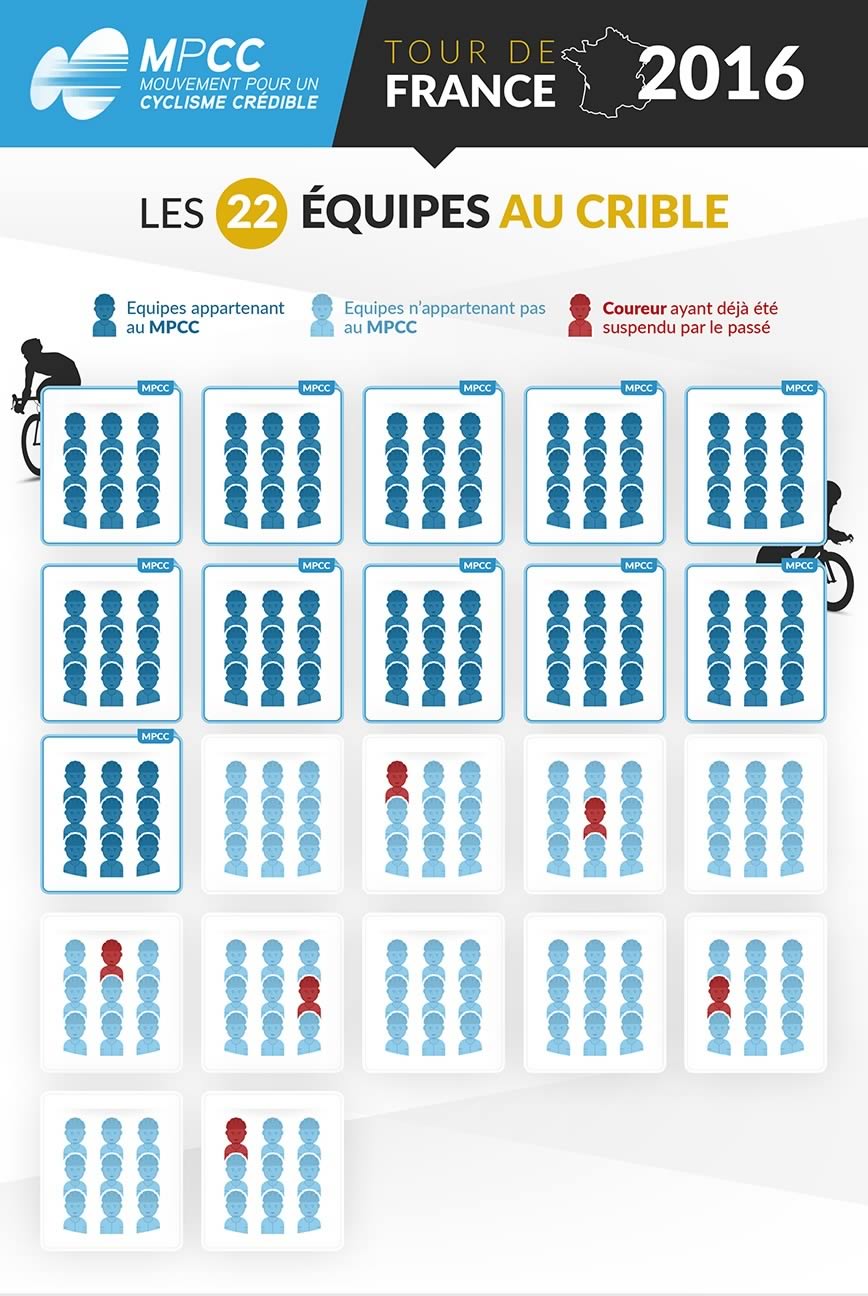
In an infography, we have represented the Tour de France 2016 peloton, distinguishing member teams and non-member teams of MPCC. Amongst member teams, no riders have ever been suspended. Within non-members, 6 already have !
With the Olympic Games starting soon, efforts are being made so that former convicted riders don’t take part in the national squads in Rio. The Tour de France does not follow the same pattern.
The spirit of Mouvement Pour un Cyclisme Crédible (MPCC) is to regroup teams which on a voluntary basis define stricter rules than international organizations. Amongst those, this one : « Dont hire riders involved in doping cases and condemned for more than 6 months, except no-shows, in the two years following the suspension. »
The start list of a race like the Tour de France highlights those differences. Six riders on the starting line in the Manche have been suspended in the past. Five of them were rehired as soon as their suspensions expired.
Rider 1 : two-year suspension, reintegrated in his team as soon as the suspension expired
Rider 2 : two-year suspension, reintegrated in his team as soon as the suspension expired
Rider 3 : one-year suspension, reintegrated in his team as soon as the suspension expired
Rider 4 : one-year retroactive suspension, remained in his team
Rider 5 : suspended in the U23 category, recruited 4 years after his suspension
Rider 6 : two-year retroactive suspension, remained in his team
Within the eleven teams members of the MPCC participating in the Tour de France 2016, there is not a single rider who has been suspended before. Not only the members commit to the rule of not recruiting this particular type of riders during two years after their suspension, they also extend this rule beyond the required two years.
At the start of the Tour de France, there is a major difference between members and MPCC and non-members. Members commit to rest a rider if his blood sample indicates an abnormal cortisol level – i.e. not letting him participate in the race. This year, not a single team had to face this issue. Had it occurred, the concerned team could have made a substitution: with the advice of MPCC, UCI now authorizes last-minute replacements for medical reasons.
As a reminder, since the beginning of the year, MPCC has supervised 145 cortisol level controls (3 did-not-start riders). 180 samples have been taken at the beginning of the Giro and the Tour de France (0 did-not-start riders), and 155 during the French National Championships (2 did-not-start riders). This amounts to a total of 480 controls.

The MPCC stands with stakeholders to fight against technological fraud
This Monday, a press conference about the fight against technological fraud was taking place at the French State Secretariat of Sports. The MPCC President, Roger Legeay, was there and rejoiced at the measures announced.
Measures addressed to crack down on technological fraud were announced this Monday at the French State Secretariat of Sports. Several people directly concerned by this new scourge attended the press conference: Brian Cookson (UCI President), Christian Prudhomme (Tour de France Director), David Lappartient (FFC President), Thierry Braillard (State Secretariat of Sports), Marc Madiot (LNC President) and MPCC President Roger Legeay.
Director of the CEA basic research Vincent Berger introduced the thermal camera this laboratory developed. The latter was tested this weekend during the French championships in Vesoul. « This technology is 100% reliable », Thierry Braillard said of it. « It is a genuine dissuasion weapon, » Christian Prudhomme added. Expanded controls will be made during the Tour de France and sanctions will be more repressive. Most of all, the unity showed by the stakeholders in the face of this problem emphasizes everyone’s willpower to find solutions in order to make cycling fully credible again.
« This rapprochement between ASO et the UCI is obviously a good thing, » MPCC President Roger Legeay reacted. Gathering all the available resources to fight against technological fraud is one thing, doing it in a very formal way with all the stakeholders is another. These measures have been taken will full transparency and we reacted quickly. We now need to ensure continuity, to not ease up in our efforts and to not limiting ourselves to the Tour de France. In his function as whistleblower, and with the satisfaction of having been involved in the reflexions on the topic, the MPCC endorses those decisions and encourages them. »
The MPCC member teams commit to make their bikes and equipments available to the commissioners at any moment and at any time.
Furthermore, as part of their joint action concerning riders’ health protection, the FFC anonymously noticed the MPCC that two riders out of the 157 taking part in the race were given a medical contraindication (cortisol level abnormally low) that prevented them from starting the French professional championship in Vesoul (road race).

Critérium du Dauphiné - Cortisol level tests
This Saturday 11 June, at the start of the 6th stage, 11 team members registered for the Critérium du Dauphiné submitted 33 riders to a cortisol level test as part of their commitment to the Movement for a Credible Cycling (MPCC).
These voluntary tests have been performed in collaboration with French Cycling Association (FFC) and French Cycling League (LNC). It was found that 2 cortisol level were below the voluntary MPCC norm. In each case the physician in charge of the team prescribed a minimum of 8 days of non-competition to the rider.
Background on cortisol tests by the Mouvement pour un Cyclisme Crédible (MPCC)
The objective of the MPCC and its member teams is to contribute to restoring the credibility of cycling. One of the organisation’s activities are voluntary cortisol tests amongst the riders of the member teams of the MPCC. In case the results of the test present an abnormally low value, the rider concerned will not race for a period of minimum eight days until the cortisol value has recovered again above that minimum value.
For the sake of clarity: it concerns a voluntary norm and the test does not concern an anti-doping control. Under WADA rules, athletes across all sports, with a cortisol level abnormally low, are entitled to perform their sport in competition (unless an anti-doping test has revealed the unauthorized use of the cortisol hormone).
The reason for the MPCC member teams to introduce this voluntary norm (below which the rider concerned will withdraw from competition for that minimum period of eight days), is an effort towards all stakeholders and fans of the sport of cycling and to confirm its commitment to clean sport and to show that cycling and MPCC member teams wish to be a frontrunner in that.
Why cortisol tests ?
Although cortisol hormones are an allowed medicine when pre-scribed by a physician, the use of that medicine has frequently been abused in the history of sports (including in cycling) for the purpose of increasing the performance. Besides, a low level of cortisol can potentially endanger the health of athletes in certain circumstances when he/she is in competition while the athletes perform under high intensity or under stress.
For both reasons and with the objecitve to contribute to restoring the credibility of cycling, the Mouvement pour un Cyclisme Crédible and its member teams have introduced that voluntary norm below which its riders will temporarily withdraw from competition.

Doping figures as at 31 May
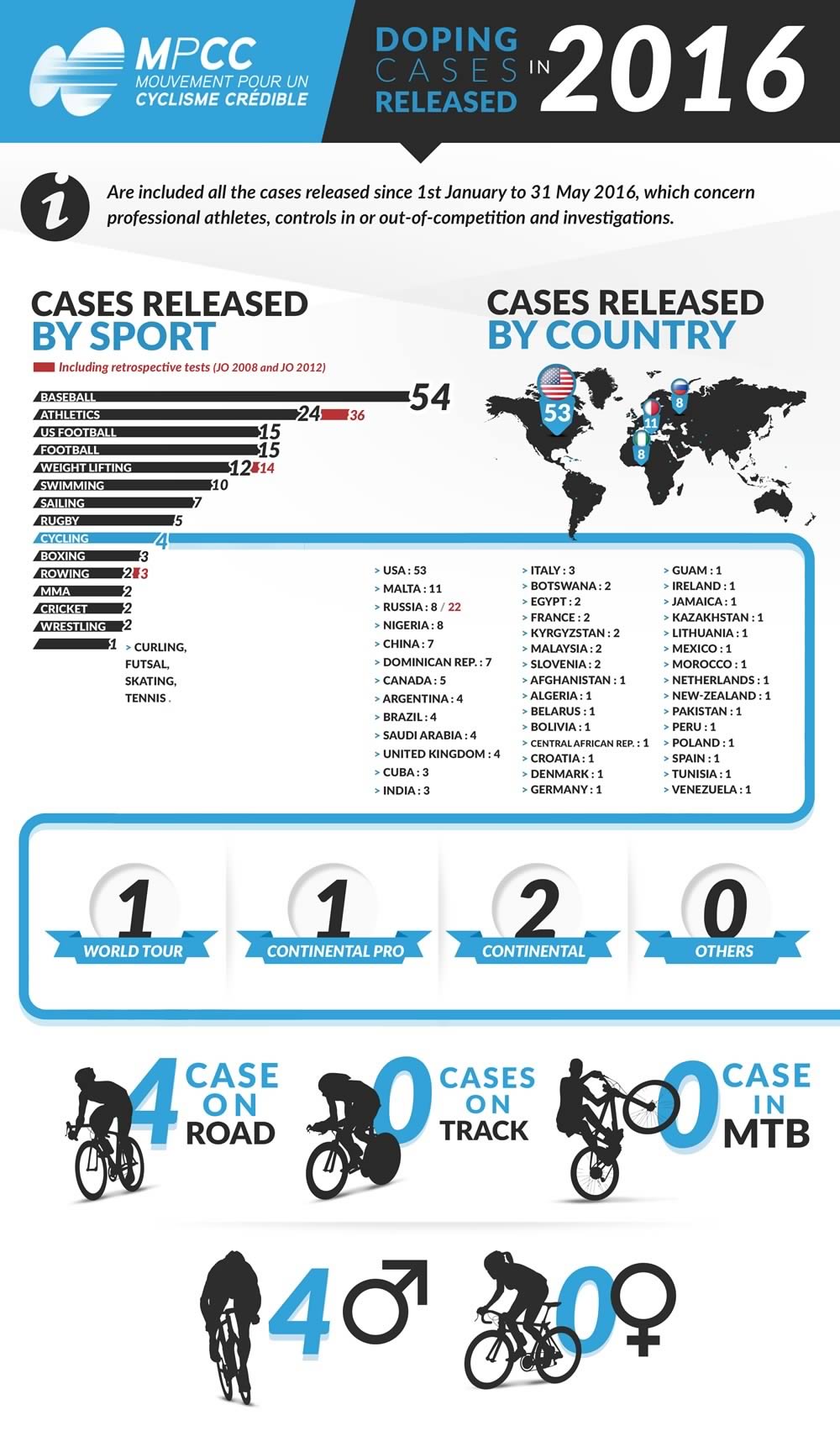
For the third year in a row, MPCC lists the doping cases released sport by sport, in order to better situate the place cycling occupies in comparison to other sports. Baseball is still leading the way.
After five months, Baseball have already faced 54 doping cases - three times more than the previous year at the very same day. While Cycling achieves to reduce its number of cases year after year, a few sports fail at this task. This trend can be explained by the retests carried out on past competitions samples. In late May, 14 athletes who took part in the Beijing 2008 Olympic Games have been proved to have tested positive thanks to retrospective analyses. Some others operations of this kind - about Beijing 2008 OG but also London 2012 OG - are in progress but the names of the athletes remain as unknowns. The cleaning is done but several years behind.
This is a confirmation: cycling's figures are decreasing. 4th most affected sport in both 2014 and 2015, cycling is 9th with 4 cases. This is far less than Athletics' 24 cases, but also Football (15), Weightlifting (12) and Swimming (10).
The most affected country is USA, with alarming figures: already 53 doping cases.
Identifying cases of doping is not an easy task and is subject to discretion if required by their respective international federations, some do not advertise doping cases in their discipline. Cycling, in contrast, reveals each positive test. Our numbers are therefore based on proven cases in 2016, according to official communications federations and anti-doping agencies.
MPCC cycling counting includes:
- Road cycling: 4 cases identified for this most publicised discipline.
- Track cycling: zero case
- MTB: zero case
Update : 25/04/2017

Cortisol level tests on the Giro d’Italia and the 4 days of Dunkirk
The teams members of MPCC have submitted 120 riders to a cortisol level test: 39 on the 4 days of Dunkirk (1 rider didn’t start), 81 on the Giro d’Italia (no DNS).
On the start of the Four Days of Dunkirk, 15 member teams registered for the race submitted 39 riders to a cortisol level test as part of their commitment to the Movement for a Credible Cycling (MPCC).
These voluntary tests have been performed in collaboration with French Cycling Association (FFC) and French Cycling League (LNC). It was found that 1 cortisol level was below the voluntary MPCC norm. In this case, the physician in charge of the team prescribed a minimum of 8 days of non-competition to the rider, who didn’t take part in the Four Days of Dunkirk.
On the start of the Giro d’Italia, 9 member teams registered for the race also submitted 81 riders to a cortisol level test.
These voluntary tests have been performed under the auspices of the Union Cycliste Internationale (UCI) on all participants. The UCI has forwarded to the MPCC the results of all riders of the member teams. All values were above the voluntary MPCC norm. The Board notes with satisfaction that the riders of these MPCC member teams registered for the Giro d’Italia have scrupulously respected the clauses of their standing orders.
Background on cortisol tests by the Mouvement pour un Cyclisme Crédible (MPCC)
The objective of the MPCC and its member teams is to contribute to restoring the credibility of cycling. One of the organisation’s activities are voluntary cortisol tests amongst the riders of the member teams of the MPCC. In case the results of the test present an abnormally low value, the rider concerned will not race for a period of minimum eight days until the cortisol value has recovered again above that minimum value.
For the sake of clarity: it concerns a voluntary norm and the test does not concern an anti-doping control. Under WADA rules, athletes across all sports, with a cortisol level abnormally low, are entitled to perform their sport in competition (unless an anti-doping test has revealed the unauthorized use of the cortisol hormone).
The reason for the MPCC member teams to introduce this voluntary norm (below which the rider concerned will withdraw from competition for that minimum period of eight days), is an effort towards all stakeholders and fans of the sport of cycling and to confirm its commitment to clean sport and to show that cycling and MPCC member teams wish to be a frontrunner in that.
Why cortisol tests ?
Although cortisol hormones are an allowed medicine when pre-scribed by a physician, the use of that medicine has frequently been abused in the history of sports (including in cycling) for the purpose of increasing the performance. Besides, a low level of cortisol can potentially endanger the health of athletes in certain circumstances when he/she is in competition while the athletes perform under high intensity or under stress.
For both reasons and with the objective to contribute to restoring the credibility of cycling, the Mouvement pour un Cyclisme Crédible and its member teams have introduced that voluntary norm below which its riders will temporarily withdraw from competition.

The UCI attentive to MPCC proposals
On 3 July 2015, on the eve of the Tour de France grand start in Utrecht, Astana decided to leave MPCC following a case of abnormally low cortisol level. On this day, the UCI stuck to its regulation by not allowing the Kazakh team to replace the rider because the sporting directors meeting had already taken place. So the team Astana refused to enter the Tour de France with only 8 riders and chose to keep the rider in race, breaking its commitment to MPCC. Under the rules of the movement - which are stricter than the ones of the UCI – a rider who face an abnormally low cortisol level must stop competition for a period of at least 8 days (Article 9 of the MPCC regulation).
At its General Assembly in October 2015, the teams and physicians members of MPCC agreed to renew their faith in the Article 9. MPCC also made public a request to the UCI: to make the international association change its rules in order to allow a team to do a last-minute rider replacement on the eve of a grand tour race. The point of the request was to avoid a double sanction for a team which need to prescribe a cortisone-based treatment to a rider in the last few days before a race as important as the Tour de France. If the rider still feels the effects of the treatment when the pre-race medical check-up is carried out, the team would be able to replace the sick rider.
Six months later, just days ahead of the start of the Giro d’Italia, the UCI Road Commission agreed to implement the amendment of its regulation in that regard. MPCC wants to thank the UCI for responding favourably to this request.