

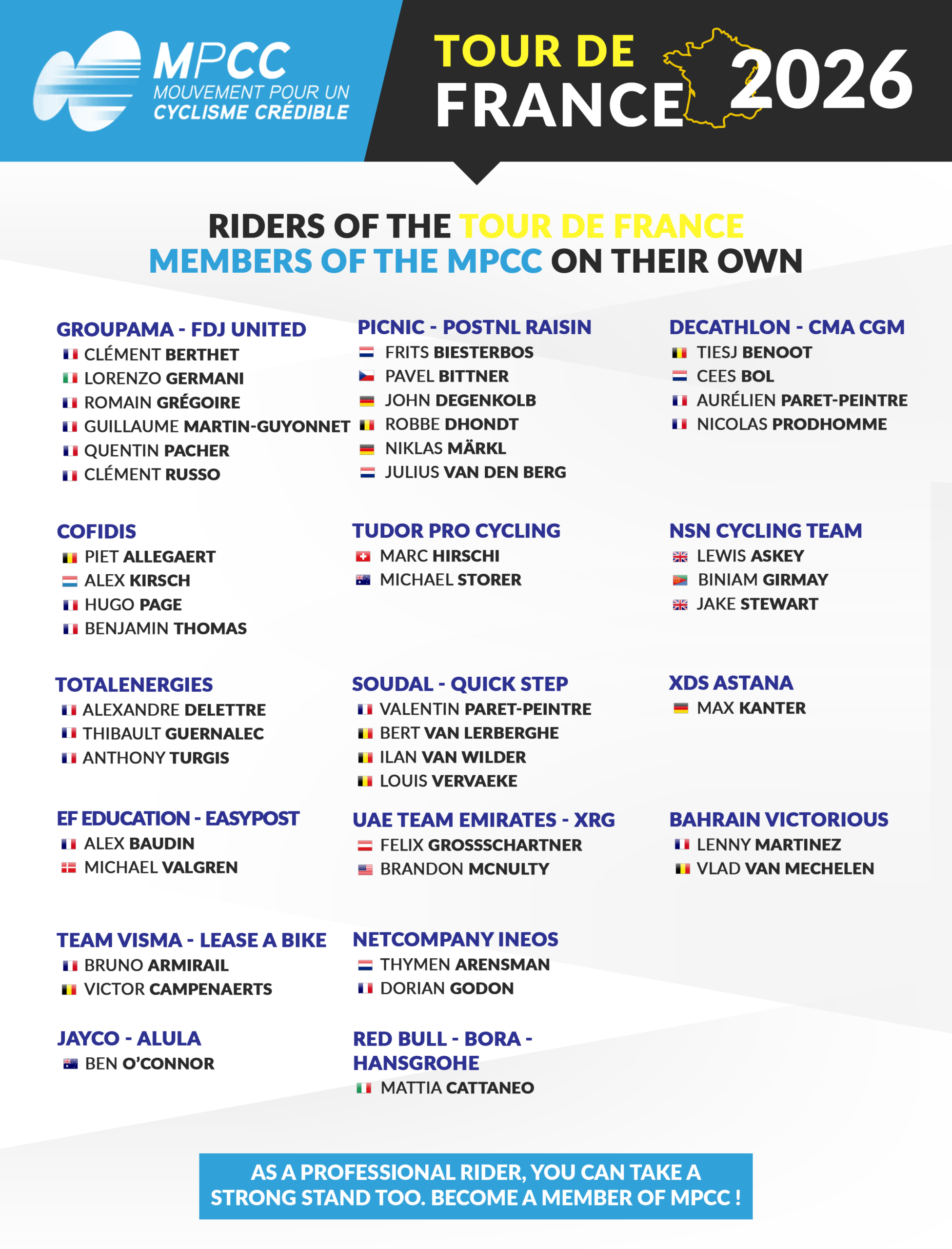
For its 113th edition, the Tour de France will feature 45 individual members of the MPCC at the start, representing around a quarter of its participants, committed to the fight against doping. That said, our movement also wishes to encourage discussion around the second chances being granted with increasing frequency to certain riders who have previously served doping sanctions.
The most eagerly awaited event of the season has finally arrived. The Tour de France is the great celebration of our sport and its main showcase. For three weeks, the best athletes in the world of cycling will compete in what promises to be a spectacular and intense race. However, the sporting and cultural appeal of the Tour must not divert attention from what the MPCC has firmly championed since its foundation: the fight against doping.
By encouraging all stakeholders in cycling to take an active role in tackling this scourge, the MPCC brings together riders – the key protagonists of our sport – as well as teams, sponsors, support staff, race organisers, federations and fans, who line the roads and inspire our champions to excel. Among the youngest spectators, there is undoubtedly a future cycling enthusiast who shares the MPCC’s values.
As such, 45 riders, representing 15 countries, will line up at the start of this 113th Grande Boucle as members of our movement. This is an opportunity to reiterate that involvement in the MPCC has always been voluntary, reflecting the desire of riders, teams and support staff to publicly commit to the values that underpin our movement. We hope that even more riders will choose to take this step in the future, recognising the responsibility we all share to protect our sport.
The MPCC believes that everyone deserves the opportunity to rebuild their career after serving a sanction. However, second chances should also be accompanied by responsibility, transparency and sufficient time to rebuild trust. This principle is reflected in one of our ten cardinal rules, under which member teams commit not to sign a rider who has been suspended for more than six months for doping until at least two years have passed after the end of their suspension.
Against this background, we note that four riders will start this year’s Tour de France having previously served doping bans of more than six months. None of these riders are individual members of the MPCC, nor do they ride for MPCC member teams. For two of them, their suspension ended within the last three years, highlighting that different parts of our sport continue to take different approaches to rehabilitation and responsibility.
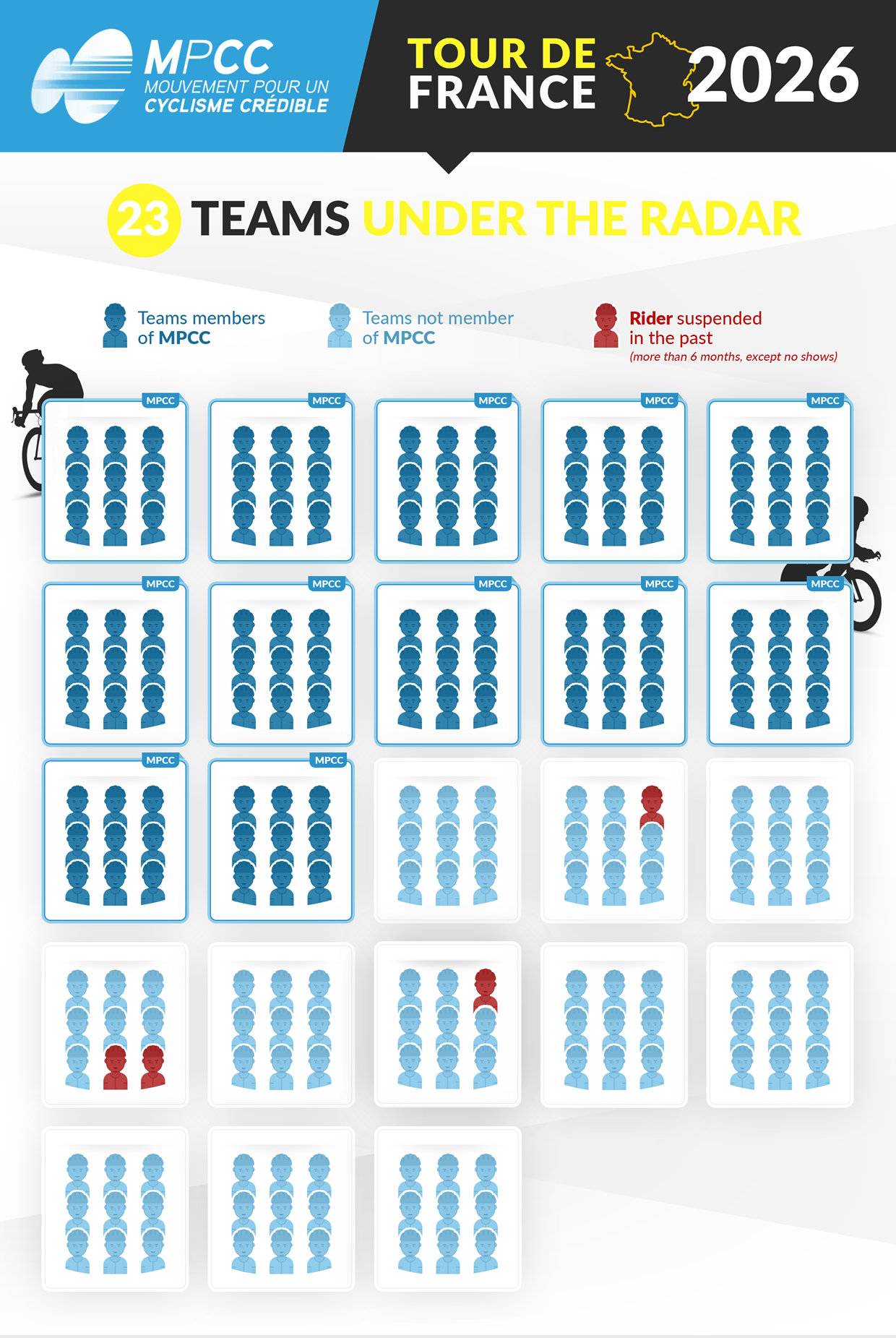
As for the teams, 12 of the 23 squads which lined up in Barcelona on Saturday are members of the MPCC: seven WorldTeams and five ProTeams, including the three teams invited by ASO, the Tour’s organiser, which is itself a member of our movement.
We therefore encourage all stakeholders in cycling who have not yet chosen to make a clear commitment against doping and ethically questionable practices, including the exploitation of “grey areas”, to join us. By working together, we can continue to strengthen the credibility of our sport and help ensure a fair and healthy future for cycling.