
Team Siscredito joins the MPCC
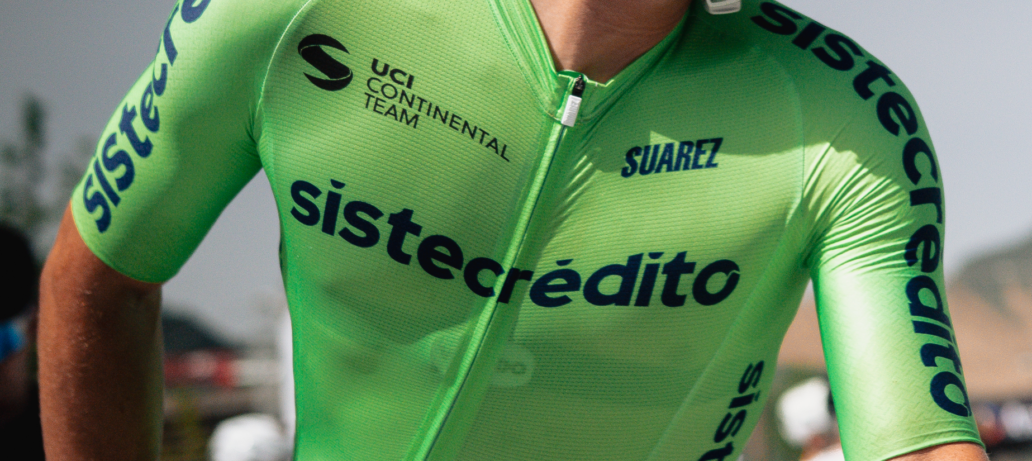
The men’s continental team, Team Siscredito, has become part of the MPCC. It is the first Colombian organisation to commit to our movement.
“Our team includes U17, U19, U23, Elite riders, both men and women, the team manager Pablo Velez says. So, our purpose is not only to win races and represent a brand, but also to teach the younger generation to do things the right way. Our team have presence in all of the branches that are important in cycling, but the one that we put more effort is antidoping. Our head doctor guides one of the most prestigious antidoping programs in Colombia, and that same program is implemented in the team. We conduct blood tests year-round across all categories, and our team also manages a biological passport testing program.”
Team Siscredito is the first Colombian team to join the MPCC. Founded in 2021, the team competed in European races for the first time last year, taking part in the Ronde de l’Isard, the Mercan’Tour Classic, the Route d’Occitanie and the Andorra MoraBanc Classica. It has once again been invited to compete in these races in 2026.
Team Siscredito is currently competing in the Vuelta Colombia U23.
Photo : Aubin Lipke

22 July 2026 Press Release
While acknowledging that we do not yet have all the facts surrounding the recent events (night-time controls), the MPCC would like to clarify our position and what we believe the real discussion should be.
The MPCC was founded on two key principles: reducing the grey areas that can undermine trust in cycling and strengthening anti-doping systems to better protect clean sport.
Cycling’s history has shown that weaknesses and loopholes within anti-doping and whereabouts systems can be vulnerable to exploitation. Identifying where such vulnerabilities may exist is therefore essential so that appropriate measures can be proposed to address them. More broadly, this is where our focus must lie.
Our responsibility is to keep the light on these issues, and to support the development of anti-doping systems that are robust, credible, and capable of protecting clean athletes and the integrity of our sport. Cycling must continue to learn from its past to better protect its future.
Ma Petite Entreprise joins the MPCC!
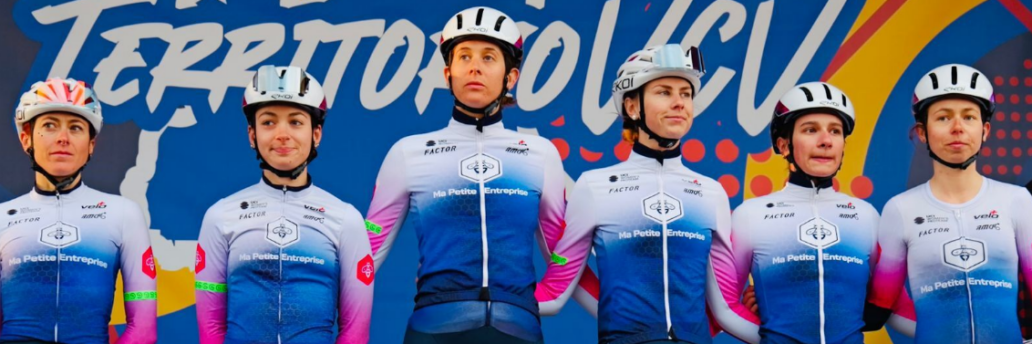
Ma Petite Entreprise joins the MPCC! Part of the Women ProTeam division, the newly created team, which has just received its invitation to the Tour de France Femmes avec Zwift, has had its application to join the movement accepted by the Board of Directors.
Vincent Lavenu, manager of the organization, was one of the founding members of the MPCC in 2007 when he was head of the team formerly known as AG2R Prévoyance. When he created Ma Petite Entreprise, now in its first season in 2026, he expressed his desire to join our movement.
“Ma Petite Entreprise is committed to an approach that places the mental and physical health of our athletes at the forefront, he explains. These principles are fully in line with the MPCC’s commitments. We are determined to support and promote the values of the MPCC to the general public and athletes in order to encourage clean and sustainable cycling for the future.”
On February 18, Ma Petite Entreprise received its official invitation to the Tour de France Femmes avec Zwift, whose organizers have awarded 100% of their wild cards to MPCC member teams.
To date, 15 women’s teams registered with the UCI are members of the MPCC.
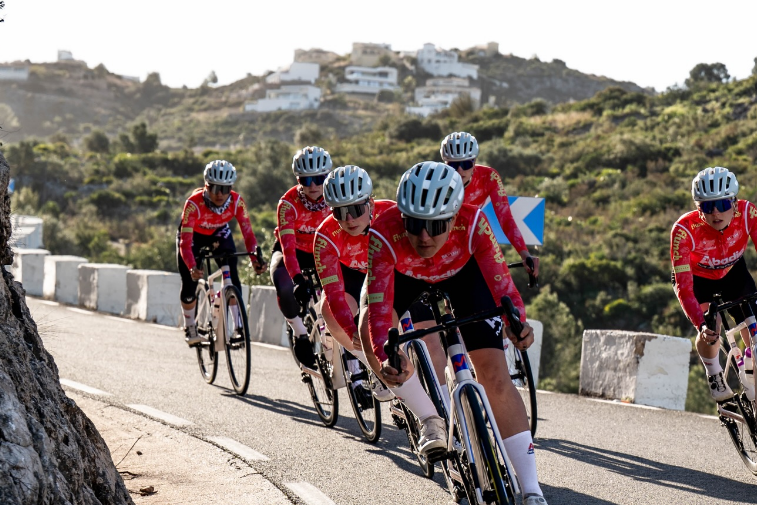
Team Abadie Magnan joins the MPCC
Team Abadie Magnan joins the MPCC! The request for membership from the women’s continental team has been accepted by the Board of Directors.
The team was known as Team Komugi – Grand Est until the end of the 2024 season and was already part of the MPCC. Now back in the peloton, it has asked to renew its commitment to our movement.
“After being a member of the MPCC during our two professional years with Team Komugi – Grand Est, we are back with a new Continental team: Team Abadie Magnan, explains manager Laurent Goglione. It was a natural step for us to reapply to the MPCC because these are our values, our DNA, the way we see cycling today and tomorrow.”
The Metz-based team inaugurated its new jersey at the Vuelta CV Feminas in Spain. Its roster includes 11 riders, including Paraguay’s Agua Marina Espínola.
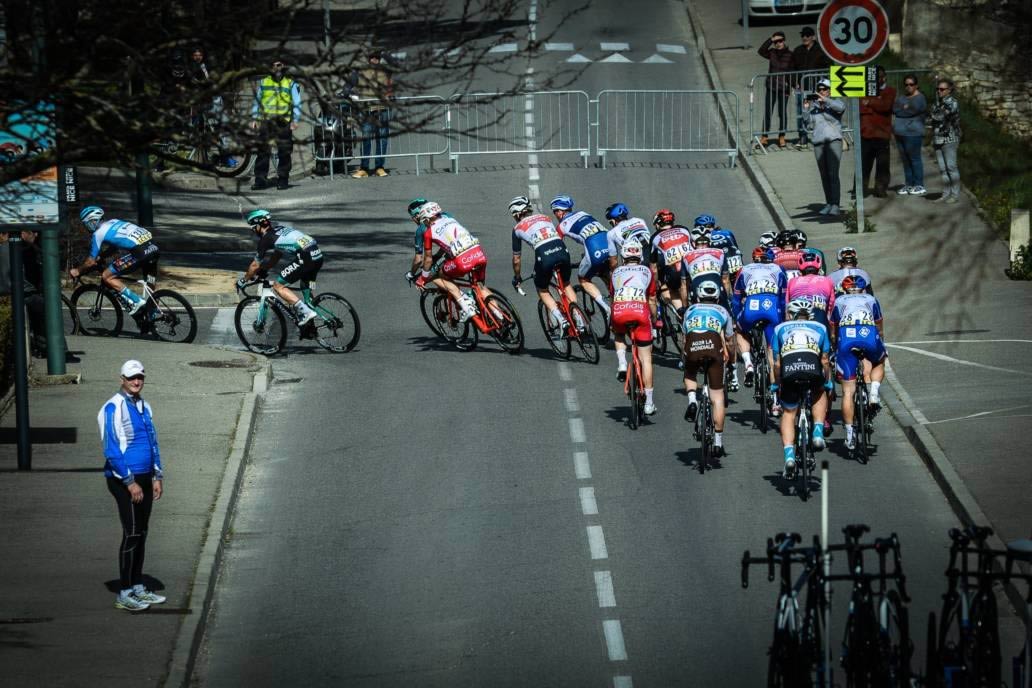
MPCC provides clarification on individual membership
380 riders, 78 former riders, 294 staff members and 20 former staff members are part of the MPCC as individuals. As a reminder, this process is voluntary and is the proof of a deep commitment to our values. Our movement wishes to provide clarification on this topic.
All of the members make their own choice whether they want to join MPCC on their own or not. Our movement supports this process as we firmly believe that the implication of all cycling stakeholders is essential for the credibility of cycling.
Any rider is free to revoke his commitment. Our movement regrets such things happening, but we never forced anyone to join us.
Any rider who is a member of MPCC can become engaged within the movement, contact the Board to make proposals, ask questions, etc. Our movement will always answer any request, and will happily invite any rider to participate in the General Assemblies should they wish to do so.
Response to Tom Dumoulin
In March, Tom Dumoulin informed the movement of his choice to leave MPCC as an individual member. He was immediately withdrawn from the list available on our website and we did not plan to communicate on his decision. Two months and a half later, Tom Dumoulin made some comments in the medias about his decision.
MPCC wants to highlight the fact that Tom Dumoulin never contacted the movement in any way between the day he joined and the day he decided not to be a member anymore. Nevertheless, our movement does not wish to assess the level of implication of its members and does not consider useful to criticize the decision of the Dutch rider.
Though, MPCC regrets the reasons given by Tom Dumoulin to publicly justify his decision.
First of all, on the Paris-Nice topic: it is not the role of MPCC to comment the decision of an organizer whether to maintain a race or not. The movement also does not wish to influence the choice of its members to take part in it or not. No MPCC member, staff member or rider, voiced any request for the Board to communicate publicly on Paris-Nice.
Then, on the subject of ketones: MPCC underlines the content of its press release of February 27th:
“The physios of the teams belonging to MPCC are also concerned by several topics, including ketones and thyroid hormones. Following this concern, they all committed not to prescribe thyroid hormones. A formal request has been made to WADA to add this product on the list of prohibited substances. MPCC recommends not to use ketones given the side effects and the uncertainty of the long-term effects. Some physios have already made this decision while they wait for more information. A task force including the physios of the MPCC teams will be set up in order to make proposals on this topic.”
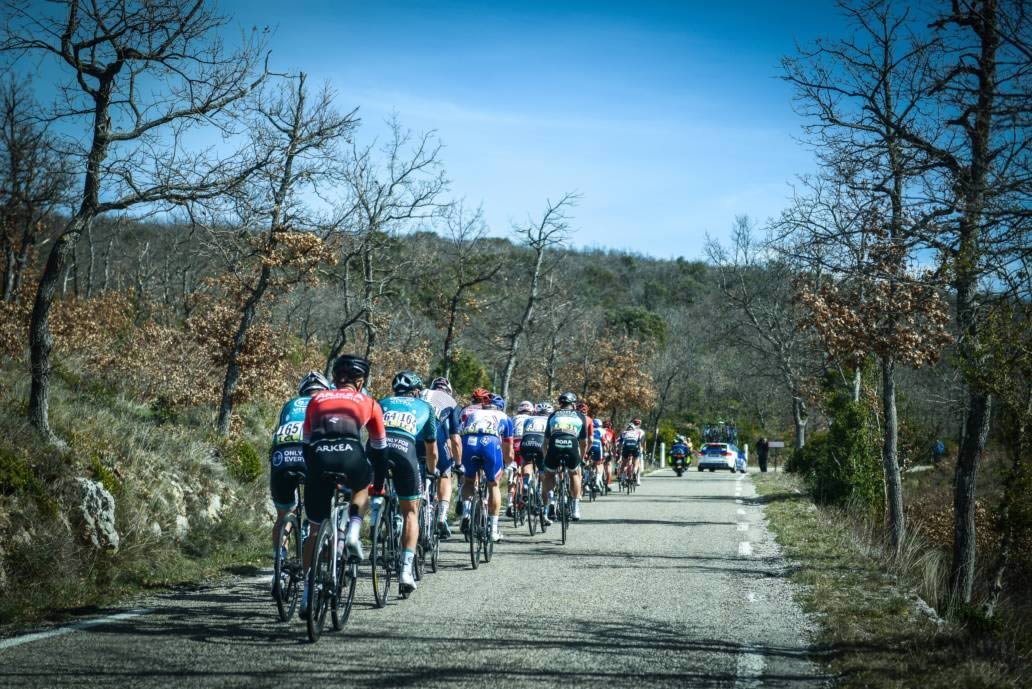
Credibility figures… pre-lockdown
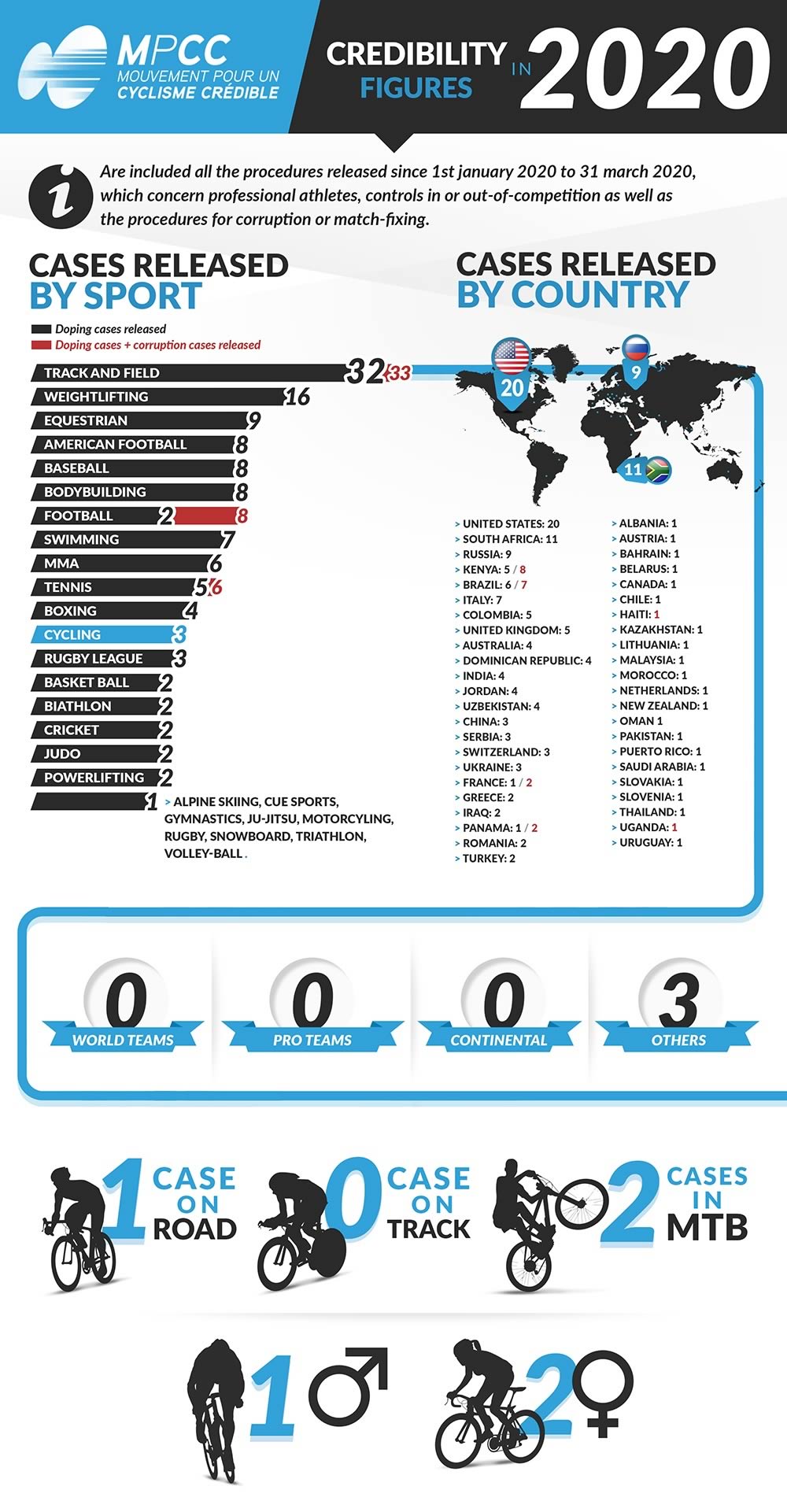
Over the first three months of the year, only three doping procedures have been revealed in cycling. An encouraging figure in light of the 32 cases revealed in 2019?
Cycling was spared from doping revelations in the first quarter of 2020. As far as cycling is concerned, and aside from 2018 (only two procedures were revealed in the first quarter of the year), those are some of the most encouraging figures ever since we first established this barometer in 2014 — which is far from being the case in athletics, a field still troubled by the ever-increasing number of doping procedures (32 cases in a month, in addition to a case of corruption!)
As for the three cases in cycling, two come from women’s MTB. The third case concerns a former professional road cycling rider turned sporting director and whose revelation originates in the confession he made as part of Operation Aderlass (a case revealed last year in Austria involving athletes from various disciplines).
However, caution must be used in making definitive statements about both these figures and the “good practices” of the peloton as the riders have been forced out of work since mid-March — at the latest.
Several of them seized the opportunity to express their concerns about the careful observance of the antidoping rules, having noted that they hadn’t been tested as often as in the past over the same period of time; during the winter period as well as during lockdown the last two months.
The many riders contesting in the UAE Tour were first placed under a lockdown order in late February, an order that was extended to the majority of Europe shortly after. Those health constraints not only led to the interruption — or the cancelation — of all scheduled races, but they also clearly had an impact on antidoping tests outside of competition. It is worth noting, though, that the last race before global lockdown, Paris-Nice, had allowed Dr. Pierre Lebreton, our referring doctor, to carry out cortisol tests on MPCC member teams, and that all tests had returned negative in accordance with our movement’s rules. Article.
Since we know deviant practices are not limited to periods of competition, the prospect of competition returning in the second half of the year (UCI released a revised calendar for 2020) leads MPCC to believe there is a call for a quick reestablishment of antidoping tests outside of competition in order to ensure their credibility.
MPCC welcomes the gradual return of trainings (in compliance with social distancing requirements) as well as the agreement between the different parties on a heavily revised UCI calendar due to the health crisis, with the hope that each country’s public authorities will allow their respective races to take place in the light of the disease evolution.
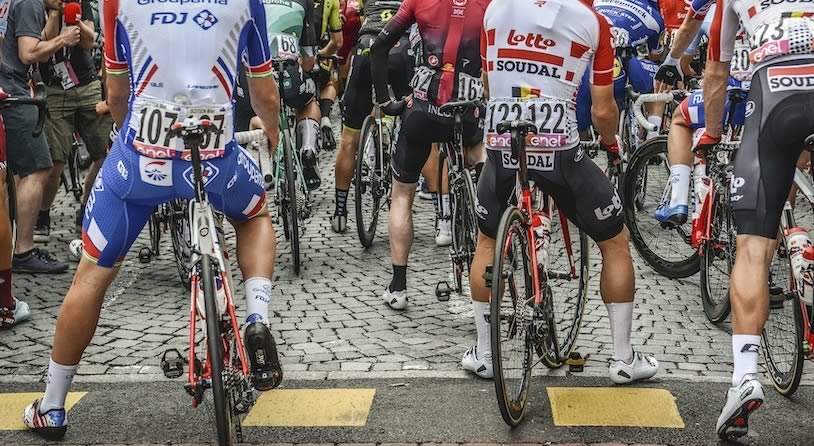
MPCC supports very stricts health measures.
Because it is a matter of protection for everyone, because the health of the riders has always been our main focus and because we have been committed to fostering credibility for 12 years, MPCC asks everyone, and especially its members, to comply at once with all of the health measures with the same determination that it has shown towards sports and ethical rules.
The efforts of the governements focus on slowing down the propagation of the COVID-19 virus in order to create a sufficient level of immunity among the population. The main goal here is to avoid a huge number of persons getting sick at the same time, thus overcrowding the hospitals and preventing those really in need from getting a sufficient level of care. As a consequence, during the spread of the virus, the governements already have to - or will very soon - restrict the free movement of persons. These restrictions will only get more permissive during an ulterior phase.
In numerous countries, the population is already required to stay home to limit the spread of the Covid-19 virus. In these areas, MPCC believes that the same rule should apply to everyone, whether you are a mere amateur cyclist or a cycling champion, for as long as imposed and following the differents rules enforced by the governments.
The doctor of our movement, Pierre Lebreton, hematologist, has a clear statement for them: « If some of you wonder whether they can go out to train, the answer is no! Not going out is the answer to two potential issues: contaminating the others, and having an accident that would overcrowd the hospitals even more. » (P. Lebreton interview Direct Vélo )
During the following weeks, we are convinced that our 861 members, including 380 professional athletes, males and females, will support this behaviour, whatever the consequences on their profesionnal activity and on their mid-term and long-term sporting goals.
Before anything else, cyclists are global citzens. Solidarity is a crucial value that sport must encourage, especially in these circumstances.
We sincerely hope that our individual behaviours and our collective will are key to defeat this pandemic.
We wish all of you « Bon courage » in this difficult moment.
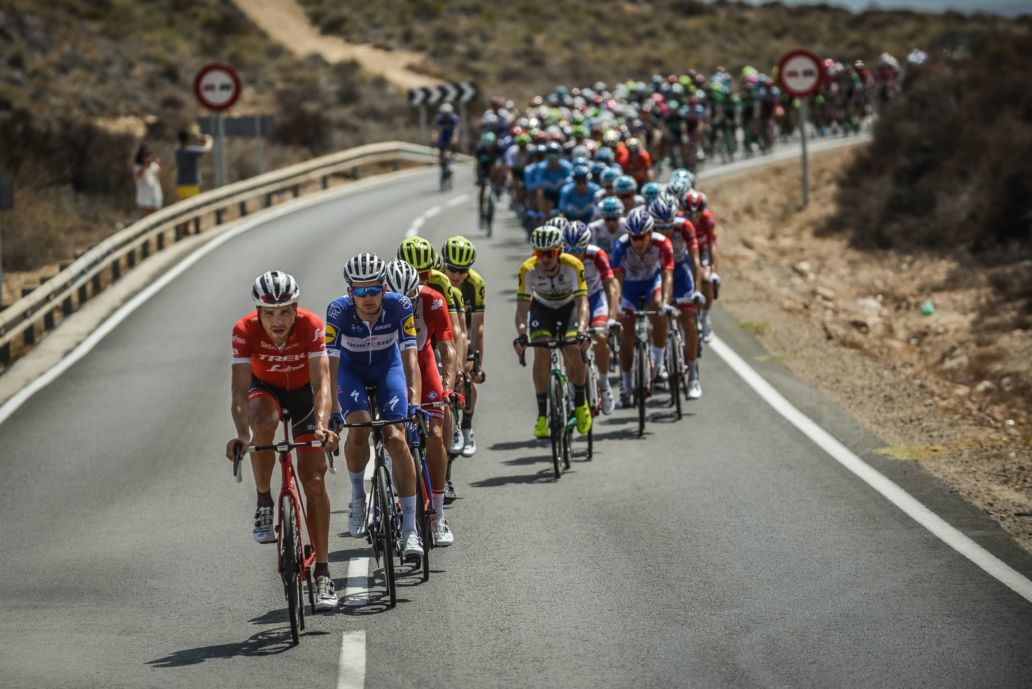
Pro Series' Boucles de la Mayenne becomes member of the MPCC!
The race joins the 9 other organizations that are part of the MPCC!
Les Boucles de la Mayenne have been created in 1975. As a first step, the race was only open to amateur riders. Then it has been promoted to the professional ranks in 2004. The race has been granted the UCI 2.1 level in 2014 and now the Pro Series level in 2020. In 2019, 16 teams taking part in the Boucles de la Mayenne were part of the movement.
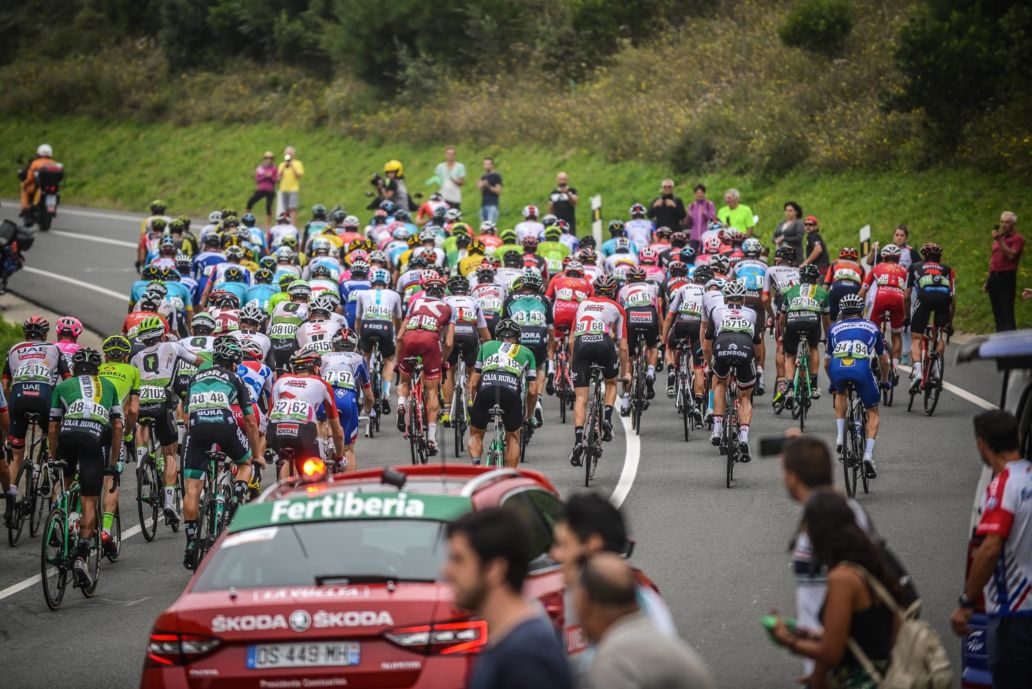
Fundación – Orbea joins the MPCC!
The Basque team is part of the UCI ProTeams division since the beginning of the year. By committing to the movement, Fundación – Orbea becomes the 17th MPCC team ot ouf 19 registered in the 2nd division.
Fundación – Orbea wears a jersey dear to the heart of the cycling fans as it is the same one as Euskaltel - Euskadi featured from 1994 to 2013.
This team, created in 2008, then turned professional in 2018 by having been granted the Continental team status. 2020 was the year where Fundación – Orbea reached another important milestone by reaching the 2nd division. The roster includes 19 Spanish riders and 1 Belarusian rider. 12 riders are 25 years old or younger. They are mentored by experienced riders such as Juan José Lobato, who has been part of Euskaltel-Euskadi in 2013.
Sporting Director of the team, Jorge Azanza comments the MPCC membership request:
"For us, joining MPCC means a reward to all the efforts we have done in the last years."
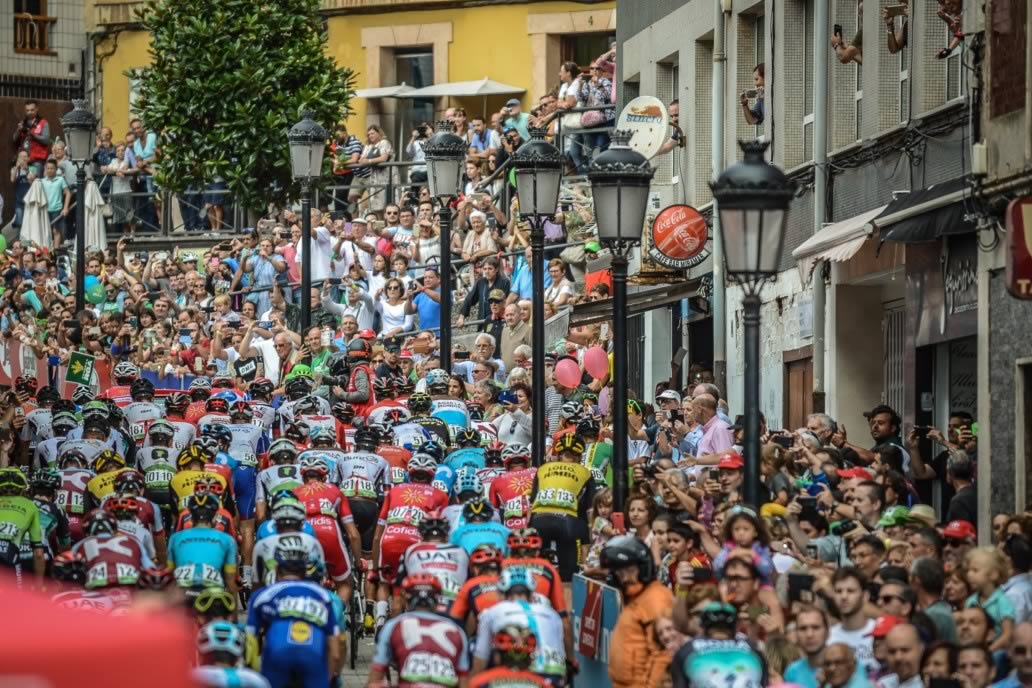
Press Release - 27th February 2020
The Board members have reviewed the application of the movement regulations and are glad to see that they are properly enforced.
They remain cautious when it comes to the UCI procedure regarding Caja-Rural team: the disciplinary committee is expected to make the decision on the possible suspension of the team because of the two cases that have occurred in the last twelve months.
Following the repeated requests from the physios of the MPCC teams, the movement confirms its commitment to keep on carrying cortisol tests in 2020 under the authority of Dr. Pierre Lebreton, hematologist.
Among the reasons why MPCC will continue this process of protecting the health of the riders:
- The misuse of corticosteroids to enhance performance
- The health threat caused by an abnormally low cortisol level in case of stress
- The wait for new WADA regulations, promised for 2021.
- The implementation of cortisol tests by the UCI to monitor health, expected to be set up during this year.
The physios of the teams belonging to MPCC are also concerned by several topics, including ketones and thyroid hormones.
Following this concern, they all committed not to prescripe thyroid hormones. A formal request has been made to WADA to add this product on the list of prohibited substances.
MPCC recommends not to use ketones given the side effectfs and the uncertainty of the long term effects. Some physios have already made this decision while they wait for more information. A task force including the physios of the MPCC teams will be set up in order to make proposals on this topic.
The Board also reviewed the members of the movement after the membership of the following teams and organizers: Alpecin-Fenix, Fondacion Orbéa, Kern Pharma, Arkéa Féminine and the organizers of « Les Boucles de la Mayenne ».
There are now 844 members of the MPCC as of March 6th :
9 WorldTeams
17 ProTeams
10 Continental Teams
6 women teams
5 agents
6 federations
10 cycling race organizers
8 sponsors
18 sympathizers
372 active professional riders
77 former riders
291 staff members
15 former technical staff members
MPCC invites all of the stakeholders of our sport to commit for a credible cycling and become a member of the movement. www.mpcc.fr