
CREDIBILITY FIGURES : THE FIGHT GOES ON
At the end of 2024, the MPCC noted that the number of doping cases and sporting fraud in cycling was lower than in 2023. Beyond these figures specific to our sport, our movement wonders about the state of the fight against doping in other disciplines and the various cases that have undermined the credibility of certain bodies dedicated to this fight.
For 17 years, the MPCC has been committed to cycling that is credible in its most general sense, and has never ceased to emphasise its responsibility towards all those involved in the sport, be they riders, riders' representatives, team managers, support staffs or race organisers. While the health status in the peloton has undeniably improved over the last fifteen years, our movement has always opted to be cautious and reminded everyone that we must be active in the fight against doping if our sport is to continue to live. This fight is still relevant today, as the ever-increasing professionalisation of teams is reflected in ever more scientific training methods, pushing riders to their limits. Some of them have even said that they practice a very different sport from the one they started out in.
This is a positive sign that cycling is still in search of maturity and is open to progress, but that it has not abandoned its spirit of human-scale practice, close to its supporters, accessible to everyone and friendly. However, the extraordinary performances of some of the world's top cyclists have raised again the shadow of cheating among some of the sport's followers. Careful about doping practices, the MPCC was quick to warn cycling world, in mid-2024, when misuse of drugs (use of Tapentadol, reputed to be more powerful than Tramadol, banned by WADA) or performance-enhancing methods close to doping (carbon monoxide inhalation) came to light. These practices show that for some people « anything that isn't banned is allowed » and that they don't want to be « involved in the fight against doping ». Unfortunately, these manners fuel suspicion for our athletes and our sport.
Being active in the fight against doping
CLARIFICATION NEEDED ON SOME PRACTICES
With these threats to the credibility of cycling, we hope that new red lines will be clearly drawn. The MPCC and its members are still waiting for the results of an impact assessment on ketones and, as the UCI, do not advise their use from 2019, pending the results of this study. They also hope that the World Anti-Doping Agency (WADA) will quickly take a position, particularly on carbon monoxide inhalation. On 19 November 2024, the MPCC formally asked WADA for a rapid ban on these practices. There has been no response to date. Carbon monoxide carries a potentially fatal risk if taken in an uncontrolled way, and its inhalation is, at the same time, in the grey area of prohibited methods by the WADA. In fact, carbon monoxide prevents the blood from transporting oxygen, thereby promoting the hypoxia sought after in high-altitude training camps. Its treatment could fall into the category of « Manipulation of blood or blood components » established by WADA. Caution is therefore still called for, not only for the sake of the integrity of the competitions but also for the health of the riders, who are first and foremost involved in cycling.
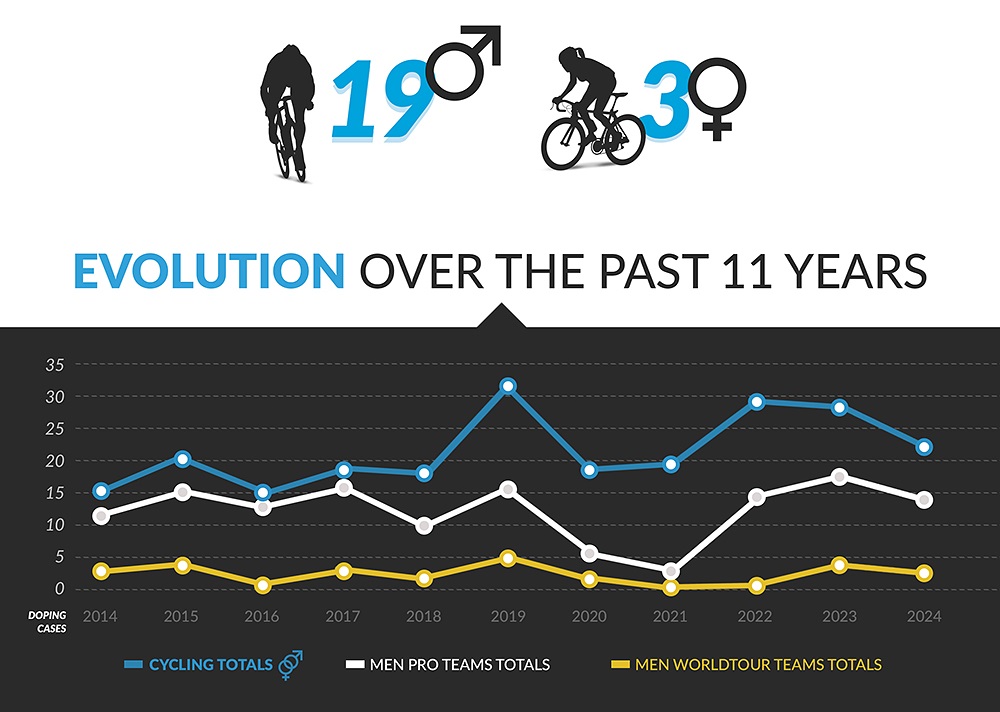
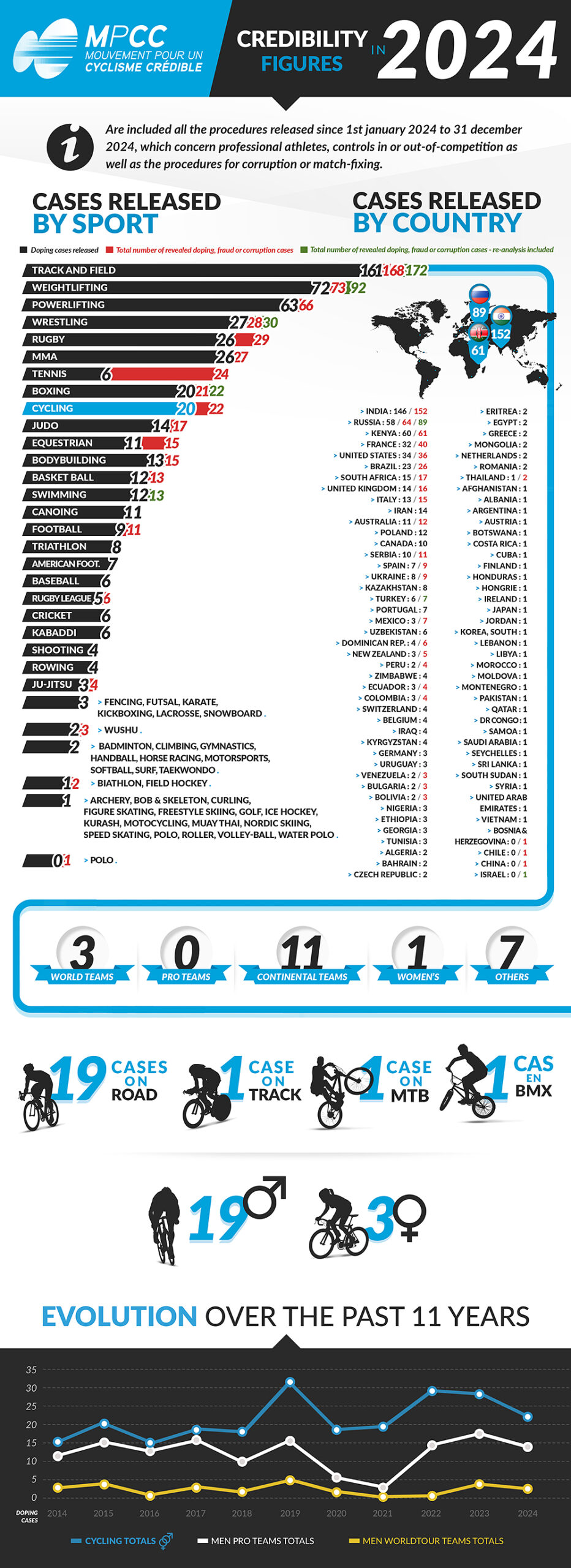
In this context, we finally counted 22 doping cases and/or sports frauds among road, track, mountain bike and BMX professionals, as well as in para-cycling at international level. The total for 2024 is therefore lower than the 28 cases recorded in 2023. Nearly two-thirds of the incriminated athletes were competing at Continental level at the time of their positive test or breach of a sporting regulation. Two of these riders were racing at World Tour level and in teams that were members of our movement at the time these cases came to light. These teams strictly applied our rule no. 1: immediately suspend a rider when a positive test is announced.
TENNIS IN TROUBLE
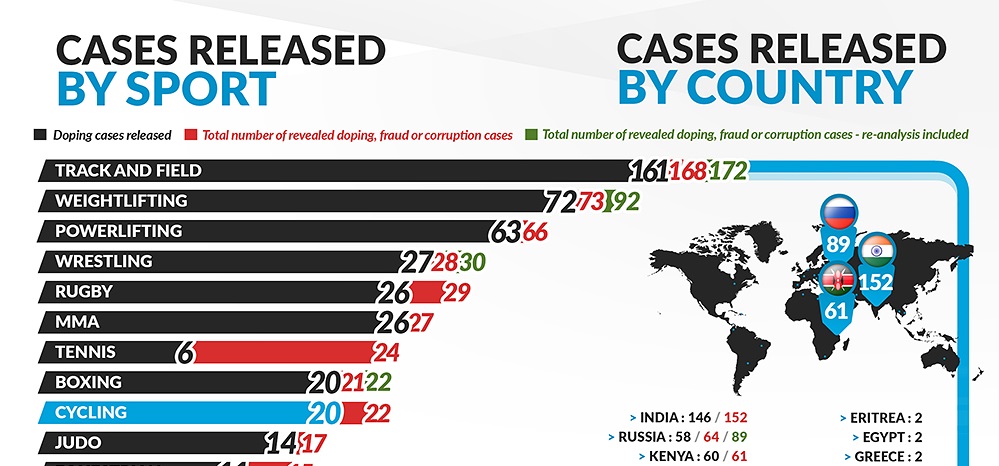
However, the MPCC regrets that other non-member teams did not adopt a stricter attitude towards suspended riders, who were quickly able to return to competition after serving suspensions. Once again, this is not being « active in the fight against doping ». The news over the last few months strengthen our position on antidoping, not just for cycling but for sport in general. Cycling is only the ninth sport most affected by doping, far behind athletics (172 cases recorded) and strength athletics (92 cases in weightlifting, 66 in powerlifting). The upward trend was confirmed for mixed martial arts (27 cases), the figures for which can be explained by the legalisation of this discipline in France from 1 January 2020 and the consequent increase in the number of tournaments likely to be inspected by the AFLD (the French antidoping agency). The number of doping cases is higher both in France and in the United States, which remains the core of this sport.
This review could not be concluded without mention of the shocks that have hit the tennis elite, both men's and women's, as two of its stars have been named in cases : Jannik Sinner, world No. 1 who tested positive for Clostebol in March and was subsequently cleared by the ITIA, the International Tennis Integrity Agency, and Iga Swiatek, considered to be the best clay-court player in the world and also world No. 1 last year. The Pole player was suspended for a month for TMZ contamination (Trimetazidine). In the Sinner case, WADA has already decided to appeal against the decision (arbitration procedure on 16 and 17 April to the Court of Arbitration for Sport).
WADA IS CHALLENGED
The organisation that rules the fight against doping at world scale, and whose credibility has been under attack for several years from its American counterpart (USADA), also faces a number of challenges : reassuring its effectiveness after the Chinese swimmers‘ scandal, which was kept for three years but revealed by the press last spring; dealing with the refusal of the Office of National Drug Control Policy (ONDCP) to pay the American contribution to the 2025 budget; and ensuring that the World Code is respected by as many countries as possible, which must adapt their legislation or risk jeopardising their athletes’ participation in international events.
These challenges show that the fight against doping can sometimes be a daunting task, requiring significant financial resources and especially the unity of all those involved in sport (sports associations, athletes, federations, events organisers). The attitude must be uncompromising towards cheaters, because the credibility of sport as a whole depends on it. It is for all these reasons that the MPCC insists that everyone becomes « active in the fight against doping ». Because this has to be the way to win this match.
Commit to MPCC, join us ! Be players in the fight against doping !

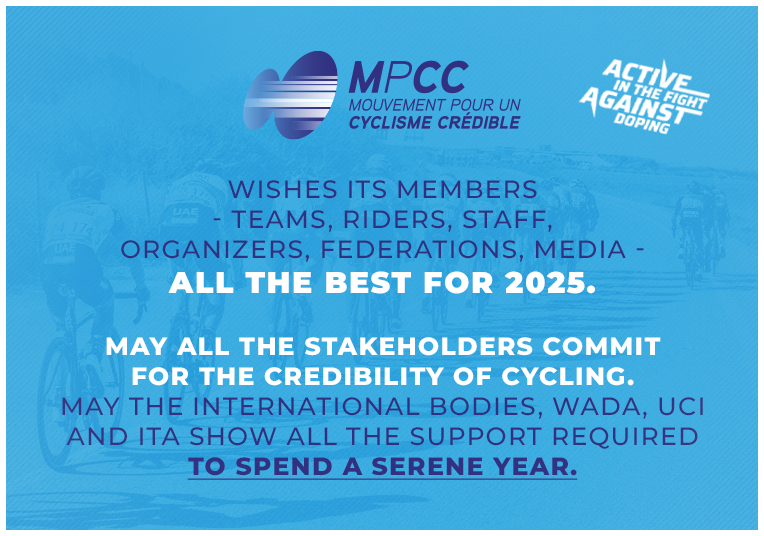
Best wishes for 2025
The MPCC President Roger Legeay and all the members of the movement wish you all the best for 2025. We hope to see even more of you involved in the fight against doping, committed to this ongoing battle and to the credibility of cycling.
Happy New Year to you all !
Women's World Tour wildcards & MPCC memberships : differencies between organizers
As with the men's World Tour, the MPCC is publishing for the first time a summary of wildcards on the Women's World Tour races. The analysis of these figures is intended to be distinct from that of the men's elite, as women's professional cycling is at a different stage of development, but a one that is growing fast.
There are 16 women's teams in our movement: 4 World Teams and 12 Continental teams. Of these 12 teams, 7 will become Women's Pro Teams, the new intermediate level implemented between the Women's World Tour and the Continental level, from next season. All the Women's Pro Teams will be members of the MPCC, a fact which we are delighted about and which encourages us to maintain our fight against doping while acting for more credible cycling.
For 2024, the number of invitations to World Tour races for MPCC teams has varied, a sign that women's professional cycling is still looking for a good balance. While the races run by Amaury Sport Organisation, such as Paris-Roubaix Femmes and Liège-Bastogne-Liège Femmes, and those organised by Flanders Classics, like the Tour of Flanders and Ghent-Wevelgem, have reached 90% or even 100% of « MPCC wildcards », others are still a long way off. We hope that these organisers and non-member teams will become involved in the fight against doping to support the development of women's cycling.
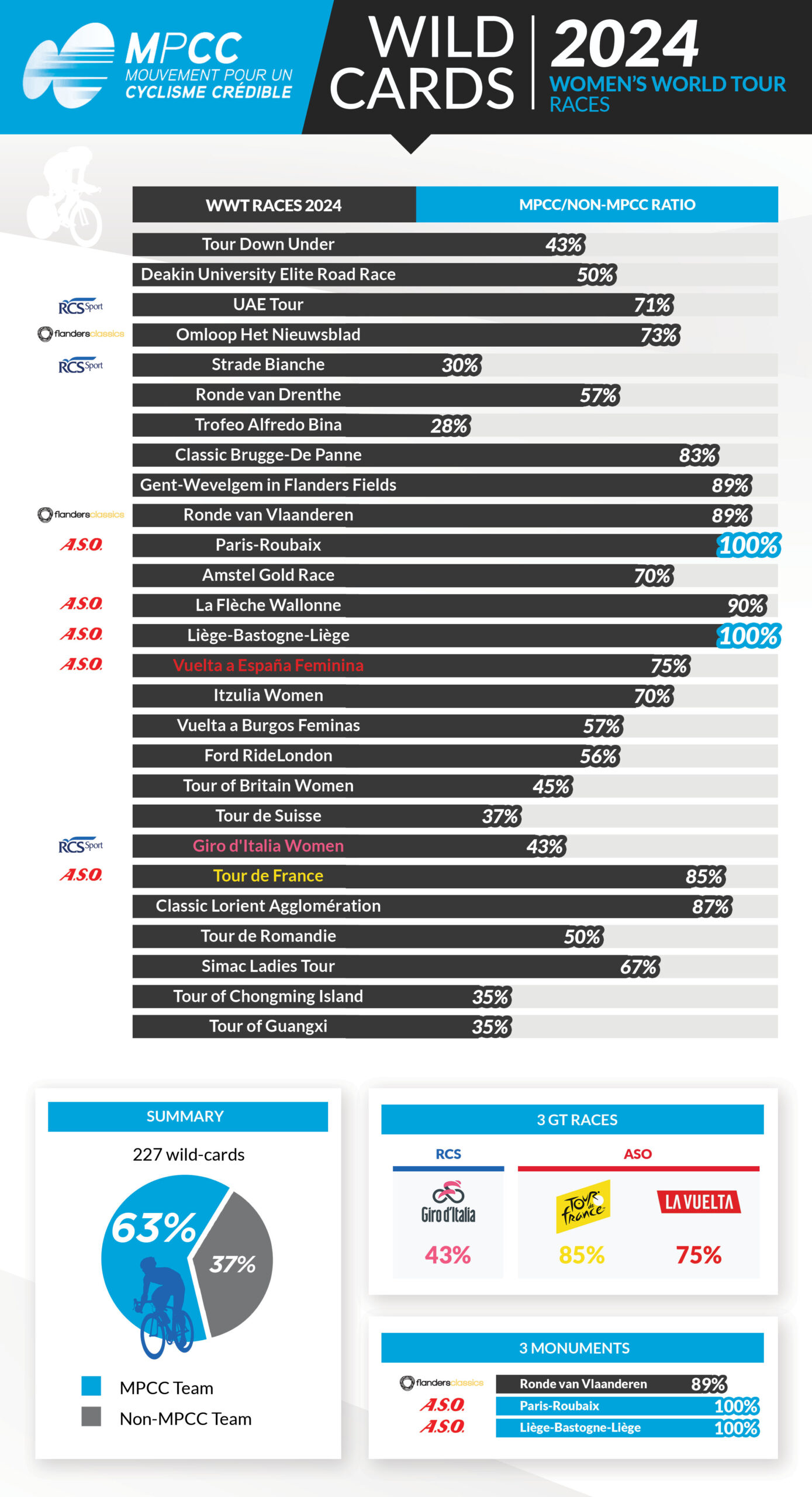 Out of the 227 invitations issued for the 27 races on the Women's World Tour calendar in 2024, 63% were given to teams that are members of our movement. While the number of MPCC teams may seem low, these same teams are competing at a very high level. At the same time, we are calling on Women's World Tour teams who share our values but are not yet members to join us. With the promotion of Emily Brammeier* to the position of vice-president at our last board meeting, the MPCC confirms its commitment to follow the development of women's cycling, always under the banner of responsibility and fairness in sport.
* Emily Brammeier is Head of Communications for Team DSM Firmenich-PostNL and an individual member of the MPCC.
Commit to MPCC, join us ! Be players in the fight against doping !

World Tour wildcards & MPCC memberships : Progress for Pro Teams
At the end of each season, the MPCC publishes figures showing the wildcards which are awarded in World Tour races. The aim of our movement, and has been since our foundation, is to reach the 100% target, a sign that most of the teams at Pro Team level, which are candidates for participation in top-level races, are also committed to cycling that is as credible as possible.
In 2024, 199 invitations have been allocated for the 35 competitions that bring together the elite of our sport : the three « grands tours » (Tour de France, Giro d’Italia, Vuelta a España), the big classics (Milan-San Remo, Tour of Flanders, Paris-Roubaix, Liège-Bastogne-Liège and Il Lombardia) as well as other major stage races (Paris-Nice, Tirreno-Adriatico, the Critérium du Dauphiné, the Tour of Switzerland). Of this total, 183 wildcards were finally awarded to MPCC member teams, or 92% of the invitations. We can consider this percentage is up to 95% due to the participation of national teams in some of the races. This figure is slightly up on 2023 thanks to the Tudor Pro Cycling Team, in June 2023.
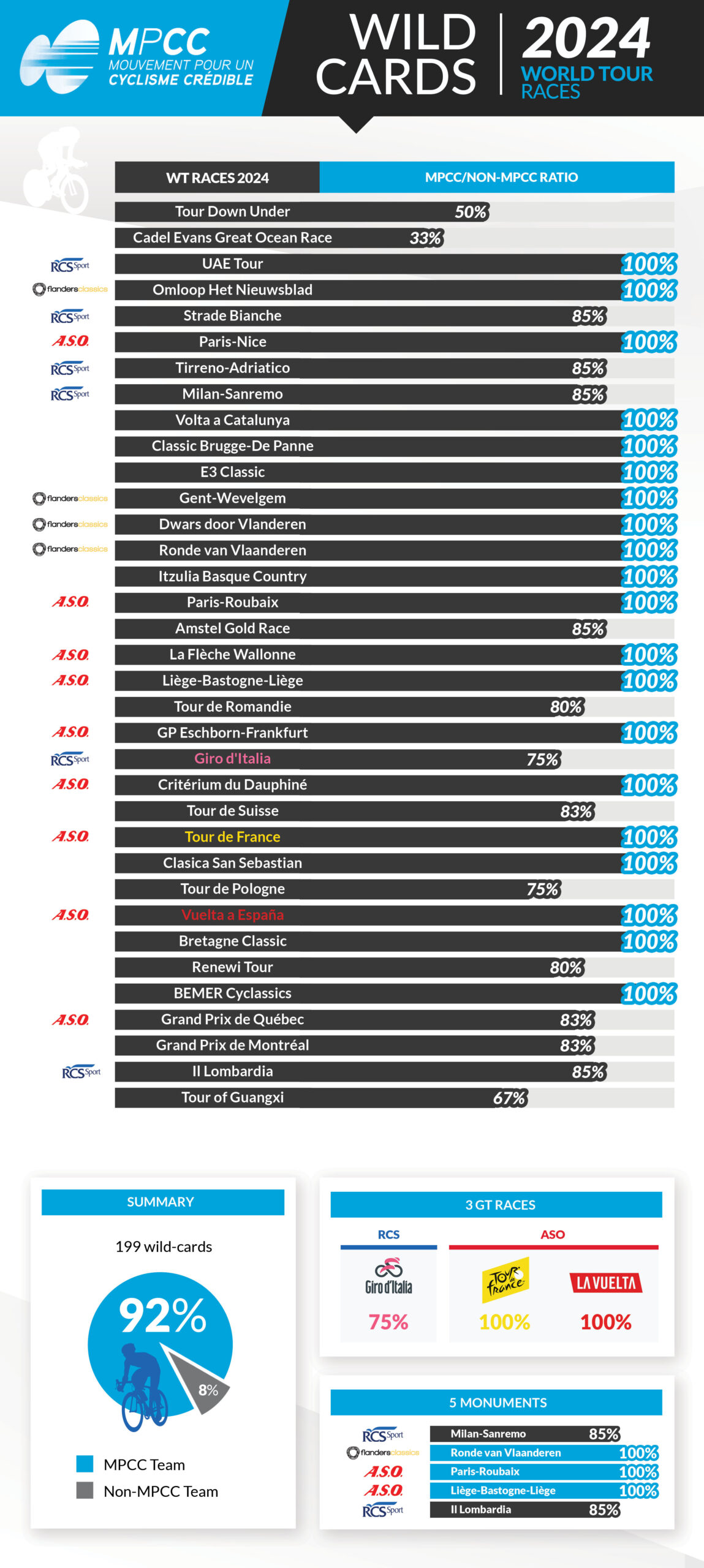
In fact, five Pro Teams have joined us in just over 2 years : Uno-X Mobility, Q36.5 Pro Cycling Team, Corratec - Vini Fantini, Tudor and Unibet Tietema Rockets, just a few weeks ago. With this new membership, the MPCC is delighted with the current momentum and hopes that, in mid term, the target of « 100% MPCC » wildcards will be achieved.
We would like to remind the requirement imposed by Amaury Sport Organisation to invite only teams that are in line with our values and members of our movement, and to praise the efforts made by RCS Sport, another major race organiser. The MPCC is now calling the World Tour teams that are not yet in our ranks to join us, to the Continental men's teams, which are still too few with us and whose challenges are of the utmost concern to us, and to the women's teams, whose strong development we monitor. One day, we hope that all the teams taking part in the biggest events will race under the MPCC banner.
Commit to MPCC, join us ! Be players in the fight against doping !
UNIBET TIETEMA ROCKETS, NEW MPCC MEMBER
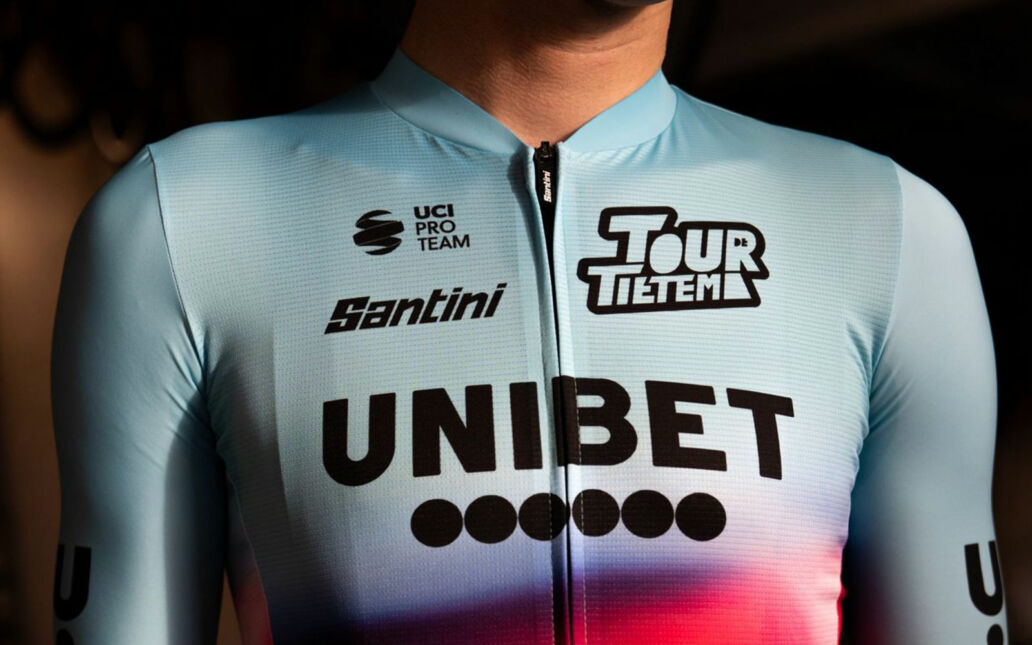
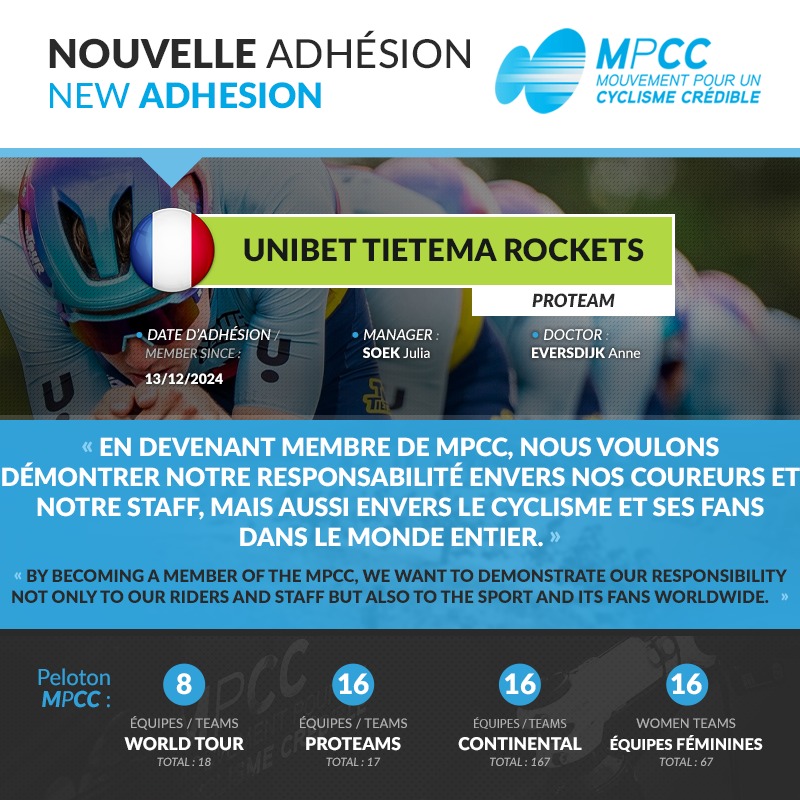
As we look forward to 2025, the MPCC is delighted to conclude 2024 by announcing a new membership of a Pro Team, from the Unibet Tietema Rockets (ex-TDT-Unibet). One of the few second-tier sporting groups which was not yet a member of our movement has finally chosen to join us, bringing to 16 the number of Pro Teams within the MPCC. Only the Polti-Kometa team (Polti-VisitMalta in 2025), which we are encouraging to join us, is missing to pack all Pro Teams with us.
For his part, Bas Tietema, one of its co-founders, declared: “ We strongly value fairness and transparency in cycling. By becoming a member of the MPCC, we want to demonstrate our responsibility not only to our riders and staff but also to the sport and its fans worldwide. We believe that collaborating with the MPCC will help us set an example and strengthen trust in cycling. Furthermore, we affirm our commitment to abide by the MPCC's Rules of Procedure. ”
The cycling team started as TDT-Unibet and will be called Unibet Tietema Rockets from January 1st. For next season, it brought together 25 riders from 9 countries and will include Norwegian rider Odd Christian Eiking, an experienced and former rider of EF-Education EasyPost, FDJ and Wanty-Gobert who also won the Arctic Race of Norway in 2019.
The MPCC thus hopes that other teams will follow the commitments made by Unibet Tietema Rockets, whether at World Tour level, Continental level or on the women's circuit. We enthrust them to become active players in the fight against doping, at a time when suspicions are far from over, and to take action to make cycling even more credible on other issues such as riders’ health and safety in races.
Commit to MPCC, join us ! Be players in the fight against doping !
MPCC urges WADA to overcome inertia on ‘grey areas’
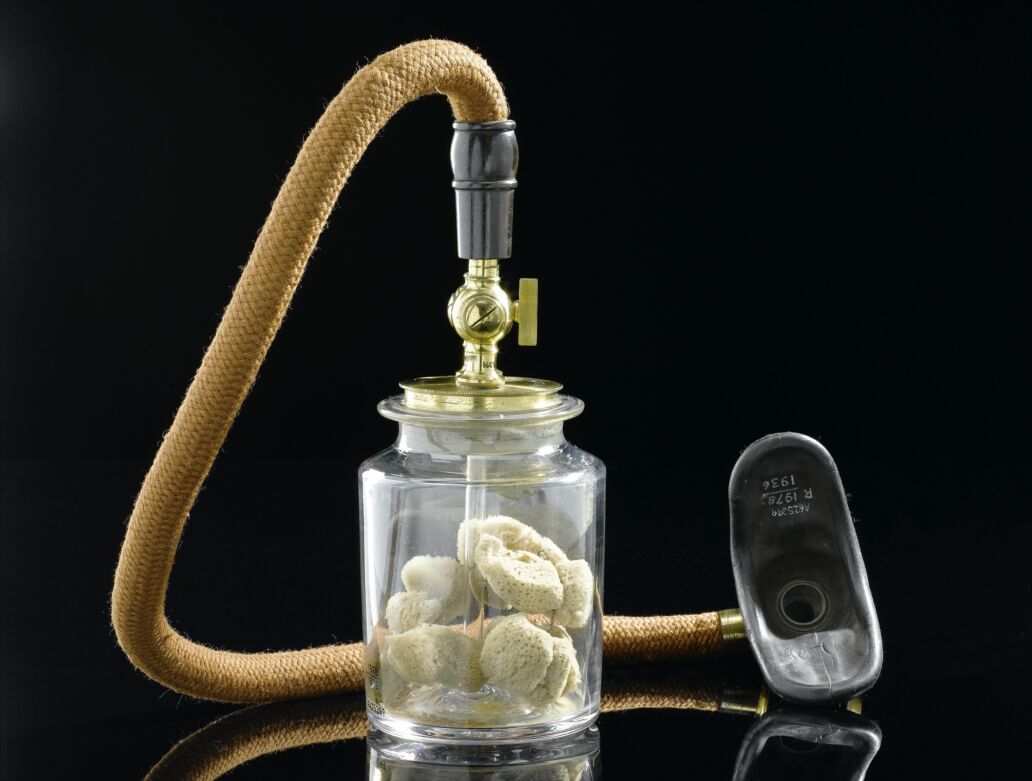
The MPCC is delighted that the Union Cycliste Internationale (UCI) has reacted to the alarming issue of carbon monoxide inhalation by some riders, in agreement with their respective teams. However, the movement deplores the slowness of the World Anti-Doping Agency's procedures, even when athletes' health is at risk.
In a press release published on Tuesday, the UCI ‘clearly asks teams and riders not to use repeatedly carbon monoxide inhalation’, while making an official request to the World Anti-Doping Agency (WADA) ‘to take a position on the use of this method by athletes’.
Less than a month ago, at its General Assembly, our movement (1) alerted the public and our sport's governing bodies to its concern about the recent widespread use of a potentially lethal gas by inhalation. The MPCC also sent a letter to WADA dated 18/11/2024, to which there has been no response to date. Without waiting, we “strongly advise against the use of this technique, pending its prohibition”.
The MPCC also regrets that its letter of 12/06/2024 alerting to the use of Tapentadol (a painkiller reputed to be more powerful than Tramadol), and calling for it to be banned, did not receive a clear response from WADA either, even though this drug has been included in its ‘monitoring programme’.
We would like to highlight two regrettable precedents :
- It took more than 10 years to convince WADA to include Tramadol on the list of banned products, even though doctors from MPCC member teams had undertaken to stop prescribing it to their riders from 2013.
- Since 2019, the MPCC has been calling for a clear position from WADA on the effects of ketones in sport. Five years later, we are still at the same point, since WADA refuses to give an opinion until a scientific study has been made public. This scientific publication, also required by the UCI, is not expected before the end of next year, at the earliest.
The MPCC Board believes that in the context of such reckless behaviour as the repeated use of a toxic gas or a powerful opioid, WADA should invoke an emergency procedure to enforce the precautionary principle when a potentially dangerous practice or drug emerges.
The MPCC also warns riders to the fact that a substance that is not on the list of banned products is not a sufficient reason for riders and their teams to allow themselves to use it.
More generally, the MPCC deplores the development of these ‘grey areas’ in medicinal practices and encourages all governing bodies to create a favourable framework to limit the medicalisation of our sport to the strict minimum.
------------------------------------------------
(1) The MPCC represents 23 of the 35 men's professional teams (World Teams and Pro Teams), and 4 of the 15 women's teams (World Teams).
Commit to MPCC, join us ! Be players in the fight against doping !
THE MPCC, « ACTIVE IN THE FIGHT AGAINST DOPING »
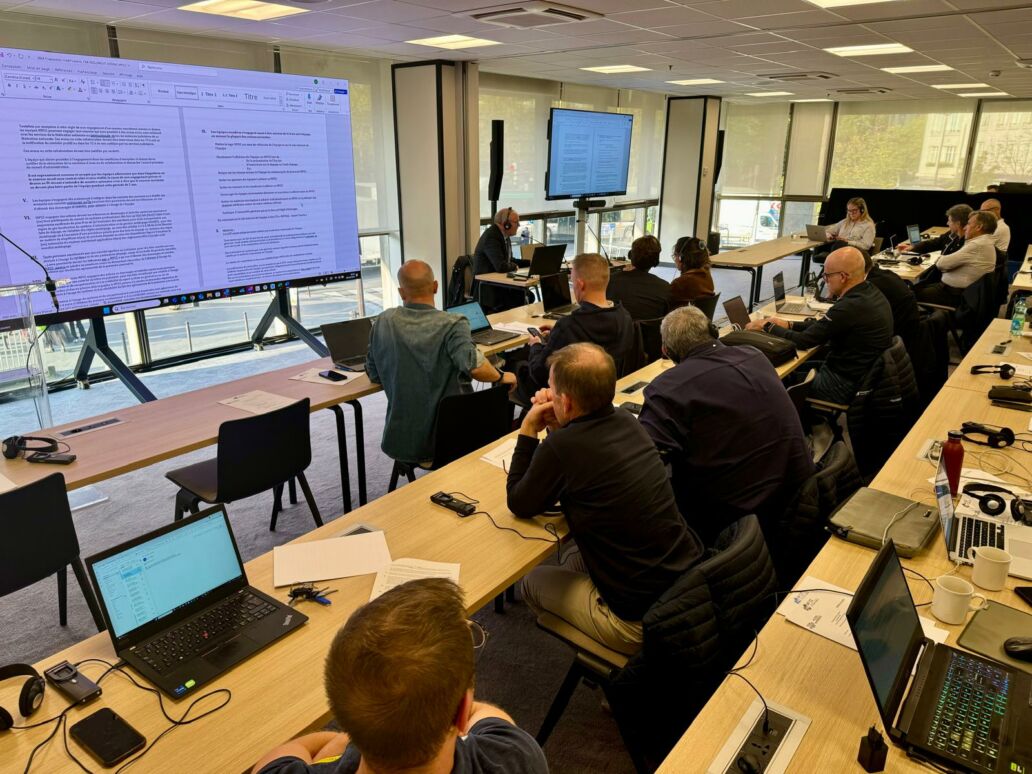
On Monday 28 October, on the eve of the official presentation of the 2025 Tour de France, the Mouvement Pour un Cyclisme Crédible (MPCC) met in Paris for its 18th Annual General Meeting. Among the many topics discussed, ketones were once again on the agenda, for the sixth consecutive year !
The MPCC spent an important day in Paris, on Monday 28 October, firstly holding a meeting of its Board of Directors and then organising its 18th Annual General Meeting. In a context where journalistic investigations have highlighted the alleged over-medicalisation of the peloton, a number of concerns were expressed during these discussion sessions. The issue of ketones is more problematic than ever, and it is sadly clear that the results of the studies commissioned by the International Cycling Union (UCI) on the subject are still awaited, putting cycling and the members of the MPCC in an embarrassing position.
What kind of sport would we want ?
It was in 2019 that the word ‘ketones’ was first mentioned at MPCC meetings, following a Belgian study, and its members were concerned about the health risks and the potential performance enhancement that the use of this compound could bring. This complex issue is a perfect illustration of the DNA of our movement. Our members want to protect their riders and their employees, and regularly make the strong choice to decide, on a voluntary basis, that it is not just the rules of the authorities that should determine what we want our cycling sport to be. This is the raison d'être of our movement : its way of dealing with grey areas.
Keeping the light on
However, it would appear that the UCI does not plan to announce the results of impact assessment of ketones on health and performance until the end of 2025. We cannot accept such long delays, given the public health issues at stake and the credibility of our sport. The managers and referring doctors of the MPCC member teams are seeing their positions, those guided by caution, weakened by an endless wait for clarification and a clear position. Either the UCI is certain that the use of ketones is acceptable and must make this known in a clear and precise communication. Or it is not and must state loud and clear that the institution does not recommend their use, or even that it prohibits it.
The members of the MPCC would like to put this issue to rest, as it has been a source of suspicion for many years.
MPCC members ever more committed
The topic of carbon monoxide was also raised. Some media have reported a likely misuse of this potentially lethal gas. The aim of its use would be to create artificial hypoxia by inhaling it in (unknown) doses, thus mimicking the effects of exertion at altitude. The World Anti-Doping Code specifies particuly in section M1.2 ‘Artificially enhancing the uptake, transport or delivery of oxygen. Including, but not limited to : Perfluorochemicals; efaproxiral (RSR13); voxelotor and modified haemoglobin products, e.g. haemoglobin-based blood substitutes and microencapsulated haemoglobin products, excluding supplemental oxygen by inhalation’.
With the health risk (potentially fatal), the complex and artificial technical aspect (misuse of technical and therapeutic means to artificially create physiological changes), and the world anti-doping code in force, the MPCC can only and strongly advise against the use of this technique... until it’s banned.
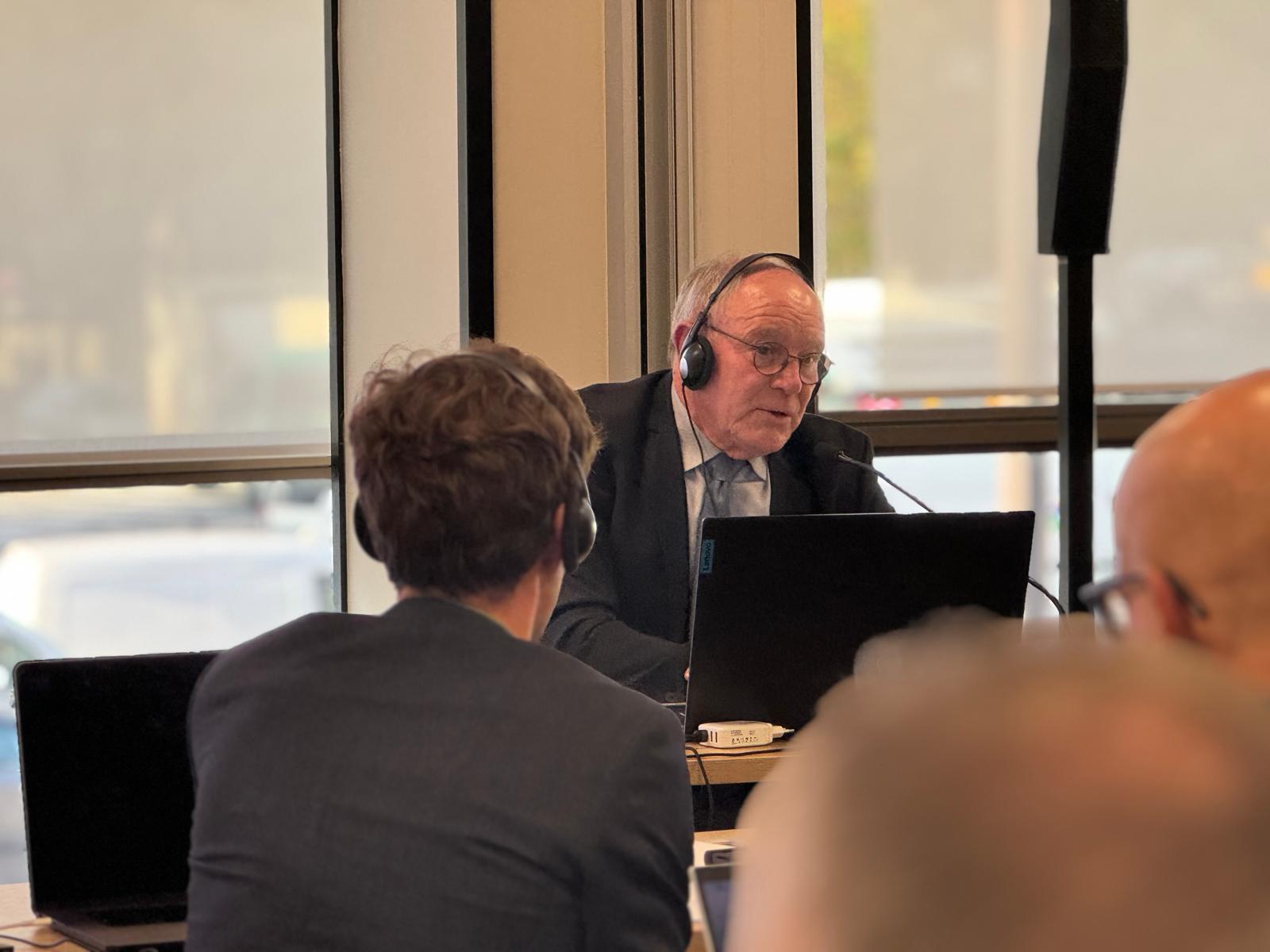
Roger Legeay, Chairman of the MPCC, also called on the members of the movement to become even more ‘active in the fight against doping’ - our new slogan since 2024.
Up to date, are members of MPCC :
15 Pro Teams
385 riders
270 ex-riders
306 staff members
6 riders representatives or agencies
8 sponsors
15 sympathizers
The MPCC is calling for ever more members committed to the credibility of cycling. It also calls on the organisers, first and foremost Amaury Sport Organisation, which has always set an example, to encourage both men's and women's teams to join the movement.
The MPCC is delighted with the invaluable involvement of its members at this General Meeting, and the commitment of its Bureau, at the rhythm of the Boards of Directors that live the life of the movement throughout the year. The Board, whose constitution was voted on at the General Meeting, welcomes a new member to the family of team referral doctors : Dr Jean-Reynald Millot (St Michel-Mavic-Auber 93).
New Board of Directors :
- BRAMMEIER Emily DSM FIRMENICH-POST NL Women’s World Tour Team
- BRANDT Christophe BINGOAL WB Pro-Team
- HINAULT Sébastien ARKEA-B&B Hotels World Tour Team
- LEGEAY Roger
- MADIOT Marc GROUPAMA-FDJ World Tour Team
- Dr MILLOT Jean-Reynald St MICHEL-MAVIC-AUBER 93 Pro Continental Team
- SENMARTIN Philippe TOTAL ENERGIES Pro-Team
- SPEKENBRINK Iwan DSM FIRMENICH-POST NL World Tour Team
- TRAJBER Franck COFIDIS World Tour Team
ITA, General Meeting’s guest for the third consecutive year
The MPCC would like to thank Olivier Banuls, head of the cycling unit at the International Testing Agency, and his close contributors, for taking part in the General Meeting for the third year running, to present the various activities and results of the International Testing Agency (ITA) to the members. ‘Cycling has the most extensive anti-doping programme of all the sports we monitor,’ said Olivier Banuls.
Indeed, as a result of the increase in the financial resources allocated to the fight against doping in cycling, in particular brought about by the contribution of those involved, and first and foremost the teams, the number of out-of-competition tests has increased by 29% between 2022 and 2023. The MPCC welcomes this, supports these necessary developments and hopes for even more results in the future, in the fight against all forms of cheating in cycling.
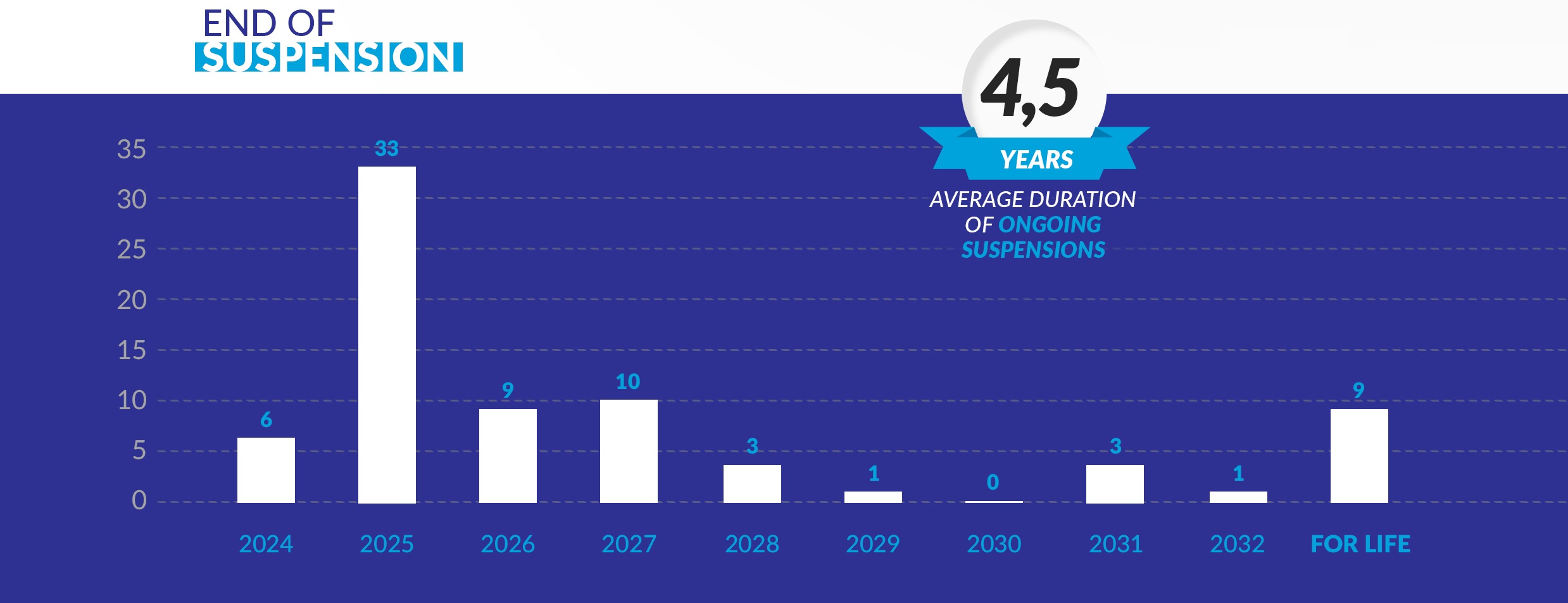
In 2025, more than thirty riders currently under suspension for doping will be authorised to compete again. The MPCC will be cautious about the future of these athletes, having reminded its members of their commitment, on a voluntary basis, not to re-engage a rider after a doping suspension for more than 6 months.
Commit to MPCC, join us ! Be players in the fight against doping !
Credibility Figures : Question marks for the Continental teams
In a year marked by the Olympic Games, the third 2024 Credibility Figures report reviews the efforts made to fight doping around the world. The question of the means also prompts the MPCC to look at the state of play at Continental level.
The memories of the XXXII Olympiad Games (Olympic and Paralympic) are certainly still vivid across the world, one month after they came to a close. From the intense images of the ceremonies to the individual and collective feats and the self-sacrifice shown by the paralympic athletes, symbolising a message of hope in these troubled times, the Olympics were a reminder that sport spreads great and beautiful values that are universally recognised and shared.
Many of these values are promoted by the MPCC, a committed movement and the main player in the fight against doping in cycling, for the fairness of competitions and the riders’ physical and mental health. It points out that top-level sport cannot dispense with the need to roll out substantial resources to combat doping. At the last Olympic Games, some 6,000 samples were collected from 4,150 athletes, around 40% of the total entrants. Only six ADRV (anti-doping rule violations) emerged from these tests, which quickly led to provisional suspensions. While this number may seem derisory, the investigators and staff at the analysis laboratories still have thousands of cases to deal with, and it is likely that others will come to light in the coming months.
In addition to the work of the control officers, the Court of Arbitration for Sport (CAS) set up two temporary offices in the French capital during the Olympic Games. One of these was dedicated to dealing quickly with proven cases of doping. It’s a proof that with a strong political will, substantial resources and uncompromising stance with doping, cheating can be contained. Nevertheless, the 2024 year has been marked by a number of incidents : the Chinese swimmers case, whose positive tests in 2021 were allegedly covered up by the World Anti-Doping Agency (WADA); the political reaction of the United States, which launched a federal investigation into the affair; and the suspension of some national anti-doping agencies, as the countries concerned struggled to bring their legislation into line with the World Code.
RAISING QUESTIONS ABOUT JANNIK SINNER
The last few weeks have been marked above all by the announcement of the positive test of one of the leading stars of tennis, Jannik Sinner, world No. 1 and winner of two Grand Slam tournaments. The Italian, who tested positive for Clostebol (an anabolic steroid) in March, pleaded contamination by a spray and finally convinced the ITIA, the body governing integrity in tennis, and an independent tribunal of his good faith. While the case caused quite a stir on courts around the world, WADA was quick to respond by lodging an appeal with CAS on 26 September.
Finally, the tense situation on the anti-doping front could not be illustrated without the major change underway on a political side. The MPCC had already reported on the very specific situation of Kenya, which has taken a proactive stance in the fight against doping after narrowly avoiding bans from several international competitions. In 2016, the country set up a national agency, the ADAK, and since 2013 has had a strict legislative arsenal. While it could count on a substantial budget of around $5 million in 2022, its future is now on hold, according to its president. The agency is said to have received just around $150,000 for the 2024-2025 financial year, making it virtually impossible to fulfil its mission: pay its staff, control athletes, take samples, whose shipping costs are considered extortionate, and send them to accredited laboratories. At the time of writing, the head of WADA's Africa regional office had just met the local Secretary for Sport Affairs to discuss this highly sensitive and important issue for the future of Kenyan sport.
THE BIOLOGICAL PASSPORT IN ACTION
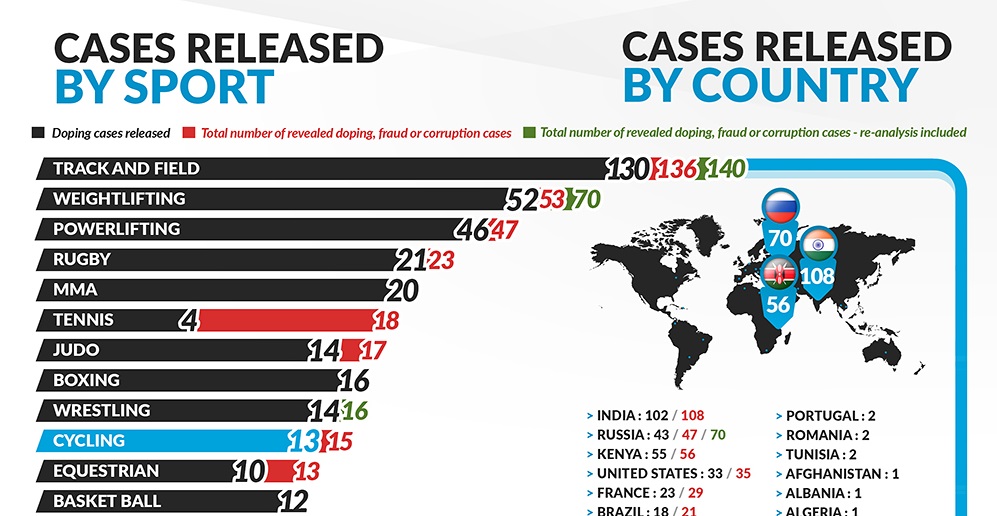
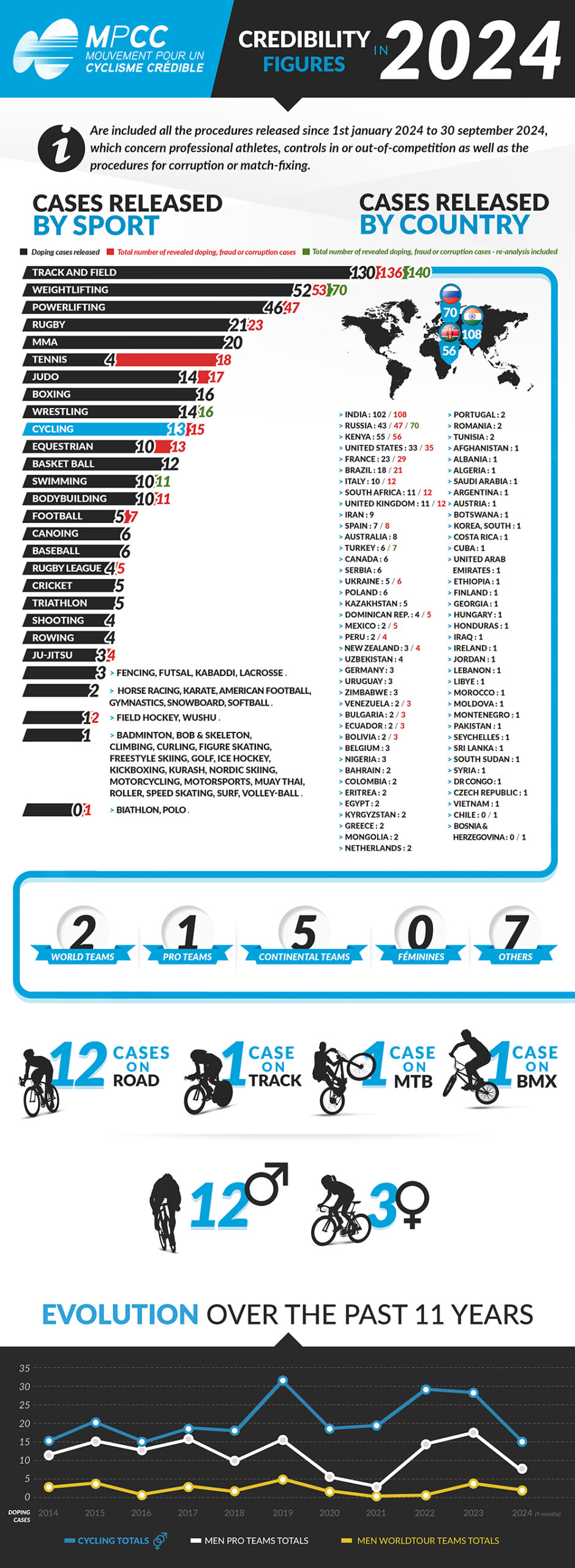
With these Credibility Figures, the MPCC's main aim is to put into perspective the position of cycling, once considered the poor relative in the fight against doping, compared with other sports. It is only the tenth most affected sport after the first nine months of the year, according to the cases revealed by the press and the national anti-doping agencies, far behind athletics (140 cases reported worldwide), rugby (23) and MMA (20), where the trend is upwards. As of 30 September, 15 doping cases in cycling from various disciplines (road, BMX, track, para-cycling) had been made public. This figure remains in line with the recent trend of around twenty cases reported each year, and is consistent with the finding made in our first report on current suspensions among professionals.
PROTECTING THE CONTINENTAL TEAMS
Last news have also made connections with our publications, as two Portuguese riders competing at Continental level have been caught out by their biological passports, the result of a more repressive move by the Portuguese Federation and the Adop (Portugal's anti-doping authority) to extend this monitoring to all national riders competing at world’s third level, i.e. around 80 riders representing 9 teams in 2024. This case serves as a reminder of the importance of being proactive in the fight against cheating, which requires ever greater financial resources for national agencies and anti-doping laboratories, a spirit of cooperation between the various players in sport, whether institutional or political, and a sense of responsibility on the part of the primary protagonists : the athletes themselves.
The MPCC therefore renews its appeal to all the men's and women's World Tour teams who are not yet members to join us in the fight against doping, as the credibility of our sport needs to be strengthened by greater participation from all stakeholders. We encourage Continental teams to become even more involved, despite their lesser media exposure and the challenges they face across the different continental calendars. A much larger number of teams in the world's third tier would help bring certain issues to the fore and keep riders and managers away from the temptation of doping. The battle against it will be won by remaining active.
Commit to MPCC, join us ! Be players in the fight against doping !
An instant snapshot on doping sanctions
In addition to its quarterly report, the Credibility Figures, the MPCC is now going to draw up an up-to-date table of sanctioned professional cyclists. As well as providing a snapshot of the current situation, the aim over time will be to identify changes in anti-doping measures.
For the past ten years, the MPCC has been producing the Credibility Figures, a report on the state of health of top-level sport, in order to place cycling in a more general context. These figures warn us to the cases that have come to light, leading to provisional suspensions pending sometimes lengthy disciplinary procedures. They highlight the effects of the fight against doping throughout the world and the means used by each sport to achieve them : from the introduction of a world anti-doping code to the establishment of dissuasive scales of sanction, through the regulatory compliance of each national anti-doping agency. As a committed player in the fight against doping in our sport, the Movement for a Credible Cycling will now set about establishing an annual snapshot of the sportsmen and women sanctioned in our sport, at the end of the procedures, in order to gain a better understanding of the evolution over time of the results of the fight against doping.
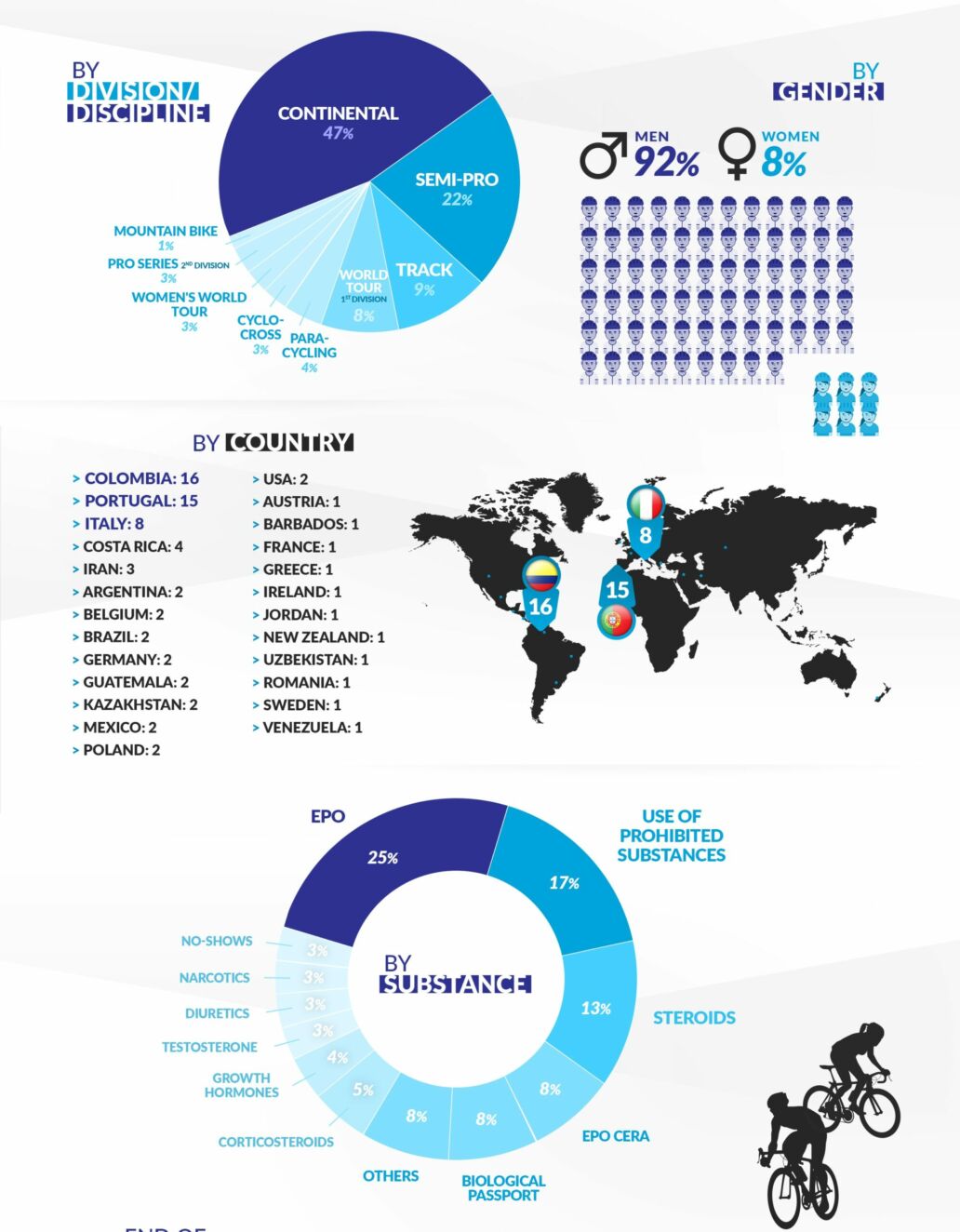
As of 1 September 2024, 75 professional licence-holders had been suspended for an anti-doping rule violation (ADRV) while competing at one of the three professional and semi-professional levels (World Tour, Pro Series, Continental) or while having taken part in races on one of the UCI's continental calendars at the time of their test. These suspensions are present in almost all cycling disciplines : road, track, cyclo-cross, BMX and mountain bike. Nine cases involved lifetime bans from all sporting competitions.
This figure of 75 male and female riders reflects the recent trend in the number of doping cases reported in the Credibility Figures, with 15 to 20 cases coming to light each year. The average length of penalty, excluding life bans, among the athletes still suspended to date is 54 months, or four and a half years. This level of sanction is more or less equivalent to the 4-year scale for a positive test to a product banned by the World Anti-Doping Agency (WADA).
In addition to those taking part in the races, seven team managers and members of medical staff are serving very heavy suspensions, some of them have even been banned for life from all cycling-related activities.
Some territories more affected by doping than others
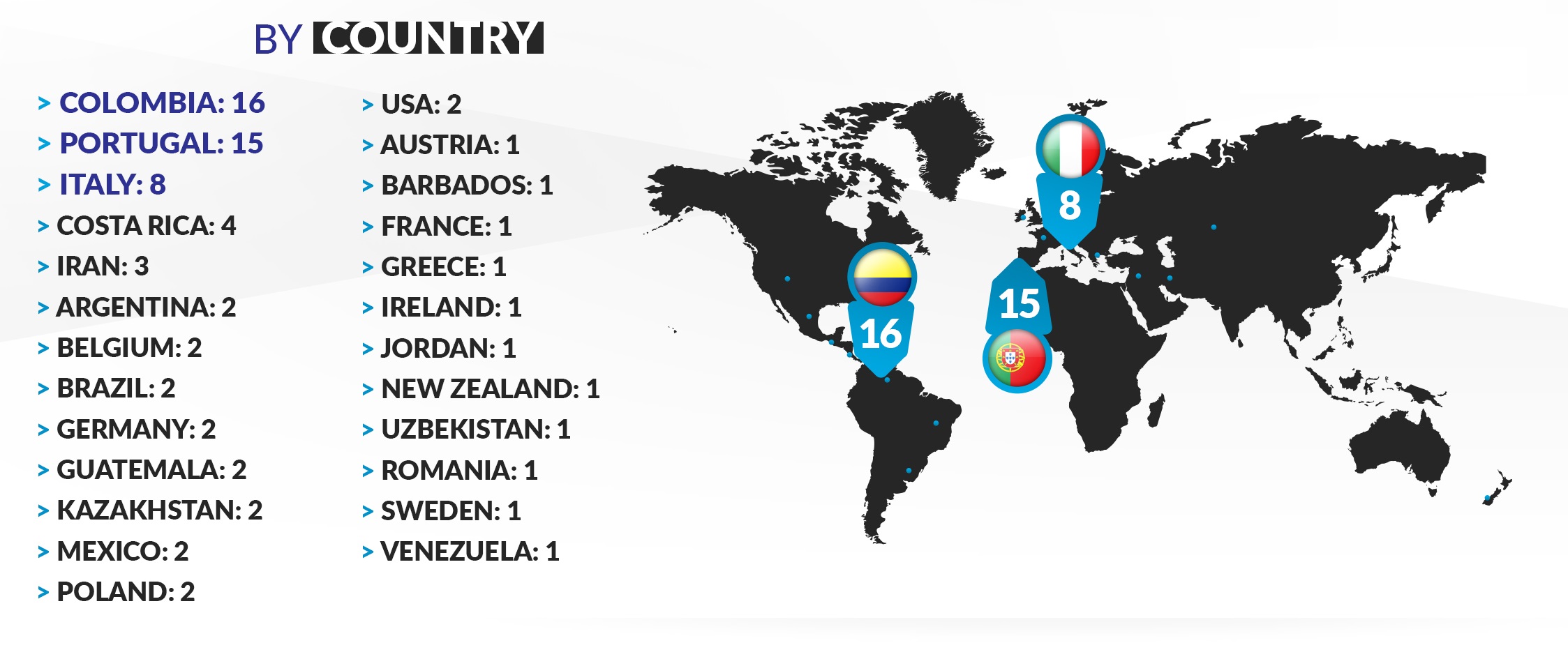
Of these 75 suspended riders, Colombia (16), Portugal (15) and Italy (8) are the three nations most represented, and for different reasons. Colombia appears to be the most complex case because many of the riders who tested positive were semi-professional riders taking part in races on the American continental calendar, races that are subject to testing either by national agencies or by the UCI.
The presence of Portugal in this roundup is also the consequence of the effects of the ‘Prova Limpa’ operation carried out by the local criminal police from 2021, on the basis of whistleblowing. The national anti-doping agency (ADoP) quickly sanctioned no fewer than 11 riders after the Continental W52-FC Porto team's rooms were raided during a national-level race in April 2022. The longest suspension handed down was 10 years. For its part, the court proceedings have resulted in the appearance of 26 defendants, and the aftermath of this case hasn’t been fully clarified, with some witnesses having brought new elements to justice a few weeks ago. But the scandal has led to one step forward : the signing of a memorandum of understanding between the Portuguese Federation (FPC) and the ADoP to extend the mandatory biological passport for professional riders, already operative for World Tour and Pro Series teams, in the country to the third level of competition.
Finally, Italy’s standing deserves particular attention. It has three athletes suspended for life, but these were mainly competing at a time and an era that led to the MPCC’s foundation. It also has five other riders, all of whom were competing at Continental level at the time of their positive test. It is above all the situation of its amateur circuits that raises questions since, according to the Italian Federation (FCI), more than 700 people (amateur and professional athletes, club officials) are serving suspensions : from granfondos to professional UCI events and local road races.
Commitments to be made for the Continental level
As the MPCC was worried about, almost 50% of the sanctions were handed down to riders who were competing in the Continental division at the time of their ADRV. It is important to remember that cyclists competing in the world's third division are not required to have a biological passport, one of the keystones of the fight against doping, the indirect method of which makes it possible to target tests more effectively.
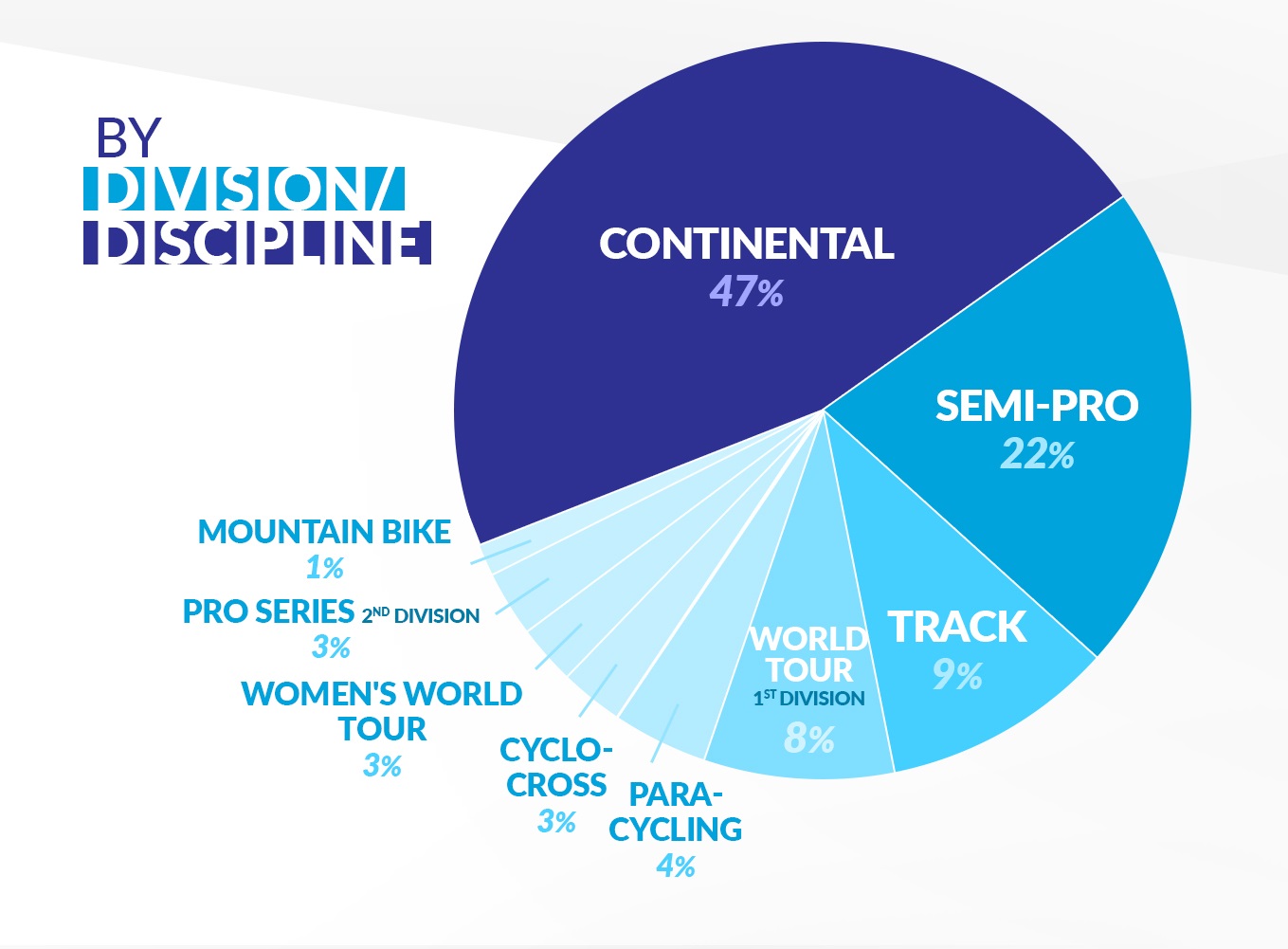
On this point, our movement recalls the commitment of the Pro Series teams, almost all of whom are members of the MPCC and subject to the rules of this lengthwise monitoring. Even if there is still some reluctance at the lower level, we would like to thank the 31 Continental teams (men's and women's) who have joined us, thereby committing themselves to taking an active part in the fight against doping. We also encourage the other teams, led by responsibility towards professional cycling as a whole, and their riders or staff, whether administrative or sporting, to also do their bit.
In a situation of latent suspicion, our movement has never ceased to warn about the problems of doping, despite the long road we have travelled over the last few years in scientific, legal and institutional terms.
EPO is still there
We could not conclude this overview without mentioning the various products that led to these sanctions. Despite the earthquake caused by the Festina case in 1998 Tour de France, which symbolized the massive use of EPO, the MPCC can only regret that this synthesised hormone is the first substance detected in 25% of the sanctions handed down. Its more advanced product, EPO-Cera, was detected in 5 cases coming from South American riders. 13% of the decisions were also handed after steroid use, while some others had used corticosteroids, its banning having been one of the MPCC's hobbyhorses. It should be noted, however, that in many cases the substance detected was not made public.
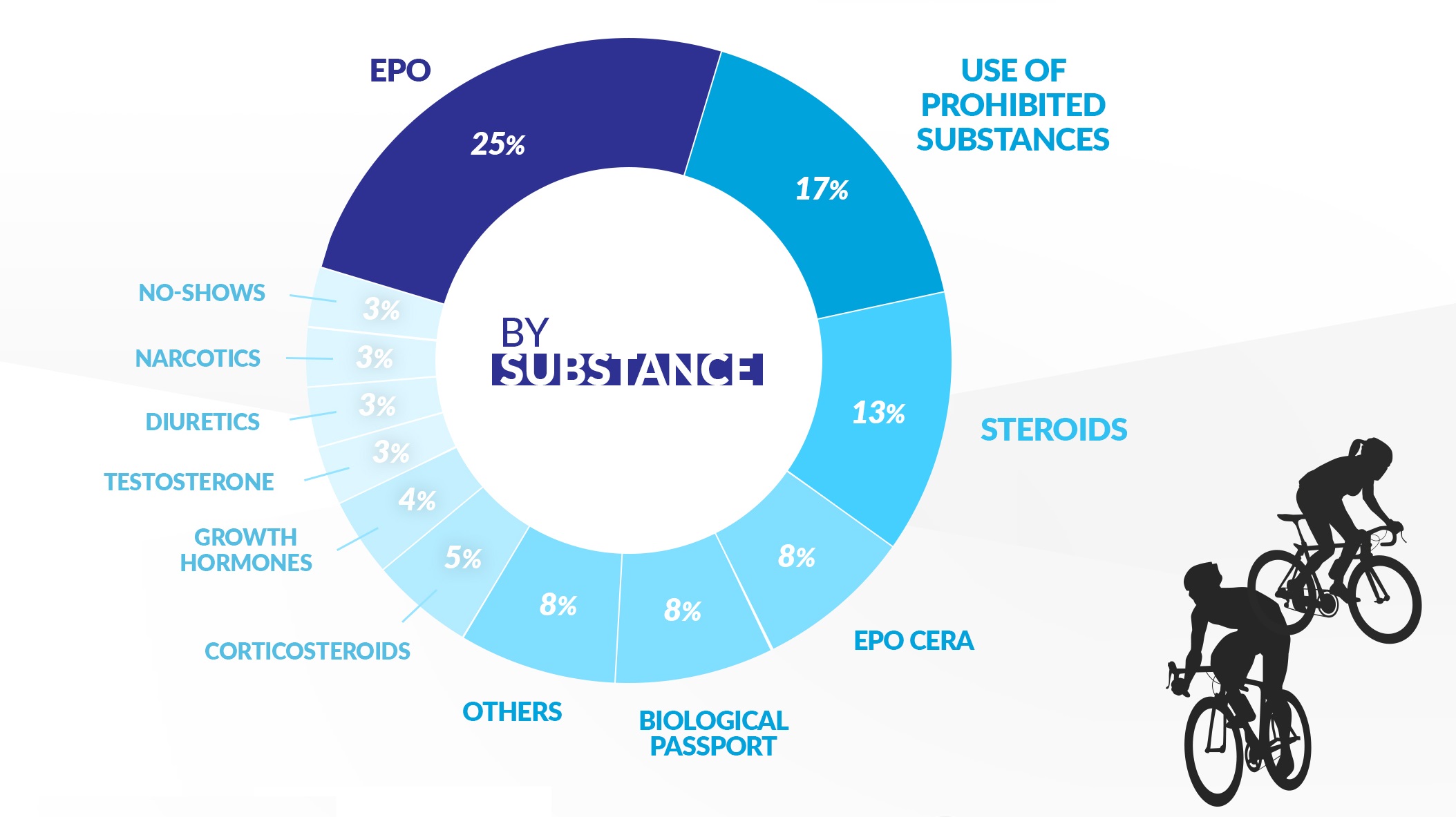
So this snapshot therefore provides a fresh look and different perspectives on the reality of the fight against doping in cycling. It shows the extent to which this ongoing commitment to a clean sport is not easy, let alone won. It strengthens the MPCC's position in its dealings with governing bodies, teams, sponsors and race organisers, and in its approach, open to discussion with all stakeholders but determined to preserve the credibility of cycling. By this release, the MPCC is insisting that we must « keep the light on ».
Commit to MPCC, join us ! Be players in the fight against doping !
Vuelta a España : the MPCC stays the main player against doping
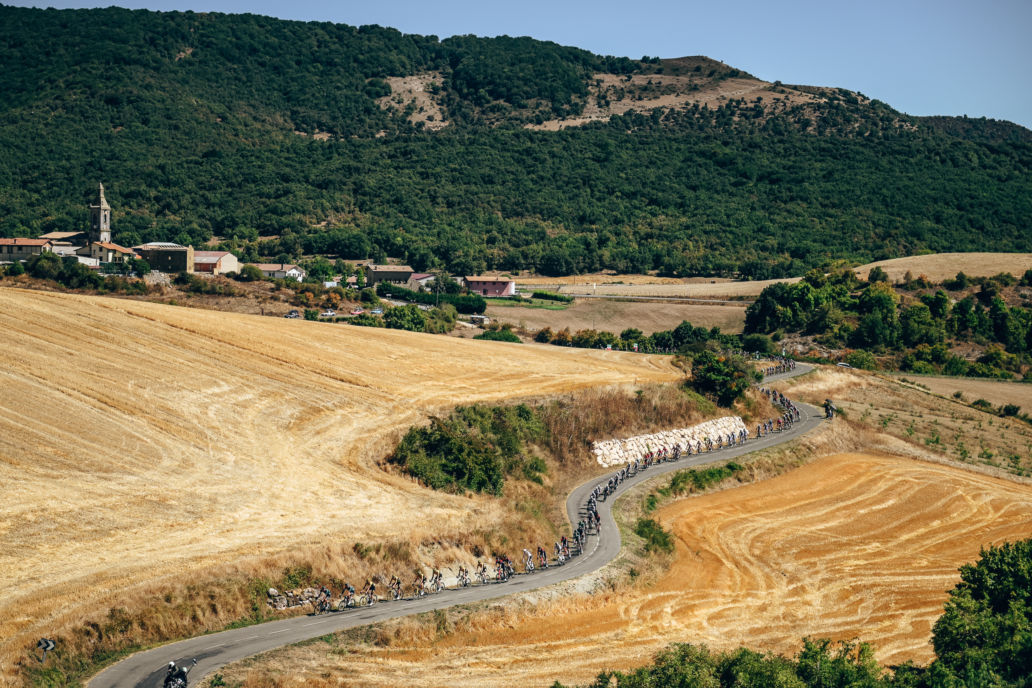
The concentration of major races since the start of June, and the Critérium du Dauphiné, is close to its climax, the World Championships, to be held in Zürich (Switzerland) from 21 to 29 September. In the course of this season full of big events and emotions, the riders will take part in the 79th Vuelta a España, the third and final grand tour of the season.
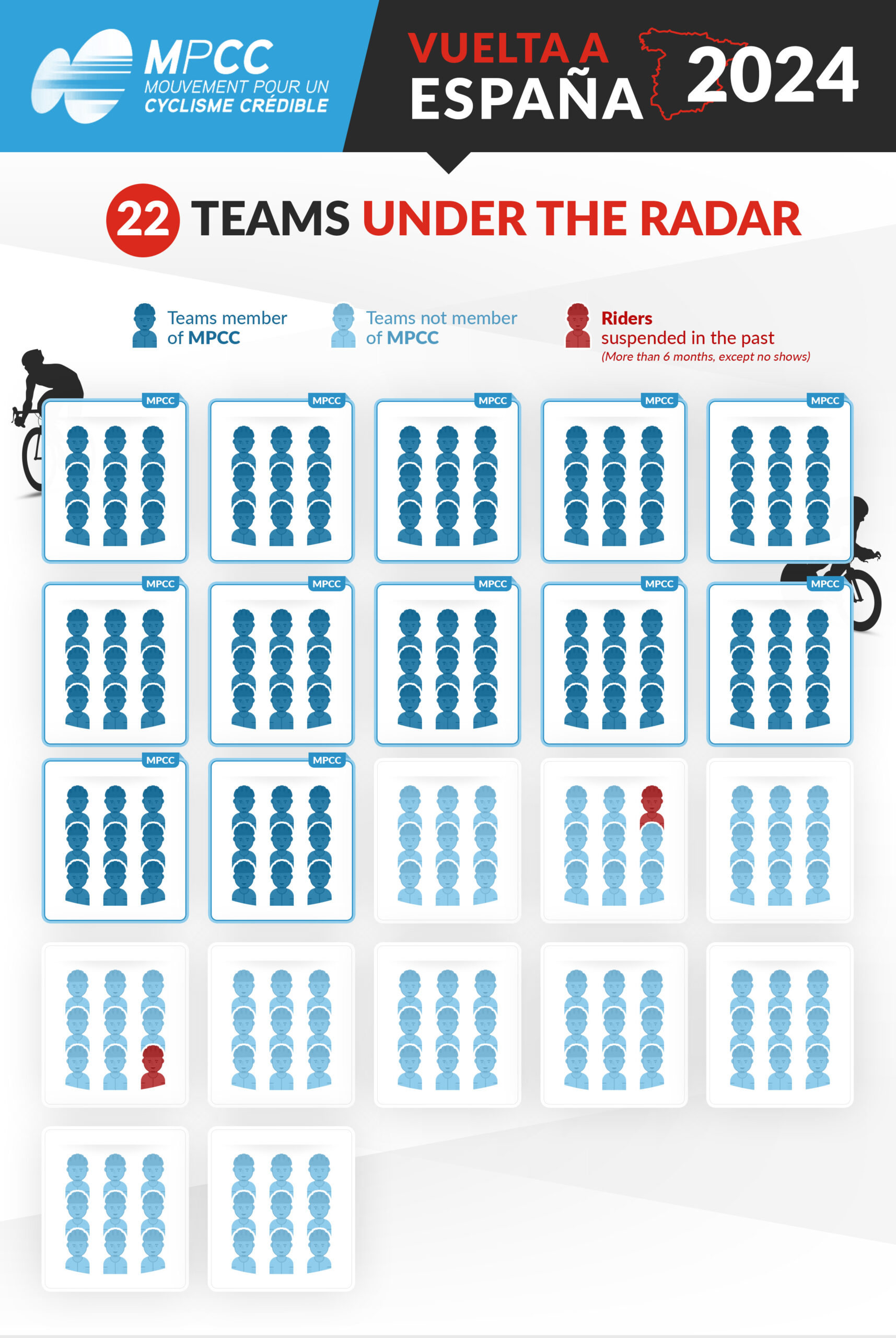
47 riders are members of the MPCC on their own and will set off from Lisbon (Portugal) on Saturday for three weeks and 3304 kilometres. They represent 16 of the 22 starting teams and 14 different countries, a sign of the ever-increasing globalization of our sport. As it has been the case for the last two years or so in the three-week stage races, twelve teams are members of the MPCC : our eight World Tour teams and the four wild cards from the Pro Series ranks (Equipo Kern Pharma, Euskaltel-Euskadi, Israel-Premier Tech and Lotto Dstny).
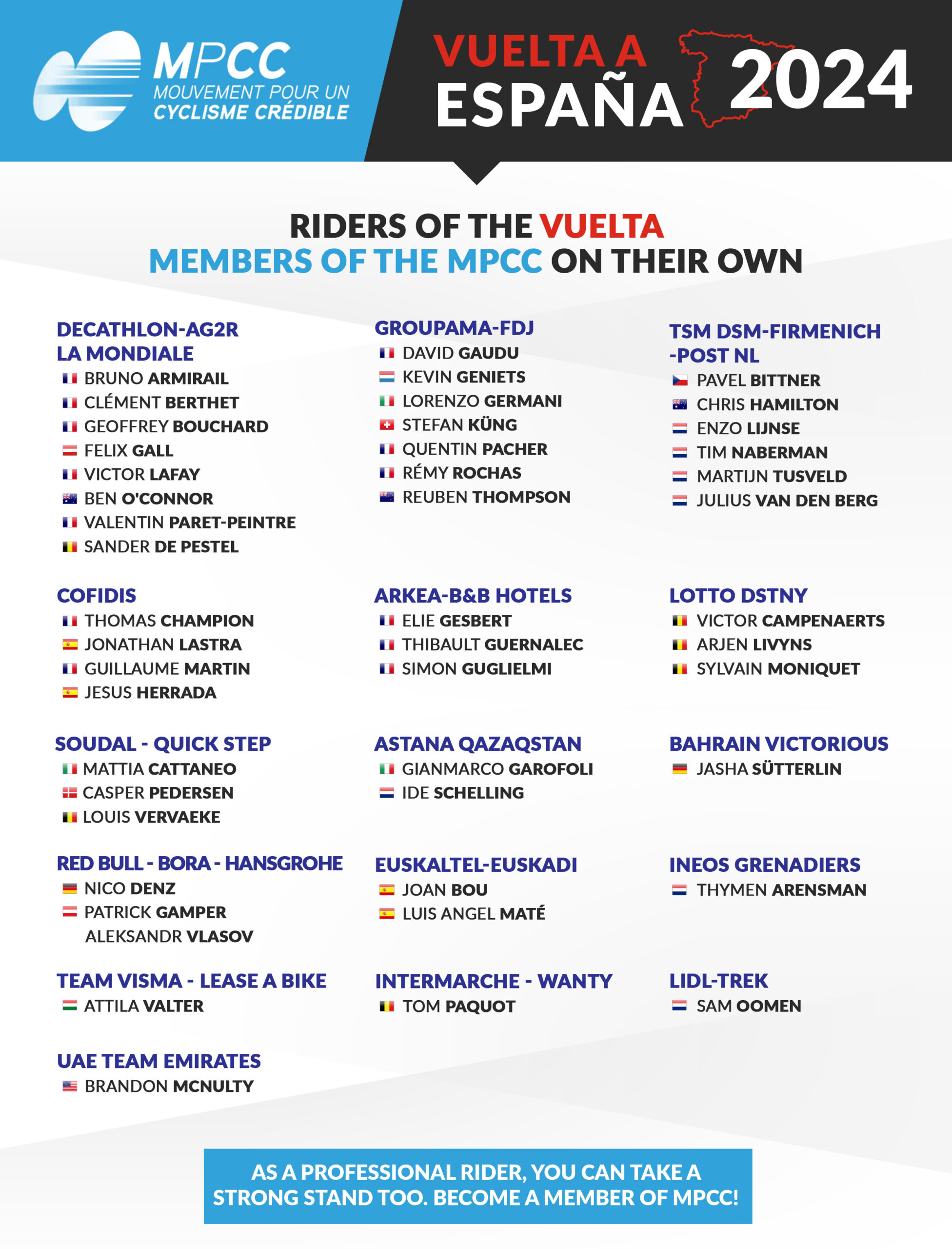 Nearly all the teams of the world's second level have committed themselves to the fight against doping, and we would like to thank them warmly for this. The MPCC also wants to be involved in other issues such as the riders' physical and mental health and their safety at the races. Once again, we encourage non-member World Tour teams to join us and their riders in this ongoing fight for more credible cycling.
For their part, the MPCC riders must also invite their training partners to get involved. As for the support staff, of whom we have more than 300 members to date, they can also make their contribution. The MPCC wants to be open to all cycling stakeholders (riders, riders' representatives, managers, technical staffs, sponsors, race organisers) in professional cycling so that we can “keep the light on”.