
Credibility Figures : the fight is far from over
At the end of the third quarter, the Credibility Figures underpine the MPCC's stance on vigilance against doping. In addition to the setbacks looked in some sports and countries in this fight, recent data on cycling also indicates that the battle is far from over.
Committed to the fight against doping since its inception, the MPCC has always expressed the need to « keep the light on » in the face of this scourge, both for cycling, which has made considerable efforts, and for sport in general. In recent months, our movement has taken a clear stance on new practices that jeopardise the credibility of cycling : the use of a new generation of painkillers such as Tapentadol, the use of ketones, whose long-term impact on health remains poorly understood given the various studies published on the subject, and the inhalation of carbon monoxide, which is potentially lethal if not strictly supervised.
We welcome the swift action taken by the International Cycling Union (UCI) on some of these practices, without waiting for any decisions at the highest level by the World Anti-Doping Agency (WADA). While it took WADA a decade to place Tramadol on the list of prohibited substances, the agency should be much more responsive to the repeated use of carbon monoxide, as its ban is set to take effect on 1 January 2026. The MPCC welcomes this ban, which demonstrates that those involved in the fight against doping must be determined in their efforts.
Keeping the light on
Is MMA in the crosshairs of anti-doping efforts ?
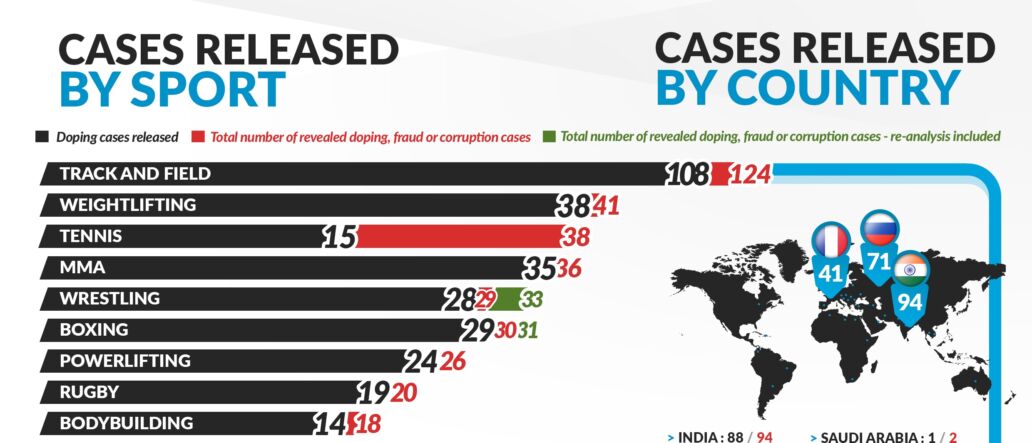
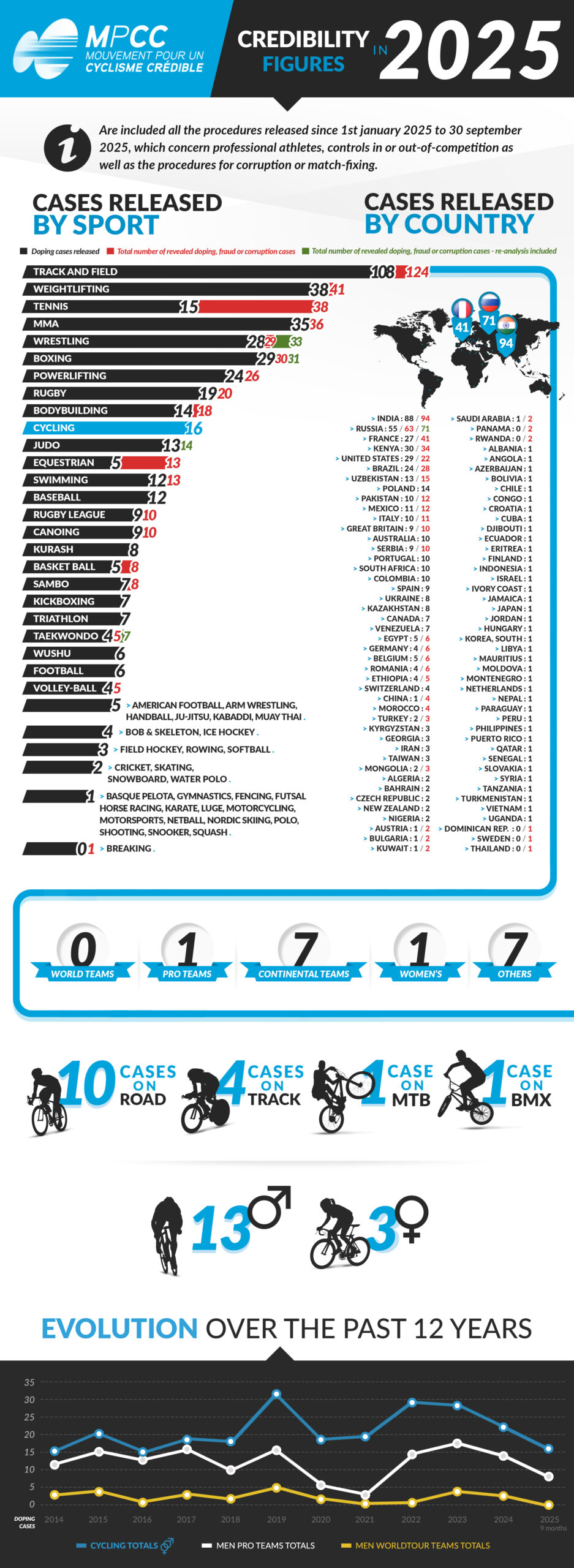
Nevertheless, this battle is far from won, as illustrated by the Credibility Figures. As of 30 September, we had recorded nearly 600 cases of doping or sports fraud among elite athletes worldwide. The breakdown by country and sport leads us to several conclusions. Athletics, which is often the sport most closely monitored by national and international anti-doping agencies, has the highest number of cases with 108 athletes testing positive, ahead of weightlifting (38) and MMA (35).
The MMA's situation is interesting in more ways than one due to the competitive structure of the sport, set between international federations (GAMMA and IMMAF), which have chosen to entrust their testing policy to a major player, the ITA (International Testing Agency), and private leagues, mainly American and considered to be the most competitive in the world, whose attitude towards doping remains ambiguous. In fact, in 2024, the UFC, and just a few days ago, the PFL, decided to no longer delegate their testings to the US Anti-Doping Agency (USADA) and sought out other so-called « independent » organisations. These changes are all the more questionable given that the sanction scale imposed by these agencies are much more lenient than WADA’s. In France, four fighters have already been sanctioned by the AFLD (the french agency) this year following bouts organised by the Ares league. The evolution of the figures for MMA in 2026 will therefore be particularly worth following.
India must make efforts
At a national level, India tops the list of the most affected countries with 94 cases of doping and sports fraud revealed after the third quarter, ahead of Russia (71) and France (41), a case on which further details are needed. The trend we are seeing is in line with WADA's findings, which list India among the countries most at risk from doping (more than 200 cases in 2023 according to the agency). This situation is all the more problematic as India is busy bidding to host the 2036 Summer Olympics. The local Olympic committee (IOA) has therefore decided to reorganise the disciplinary panel of NADA India, the national anti-doping agency, to strengthen its controls.
In France, not all 41 cases involve doping, as 11 French athletes have been sanctioned by the ITIA (International Tennis Integrity Agency), for sports fraud, most often for failing to report or participating in sports betting, a scourge that has plagued the sport for many years. These French players are all ranked below the 200th place in the world, at a level where making a living is difficult and the temptation to cheat is therefore particularly strong.
Finally, we cannot conclude this overview by country without mentioning the continuing delicate situation in Kenya, which has been under WADA’s scrutiny since an audit carried out in May 2024. Its national agency, the ADAK, was at risk of being declared non-compliant with the World Code, which could have resulted in the country's absence from several international competitions. Actually, several members of the Kenyan agency indicated that it was mainly budgetary restrictions imposed to control public debt that were jeopardising its proper functioning. After putting ADAK’s operations at risk at the end of 2024 with a projected budget reduced by a factor of 20, the Kenyan government finally granted the equivalent of $2 million for 2025-2026. This is a reasonable budget, but a significant decrease compared to previous years. This saga is a sign of the challenges ahead in the fight against doping.
7 new cases in cycling
As for cycling, it has not been spared from a resurgence of cases, with seven riders provisionally suspended or sanctioned during the third quarter. One of them, Giovanni Carboni (Unibet Tietema Rockets), is the first Pro Team athlete to be caught out by his biological passport in three years. His team, a member of the MPCC, quickly applied one of our fundamental rules by removing him from its roster, even though it claims that the period in question for the anomalies predates his recruitment.
After the first nine months of the year, 16 professional road, track, BMX and mountain bike riders were suspended. The figure is in line with those recorded over the past decade, with around 20 doping cases per year. However, the MPCC cannot be satisfied with this status quo and reiterates that cycling must remain flawless and proactive in the fight against sports fraud. Its stakeholders have a duty to remain united and to give themselves the means to consolidate cycling as the healthiest, most professional and fairest sport possible.
Commit to MPCC, join us
Be players in the fight against doping !

Update on professional cyclists suspended
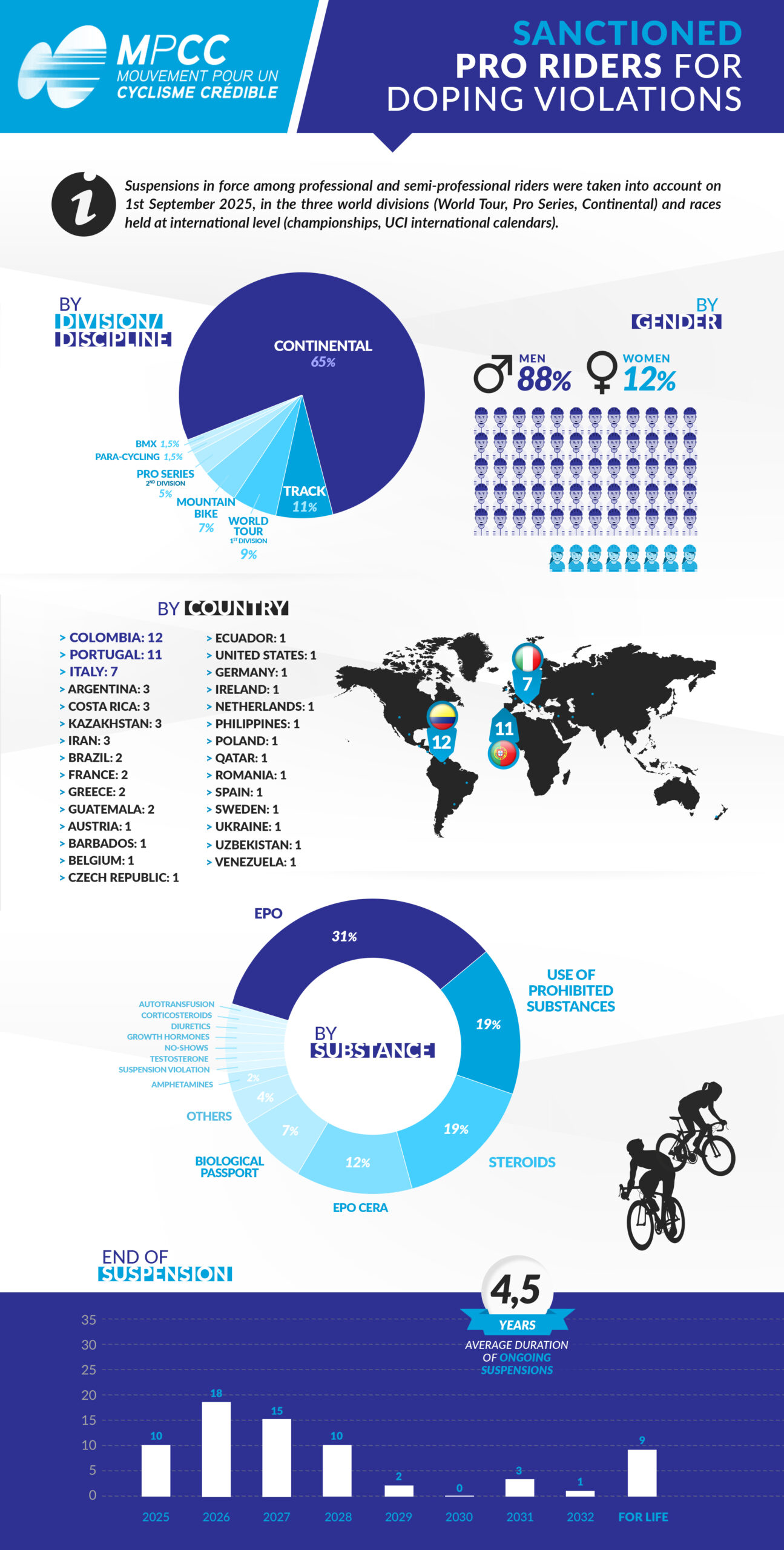
The MPCC has published a new update on professional cyclists who have been suspended to date. This overview highlights the situation at the Continental level, which is the level of competition most affected by doping cases.
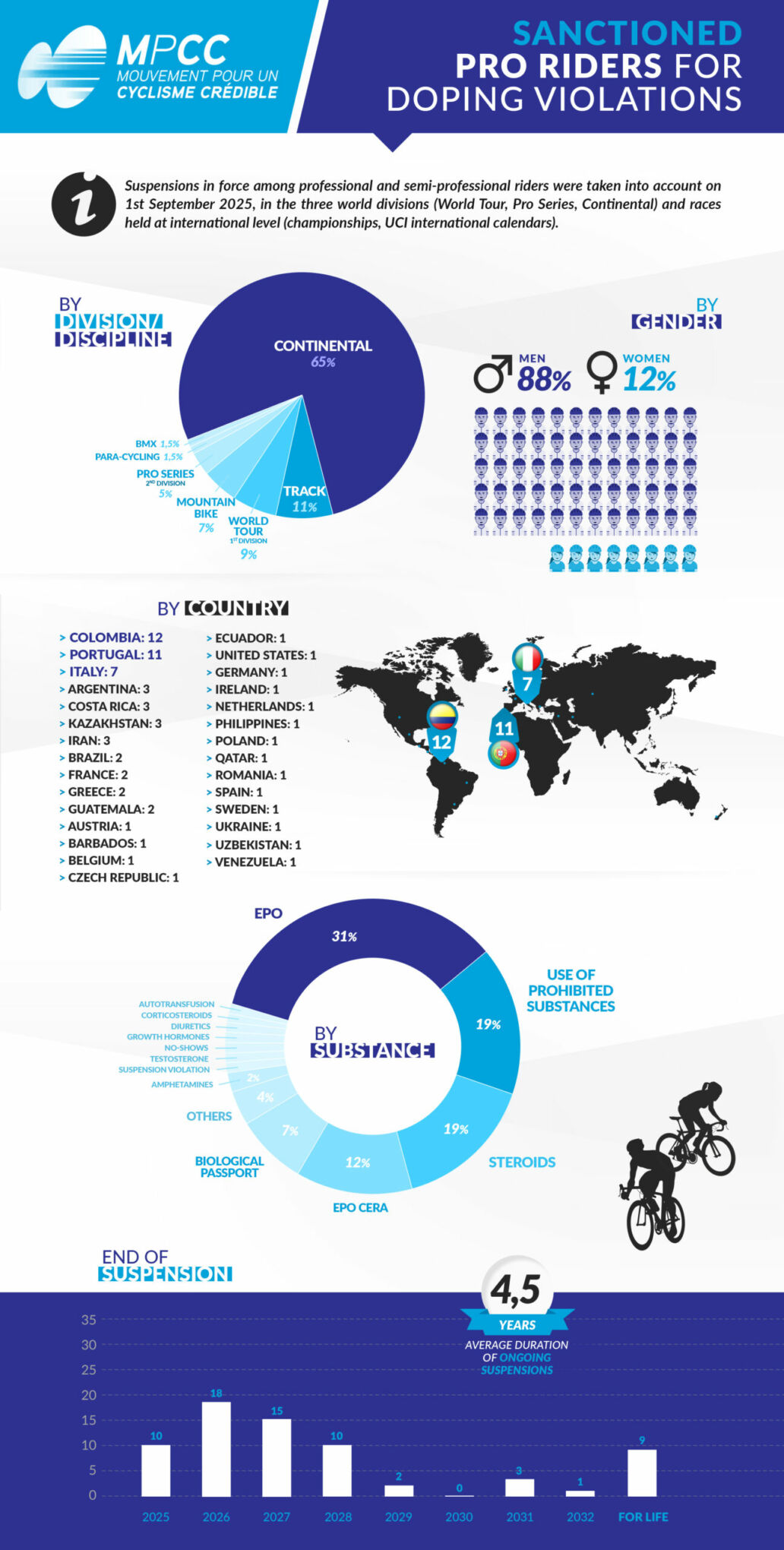
Intended to be an add to the Credibility Figures, this overview of professional athletes suspended to date provides a broad picture of the state of the fight against doping in our sport, worldwide and by discipline. It also illustrates the efforts and actions undertaken by the various institutions responsible for ensuring the credibility of competitions, whether they be national federations or national anti-doping agencies. This inventory is divided into several categories: cases by country, by level of road competition, by discipline, by products detected during testing, by suspension end date, and by gender.
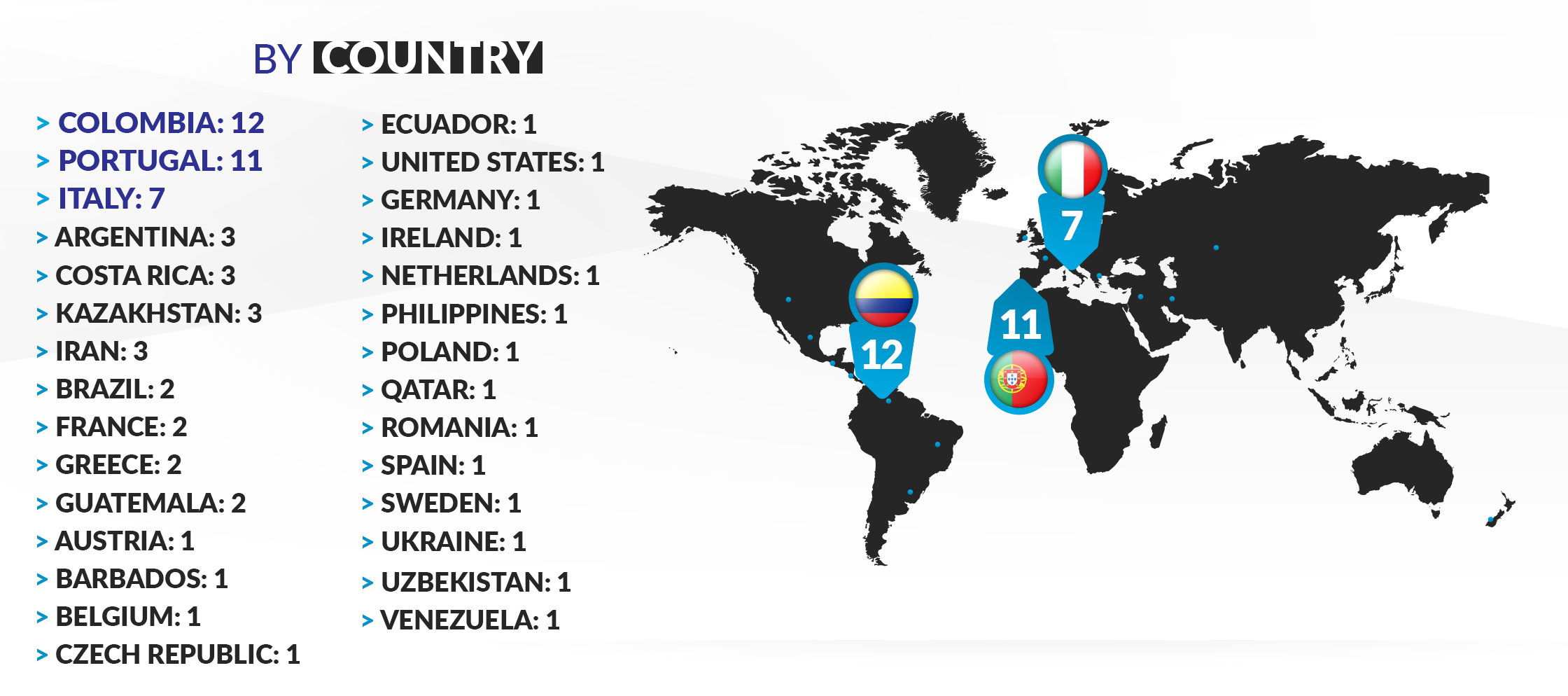
After counting 75 professional cyclists serving bans for anti-doping rule violations at the end of August 2024, we now have 68 athletes banned from all competition as of 31 August 2025. Colombia remains the most represented nation in this list with 12 riders suspended, closely followed by Portugal (11), and Italy (7). It should be noted that, in Portugal, five riders involved in Operation « Prova Limpa » and sanctioned by the Portuguese Anti-Doping Agency (Adop) served their suspensions last July. However, the advanced age of most of them is unlikely to allow them to find an other competitive team at the highest levels of sport. On the other hand, a number of riders, caught out by their biological passports, which have been extended to continental teams by joint decision of the Portuguese Federation and the Adop in 2023, remain provisionally suspended and are therefore awaiting a final sanction.
Reveal – Blow the whistle
The Continental level remains the most affected
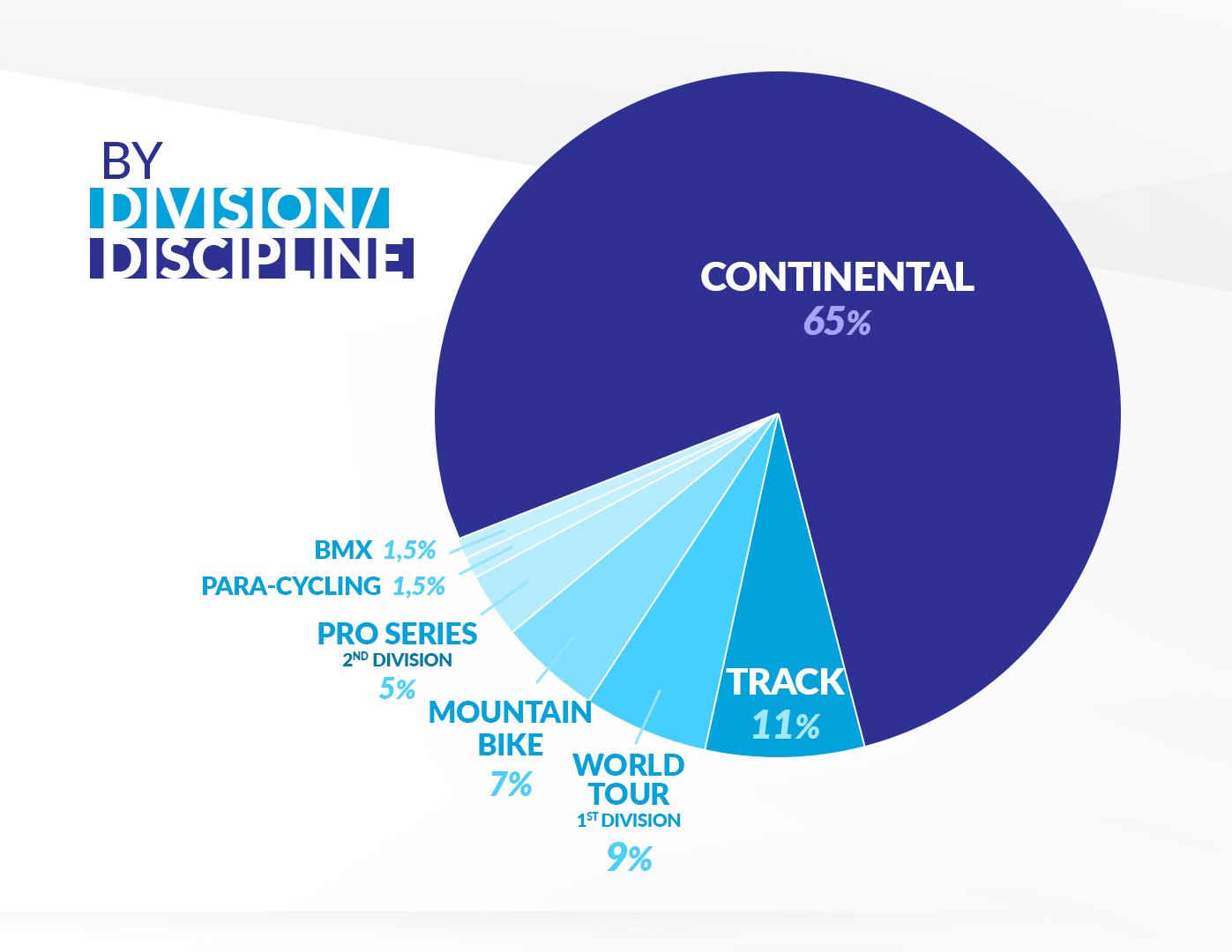
The biological passport, in use since 1 January 2008, a few months after the MPCC was founded, has been an important tool in the fight against cheating, but its scope is limited as it is only mandatory for World Teams and Pro Series teams. In fact, 65% of those suspended are from the men's and women's Continental level, an increase of 14 percentage points compared to September 2024. This increase is a trend already described in our previous Credibility Figures, where doping cases at this level remain frequent.
EPO tops the list of detected substances
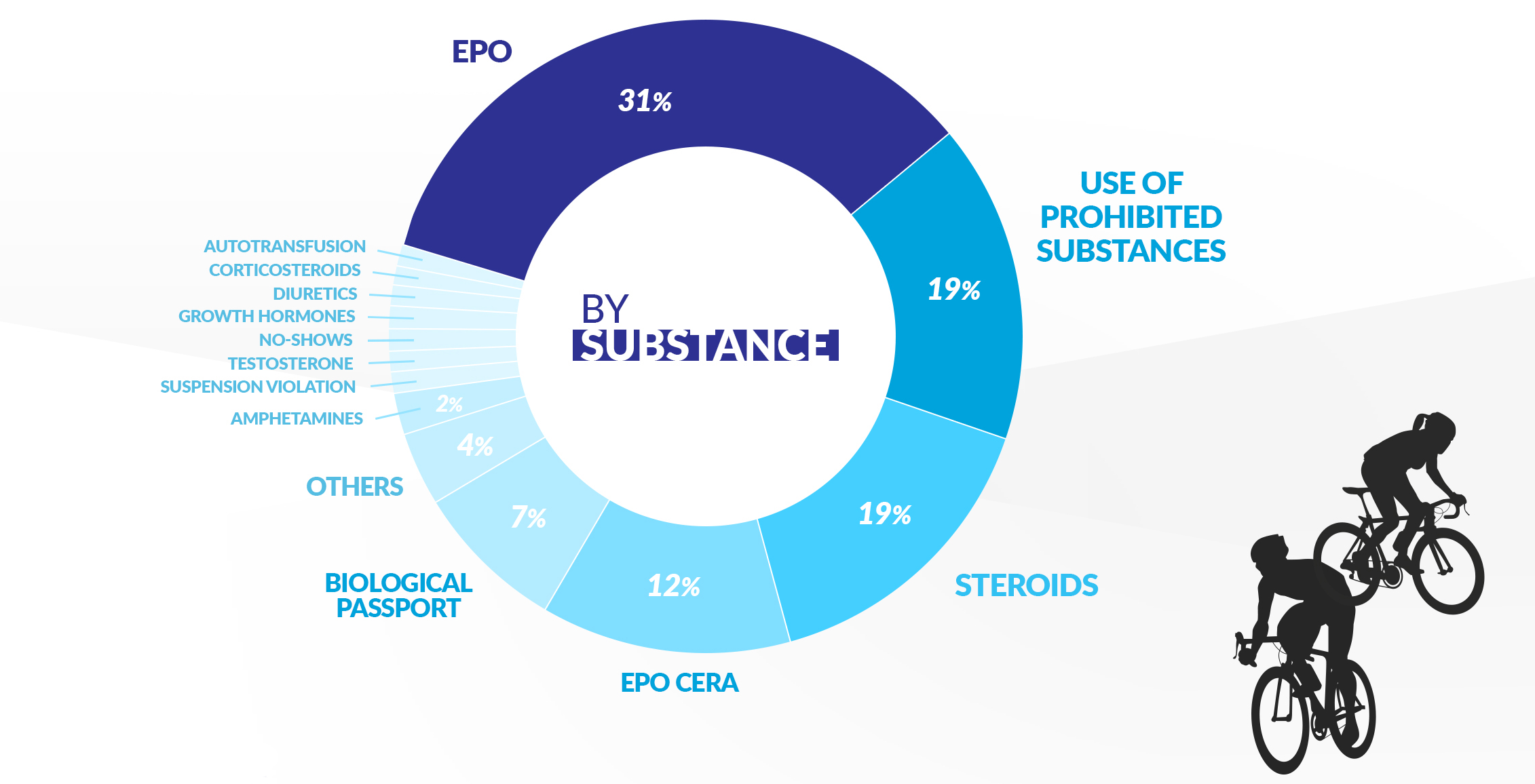
Since 2021, the most frequent cases of doping in cycling reported by the MPCC have involved both Continental-level riders and positive tests for EPO or its variant, EPO Cera. This hormone, which one might think had fallen out of favour a quarter of a century after the Festina case, remains the leading cause of suspension for 43% of banned athletes. One fact illustrates this trend : three of the last six professional riders sanctioned by the UCI tested positive for EPO or Cera and were riding for Continental-level teams. The use of steroids ranks second among the substances detected in 19% of cases. Finally, the term « use and possession of prohibited substances and/or methods » accounts for 19% of current suspensions, but can sometimes correspond to a rider's biological passport failing, which officially accounts for only 7% of sanctions.
The average length of suspension (except lifetime bans) remains at four and a half years, which is roughly in line with the penalty scale for the use of methods and/or substances prohibited by the World Anti-Doping Agency (WADA). Finally, 88% of athletes sanctioned are men, compared to 12% for women.
Keeping the light on
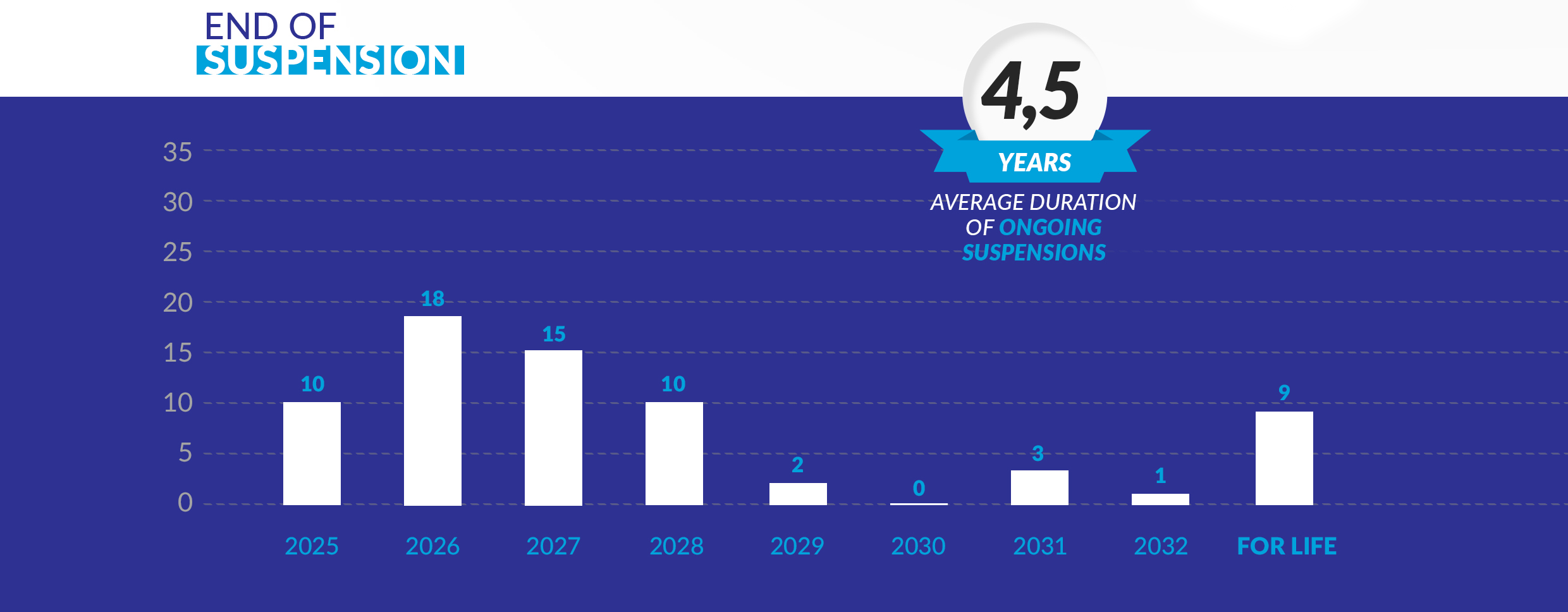
These figures require some clarification:
- Six suspended riders were riding at the World Tour level when they tested positive, as in 2024, but four of them are serving a lifeban.
- The number of athletes whose suspension end dates fall between 2026 and 2028 has increased significantly since our first publication, but due to our methodology, which only counts ongoing sanctions, except the provisional suspensions. Some riders were notified between 2022 and 2024 but have only recently been suspended, sometimes because of lengthy legal proceedings (analysis of B samples, appeals, second-opinions, etc.).
- To date, no cyclist has been sanctioned under the ‘retesting’ system, which involves re-analysing samples stored for up to 10 years.
These figures provide a perspective, in time and space, of the fight against doping waged by the MPCC, the UCI and the teams. Although the figures may seem dry, they are nevertheless one of the keys to detecting cheating, a task entrusted to the International Testing Agency (ITA), which does difficult and necessary work for our sport. These figures remind us that each and every one of us must play an active role in the fight against doping.
Commit to MPCC, join us
Be players in the fight against doping !
A roundup of the Vuelta startlist
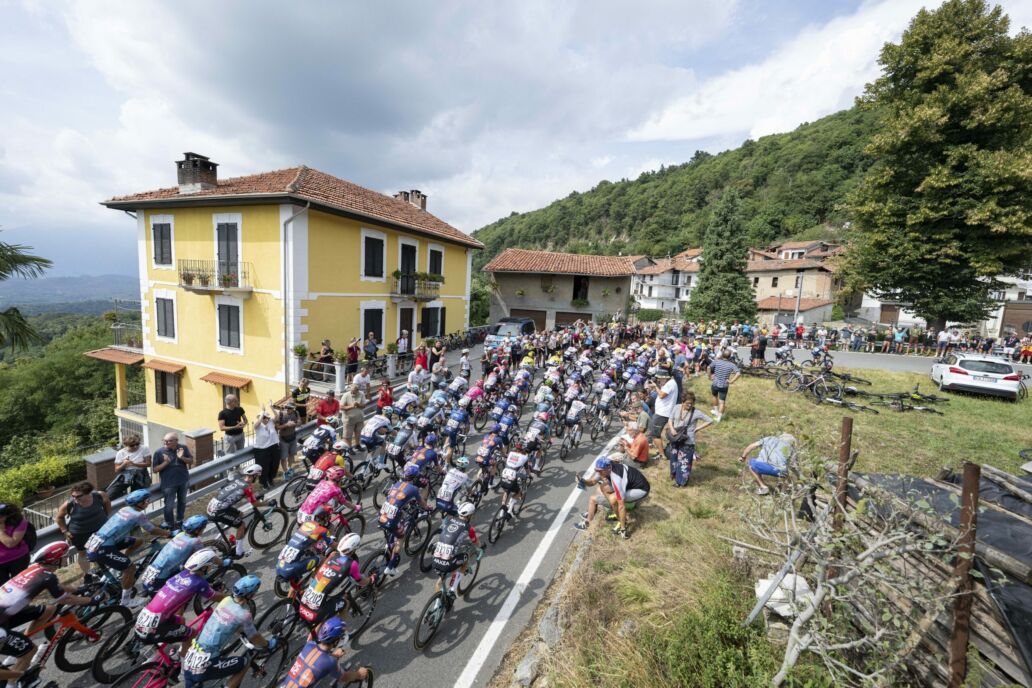
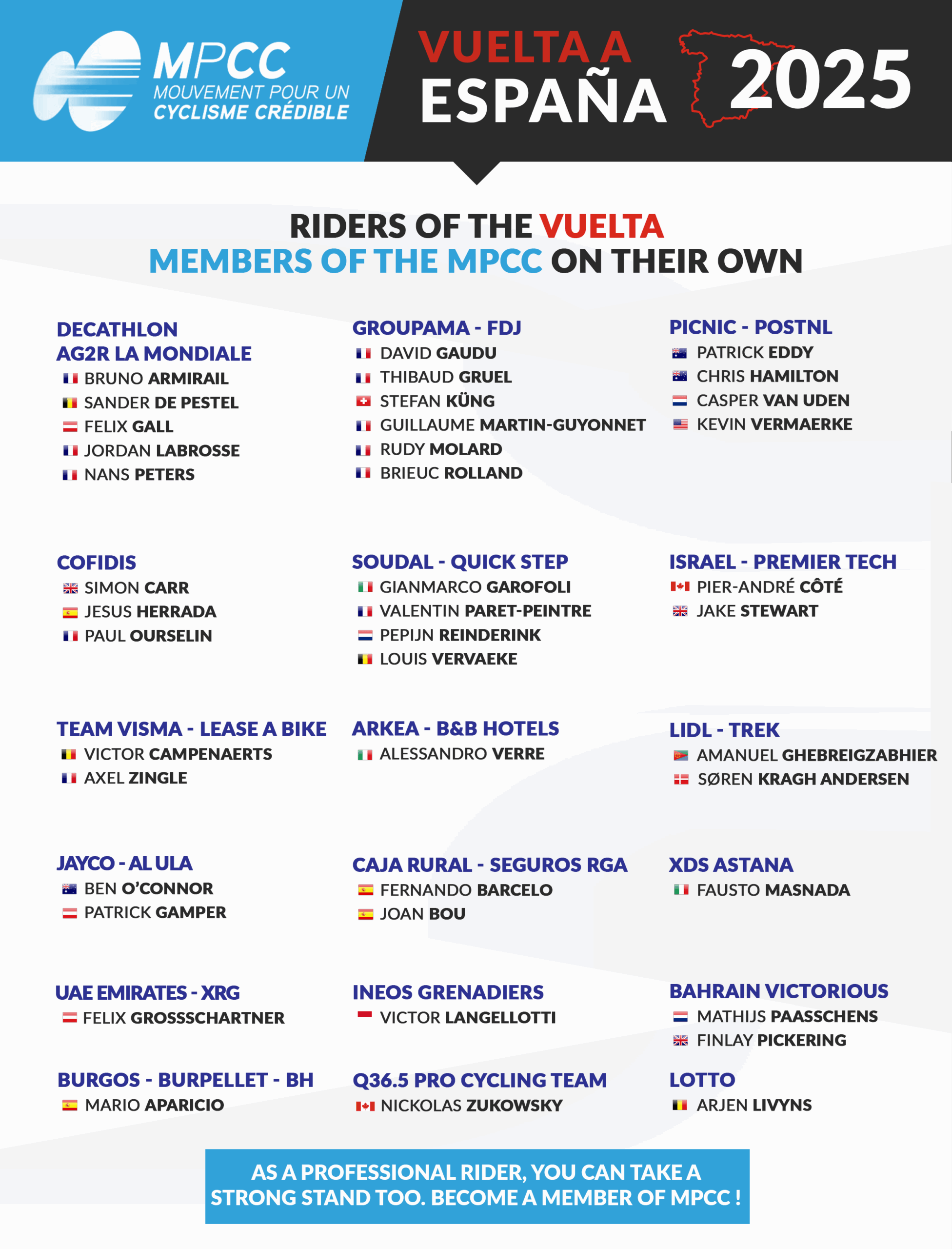
At the start of the Tour of Spain, which began on Saturday, the MPCC had 41 individual member riders. This race is also an opportunity to highlight the efforts made by member teams over the years in the fight against doping.
Starting with its female counterpart in mid-May, the grand tour season is currently concluding with the men's Vuelta, which started on Saturday in Italy. The Vuelta is an opportunity to give credit to our four MPCC member teams from the Iberian Peninsula, which have been committed to credible cycling for several years. However, when our movement was established in 2007, Spanish cycling was going through one of the worst crisis in its history, following Operacion Puerto. A rethink was necessary for Spain, a stronghold of international cycling, to put an end to all the excesses committed and to survive.
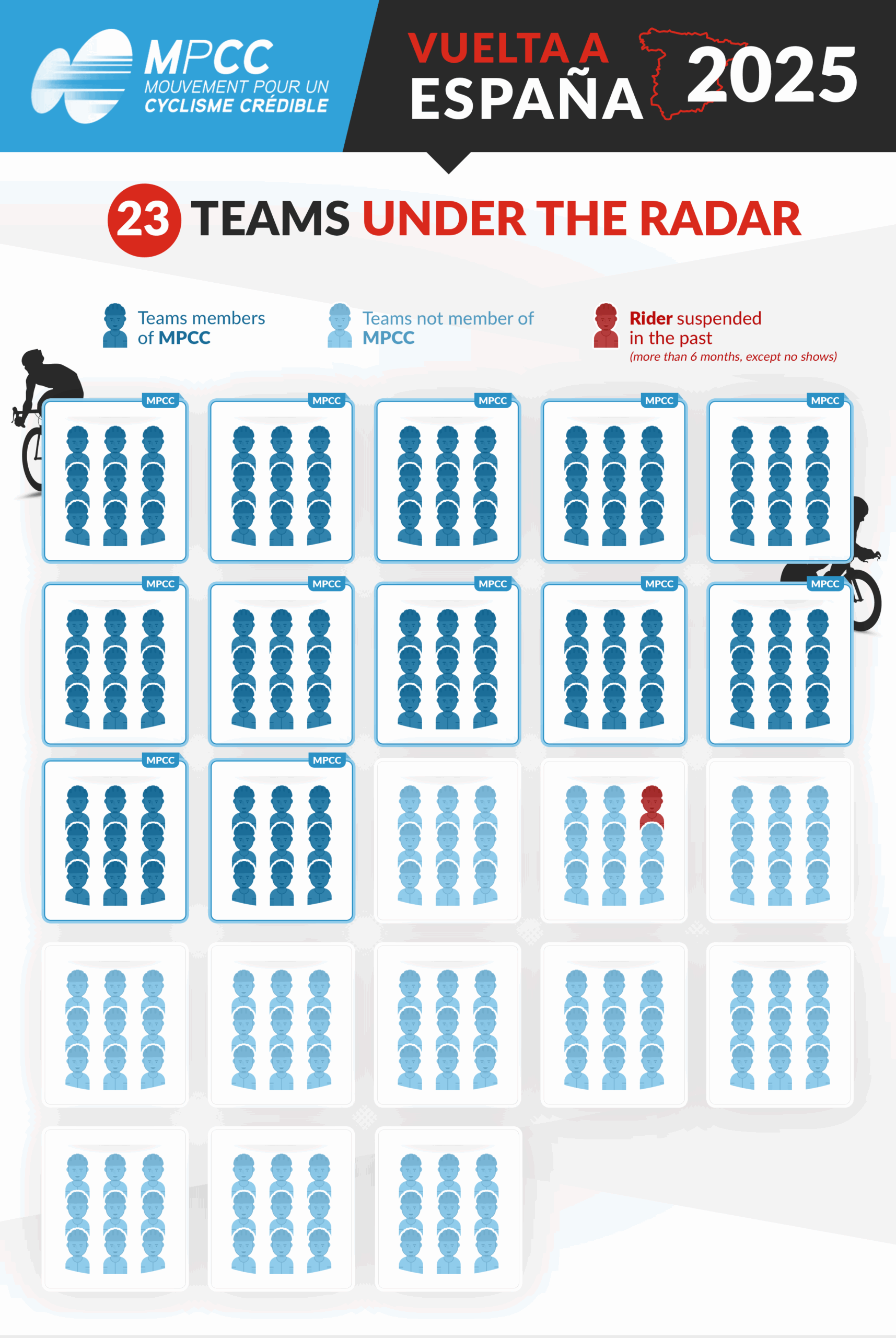
In order to make this challenge possible, it was necessary to be actively involved in the fight against doping. This is the very essence of the MPCC's commitment. Today, all those involved in our sport, whether managers, riders or technical staff, are invited to continue this fight against cheating, for the credibility of cycling. As a result, 41 of the 184 riders who started the Vuelta are individual members of the MPCC. They compete in 18 of the 23 teams taking part in the race, as was the case in the last Tour de France. This figure reflects the diversity of positions taken by riders within the peloton and reminds everyone that the membership is voluntary, based solely on the rider's free will.
Being active in the fight against doping
However, only 12 of the 23 teams participating in the Tour of Spain are members of the MPCC : our seven World Tour teams and the five wild-card Pro Teams (Israel – Premier Tech, Q36.5 Pro Cycling Team, Lotto, Caja Rural – Seguros RGA and Burgos - Burpellet – BH). In addition, a rider who has been suspended for at least six months in the past is also participating in the race for a team that is not a member of our movement. Indeed, one of its fundamental rules is that a team must not hire a rider who has been suspended for at least six months until two years after the suspension. The rider in question was recently sanctioned and would therefore not have been able to ride with one of our member teams.
This fact shows how far we still have to go before the values upheld by the MPCC are shared by the majority. Nevertheless, we are pleased to see these riders and member teams formally taking a clear stance against doping and hope that other stakeholders in cycling will join us in the fight.
Commit to MPCC, join us
Be players in the fight against doping !
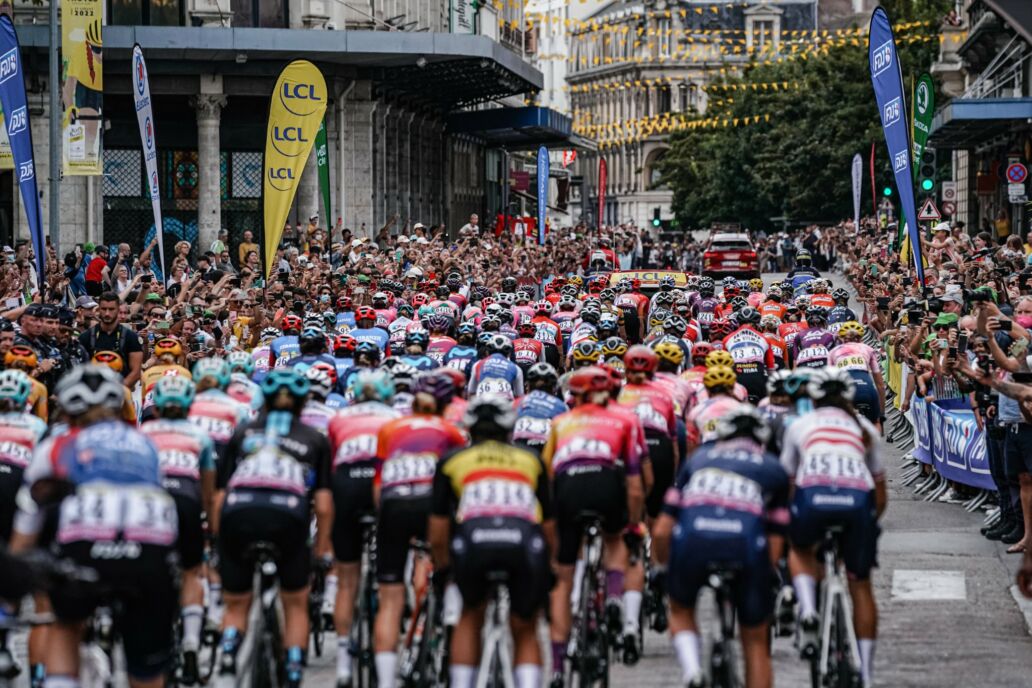
A Roundup of the Tour de France Femmes starters
With half of the participating teams being members of the MPCC, the Tour de France Femmes, one of the major races of the season, is an opportunity to consolidate women's cycling's commitment to anti-doping.
After two months of build up, the season of major stage races (Vuelta Femenina, Vuelta a Burgos, Tour of Britain, Tour of Switzerland, Giro d’Italia Women) is getting close to its end with the 4th Tour de France Femmes, which started on Saturday in Brittany. The main goal of the season for many riders brought together 154 competitors representing 22 teams and 26 nationalities at the start.
Still in its early stages of development among the general public, women's cycling is gradually trying to write its finest hours, such as the epic duel between Demi Vollering and Katarzyna Niewiadoma on the slopes of L’Alpe-d'Huez in 2024. In addition to putting on a good show, those involved on the field must also commit to the fight against doping, for fair and clean sport.
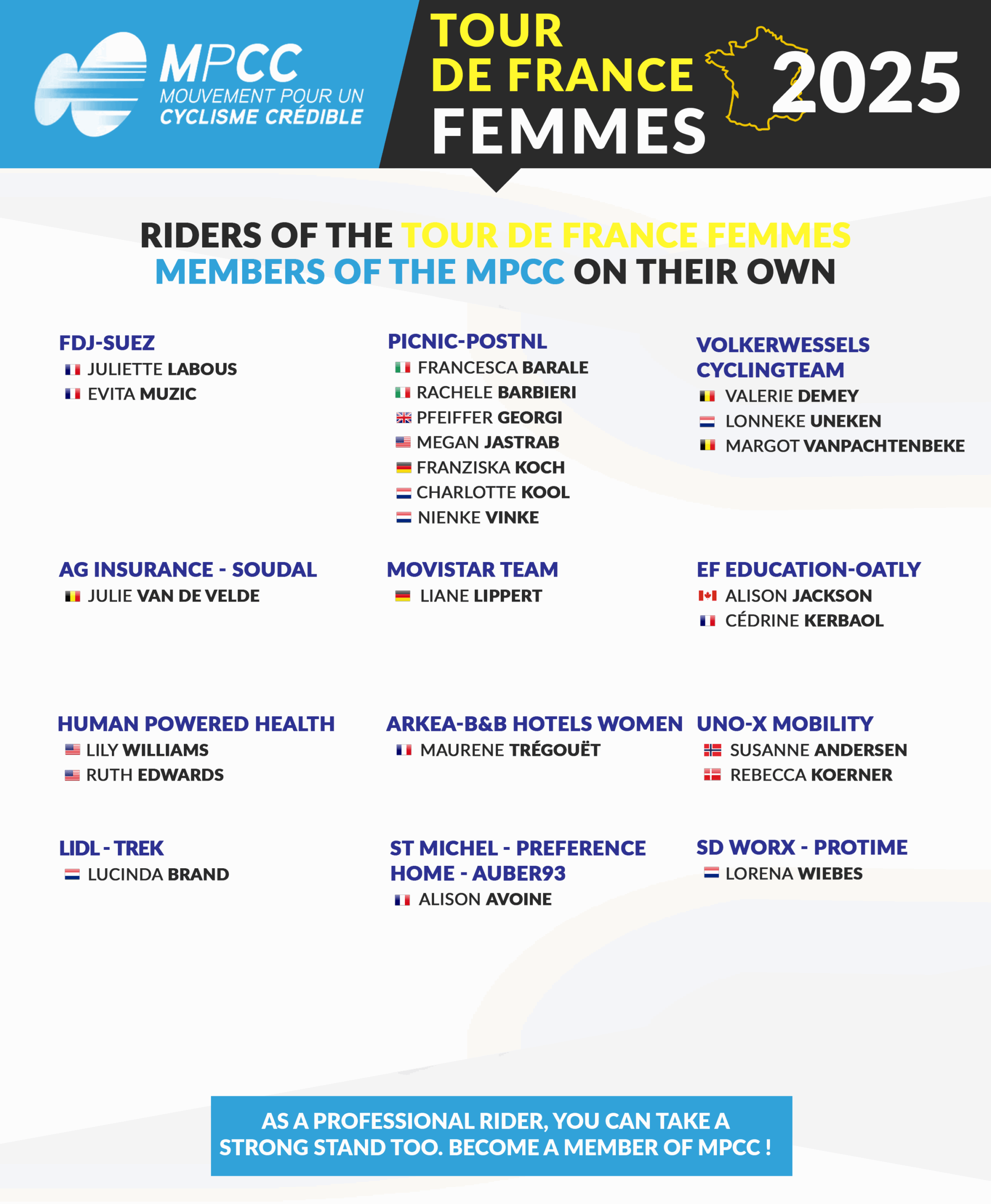
In this Tour de France, 24 riders, or just over 15% of the starters, are members of the MPCC on their own. Half of the participating teams (11/22) are also members of our movement. While the MPCC is pleased to see that all teams in the new Women's Pro Team division have joined, we hope that other teams, World Teams and Continental teams, will realise the need to be active in the fight against doping. Despite the fact that relatively few doping cases have come to light in the professional women's sphere in recent years, the latter should not believe itself to be immune to this scourge.
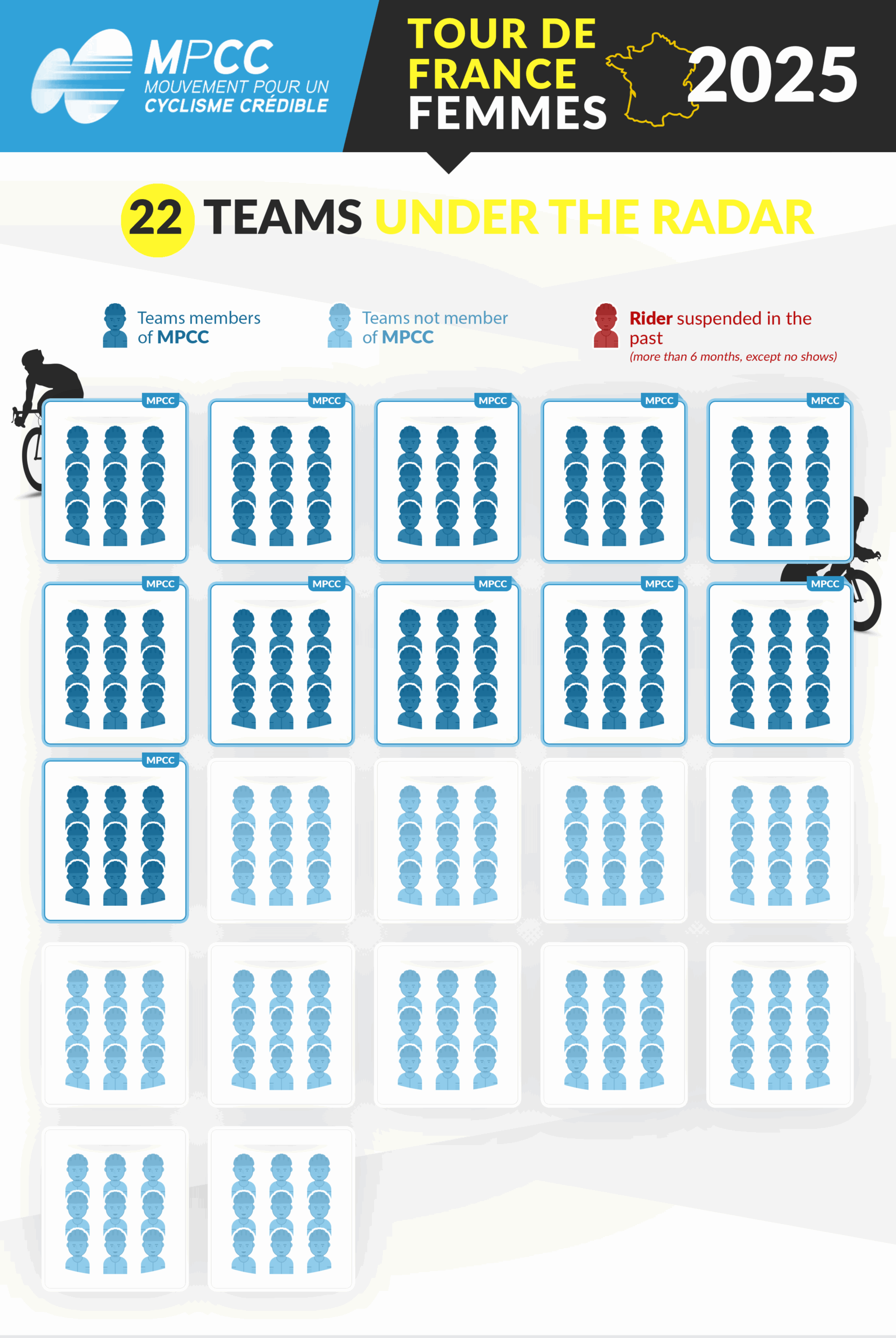
Indeed, unlike their male counterparts in the Tour de France, no female rider, within the starting field, have ever been sanctioned for a positive doping test and suspended for at least six months. Nevertheless, the MPCC has always wanted to keep the light on about doping issues. It is therefore necessary for as many stakeholders as possible to make a formal commitment against it and ensuring that our sport remains credible.
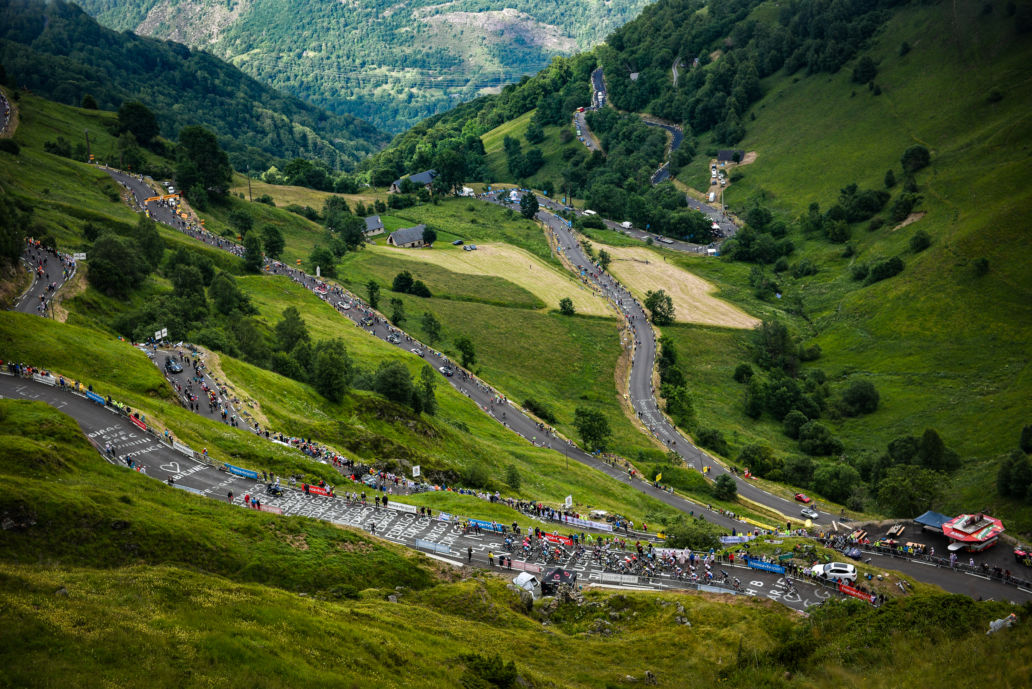
Tour de France : A record number of MPCC riders
At the start of the 112th Tour de France a week ago, the MPCC attracted a record number of individual rider members. Our movement hopes that other players in our sport will follow suit to strengthen the fight against doping.
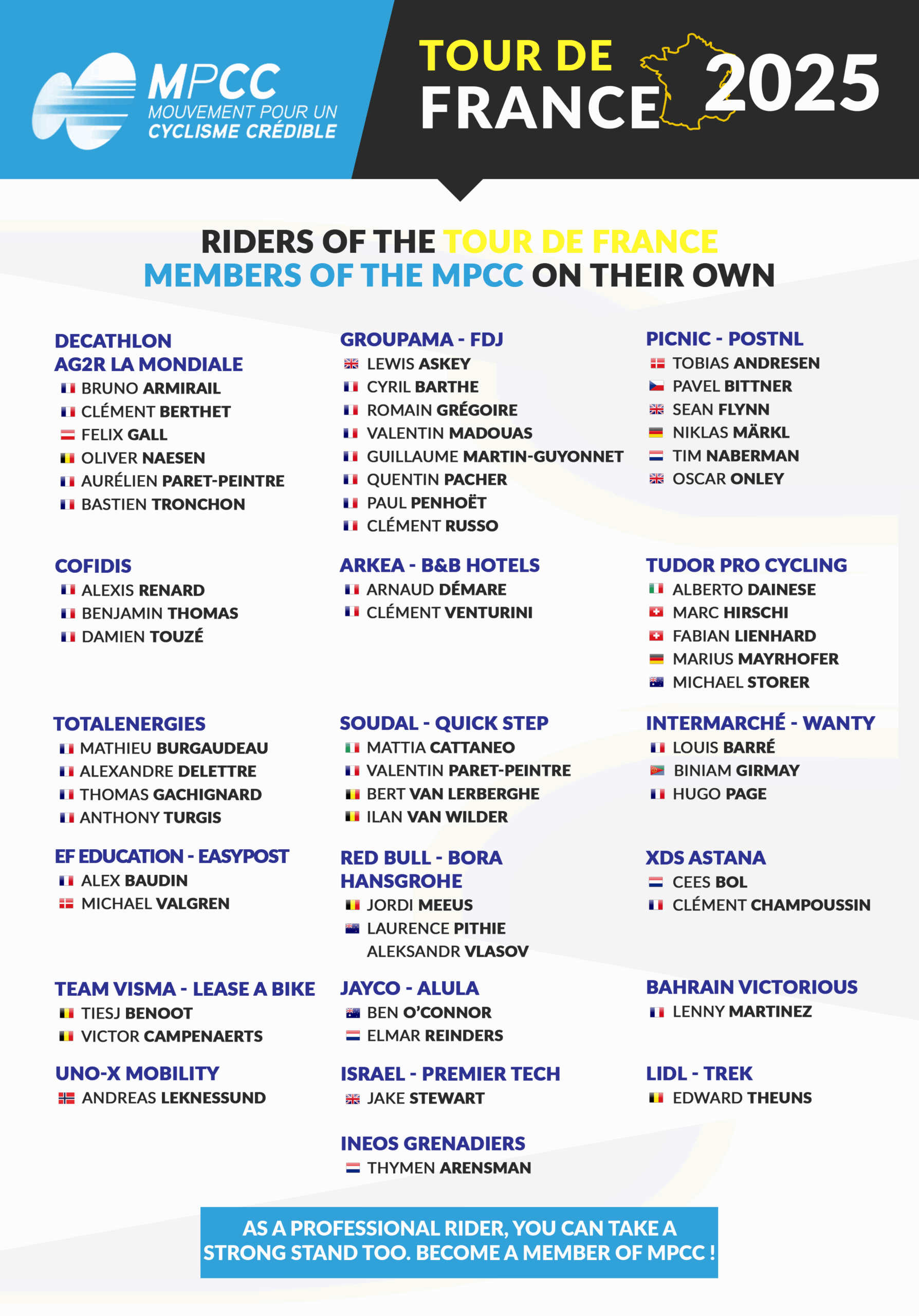
The highlight of the season, the Tour de France, kicked off around ten days ago with the largest pool of MPCC riders for three years. At the big start from Lille, 57 out of the 184 starting riders began the race as members of our movement. By way of example, the whole Groupama-FDJ squad has its members committed to the MPCC on an individual basis, and six Tour de France teams have at least half of their starting line-up engaged against doping, a fact that we welcome.
In total, these 57 riders represented 14 nationalities and 19 of the 23 starting teams. These figures testify to the diversity of the peloton and the commitment of the riders, who are universally aware of the fight against doping. They are also a reminder of the spirit of the MPCC, whose membership is based on voluntary participation. The fight against cheating is not just a specifically French issue, but affects all lovers and professionals of our sport, so that it remains an example in competition.
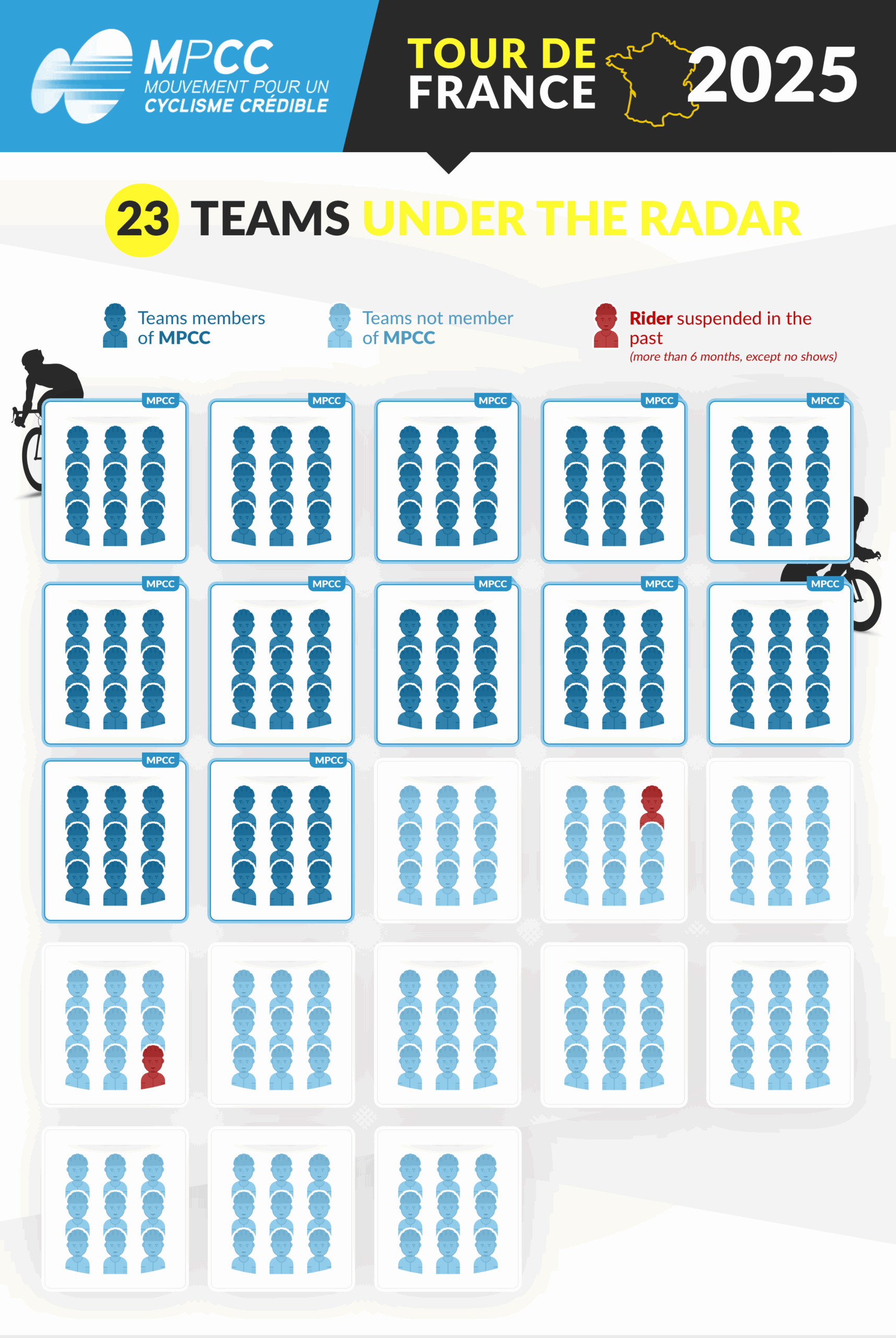
 Despite this, two riders who had been suspended in the past for an anti-doping rule violation and who had served a minimum six-month ban took part in this Tour de France. However, these riders do not belong to MPCC teams, which abide by one of our main rules : « not to hire any rider tested positive and suspended for more than six months in the two years following its suspension ». Only half of the participating teams - the 7 World Tour teams that are members of the movement and the 5 invited Pro Teams - chose to share our commitment to more credible cycling, a sign of how far we still have to go.
Alongside the riders and the teams, we would also like to emphasize the responsibility and weight that race organisers such as Amaury Sport Organisation (ASO) can shoulder. ASO is doing its part by only granting wildcards to the Tour de France if the team is a member of the MPCC. This is a step that other organisers could follow in the future, and would illustrate the unity of the various stakeholders in cycling in the face of doping. Because the battle against this scourge will only be won by remaining active in the fight.
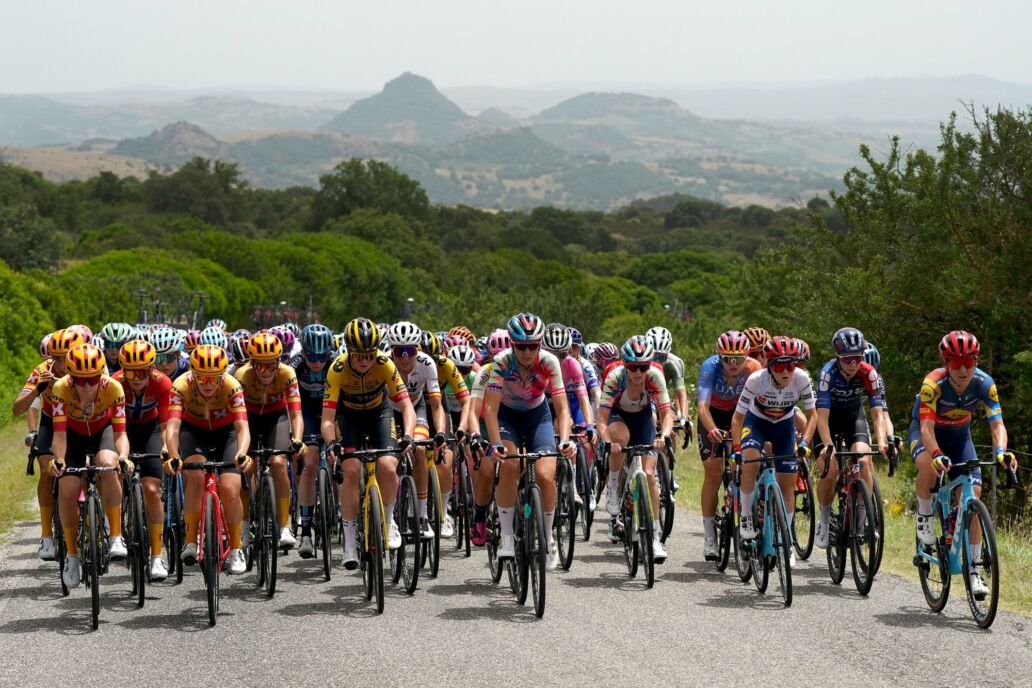
Giro d'Italia Women : being active in the fight against doping
Thanks to the actions of the UCI and numerous race organizers, women's professional cycling has grown exponentially over the past decade, and has undergone significant development, so that all female cyclists can express their talents on the road and throughout the season, just like their male colleagues.
The MPCC welcomes this state of affairs, but our movement also hopes that women's cycling entities will make a strong commitment to doping. Since the beginning of the year and a reform of the structure of international professional cycling, the MPCC has been pleased to gather all the teams from the Pro Team level (7 in total) and 4 of the 15 Women's World Teams.
Keeping the light on
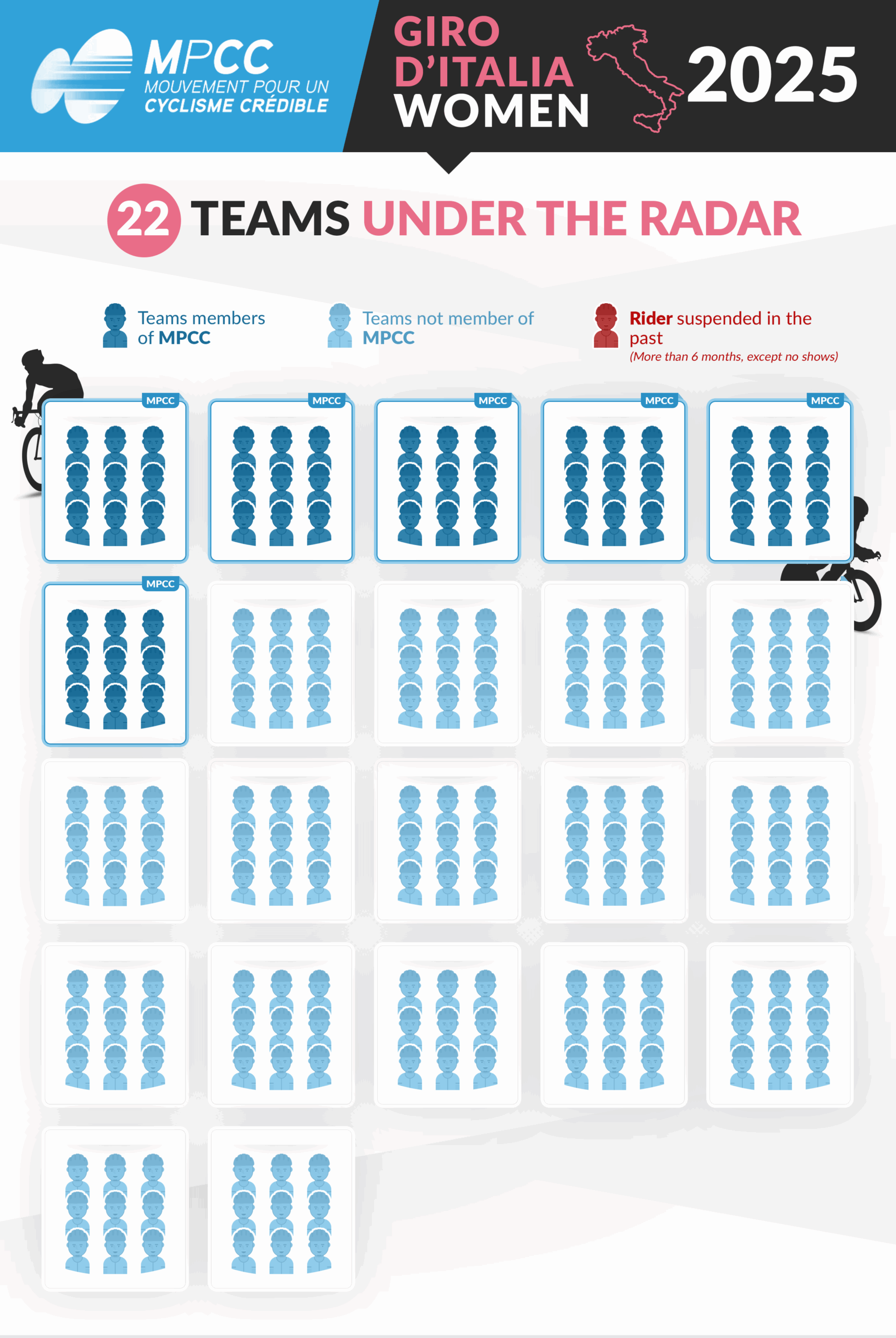
While the stage race season has been in full swing for two months now, with the launch of the Tour of Spain, the Giro d’Italia Women punctuates this build-up to the main target for many female racers: the Tour de France Femmes, to be held from July 26 to August 3. Setting off from Bergamo on Sunday, the Giro features 15 MPCC members on their own, including sprinter Lorena Wiebes and stage race specialists Juliette Labous and Evita Muzic.
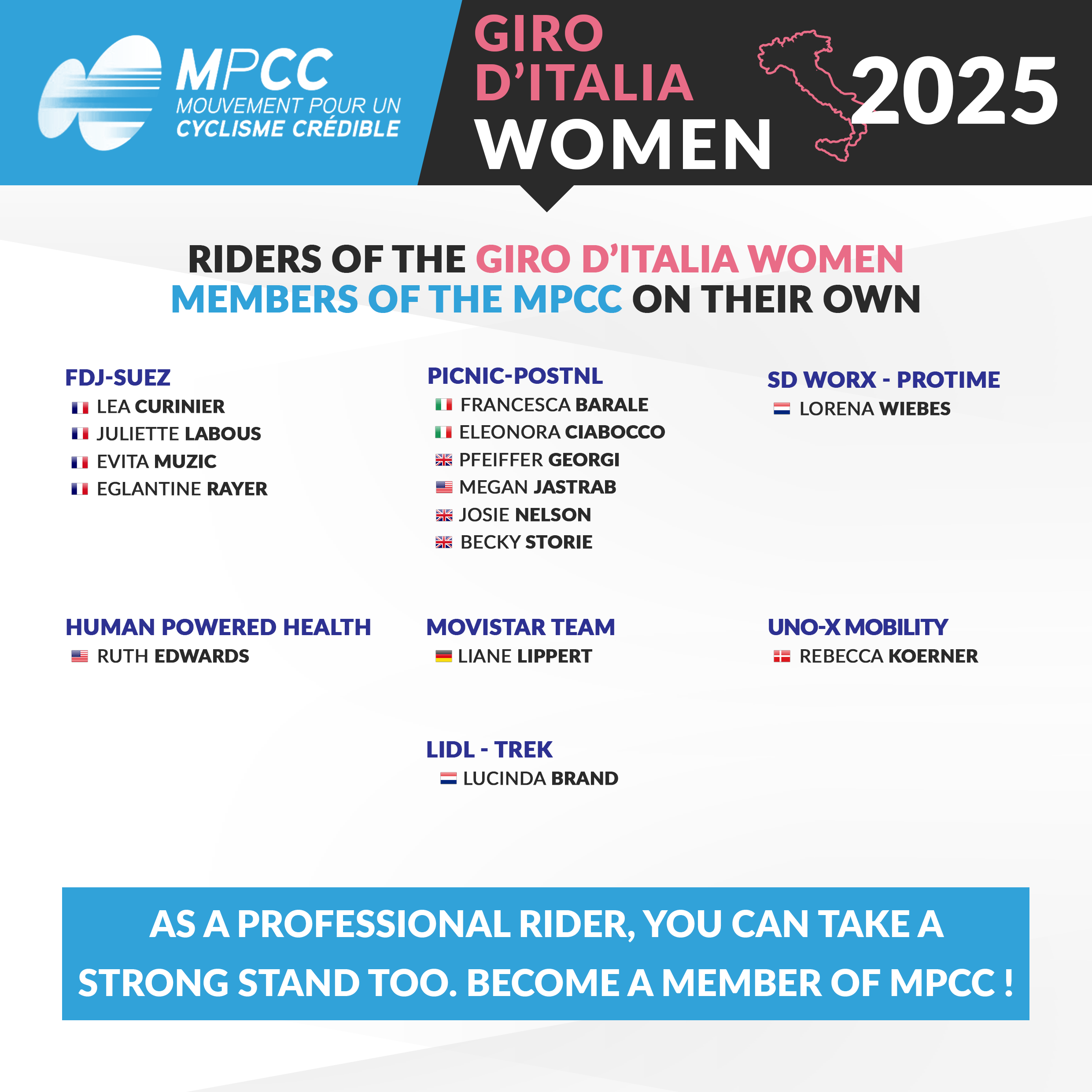
Only 6 out of the 22 participating teams are also members of our movement. That's not enough. We therefore encourage all other runners and non-member teams to become involved in the fight against doping by joining us, and thus consolidate an ongoing battle for the credibility of their sport.
Commit to MPCC, join us
Be players in the fight against doping !
Credibility figures : Transparency is at stake
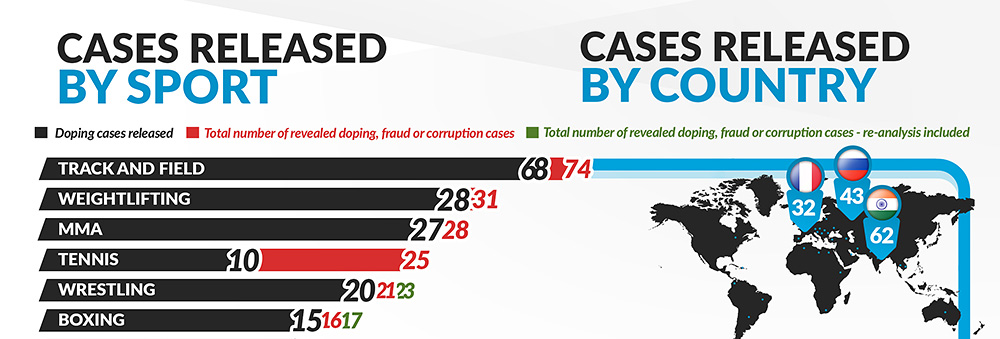
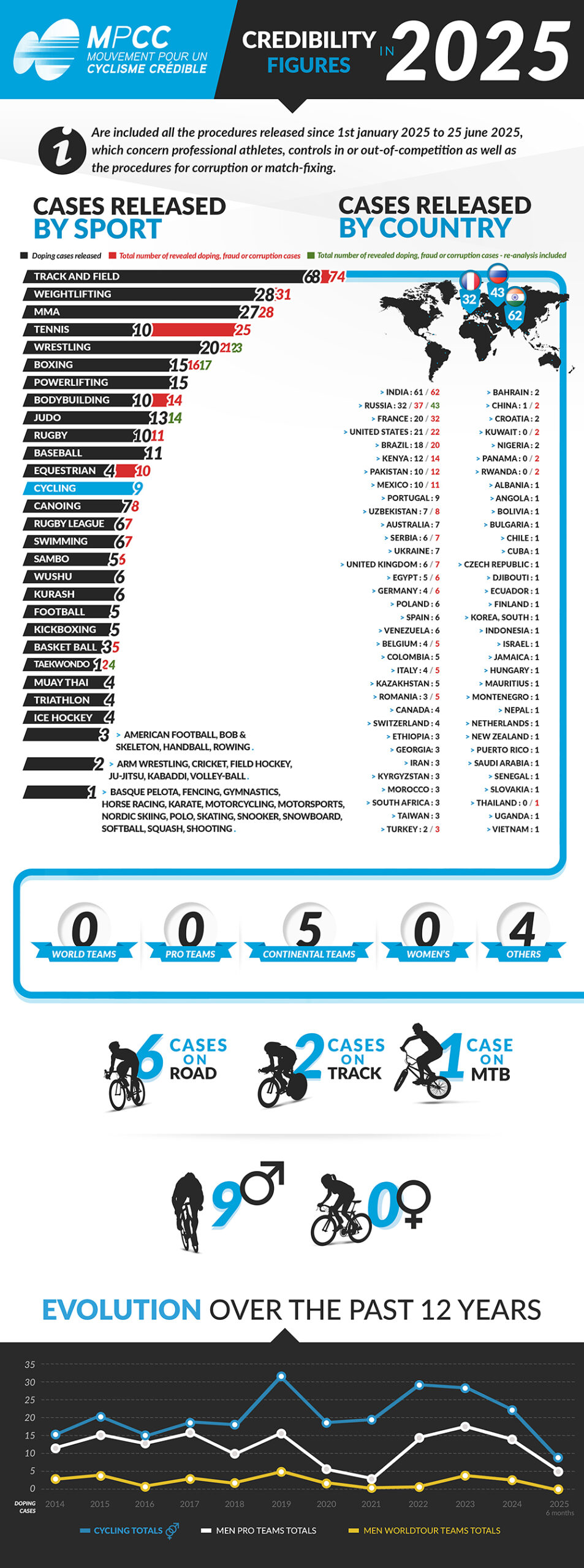
At the end of the second quarter, the MPCC has taken notice of a relatively low number of doping cases in cycling, the 13th highest among the sports listed (9 cases in 2025). Over and above the situation in our sport, a number of recent events have raised the question of transparency.
The tension between the World Anti-Doping Agency (WADA) and its American counterpart (USADA) has not yet subsided, as the latter is reluctant to pay its share of WADA's 2025 operating budget. For the past two years, USADA’s CEO Travis Tygart has been at open war with the newly re-elected President of the world anti-doping regulator, Witold Banka. At issue are the agency's alleged ‘lack of transparency’, its governance, which is deemed undemocratic, and its handling of the Chinese swimmers* case, which erupted in the spring of 2024, just a few weeks before the Olympic Games. So that the word war between the two leaders are damaging the image of sport and the world of anti-doping.
The recent holding of the « Enhanced Games » (May 21-24), games on the fringes of the Olympic movement that authorise performance-enhancing products, and a new offensive against WADA led by US senators are a reminder that it remains difficult to gather around the fight against doping if political considerations threaten the fight for fair and clean sport. The latter can only be ensured if all the stakeholders involved play the transparency card, an idea repeated time and again by USADA when it raises its complaints with WADA.
The agency is struggling to provide fast and effective answers on ban of certain medical methods that border on doping, such as carbon monoxide inhalation (banned by the UCI since February 1), for all sports. Other bans on substances such as Tapentadol, an opioid more powerful than Tramadol and used by some teams, have still not been imposed yet. Finally, latest press investigations are also leading us to be vigilant about microdoses, where major progress needs to be made in their detection.
Keeping the light on
TRANSPARENCY IS THE WATCHWORD IN ANTI-DOPING POLICIES
Above all, it is thanks to transparency, on the part of honest athletes and testing bodies (national agencies, laboratories, federations, etc.) that doping can be contained. It is also thanks to transparency that the MPCC is able to regularly assess the state of play in the fight against doping through the Credibility Figures. For example, some agencies and international federations do not make public the names of athletes accused of doping, most of the time for legal reasons and particularly concerning the protection of personal data.
This limit has been further illustrated by the publication of an article by Hajo Seppelt, a journalist specialized in the world of anti-doping, establishing that around a hundred athletes sanctioned by the German anti-doping agency (NADO Germany) have never had their names made public since 2020, largely because of the protection of their anonymity. In this way, NADO Germany is trying to protect itself from a large number of legal actions that would jeopardise its finances, but this has not prevented it from making public the cases of athletes Sofia and Sara Benfarès in 2024, and much more recently the case of canoeist Martin Hiller, world champion in 2022. WADA also emphasises in the World Code, a regulation imposed on all its signatories including Germany, that public disclosure of an athlete's name is possible if the athlete is informed.
Reveal – Blow the whistle
ATHLETICS ON THE FRONT LINE
On the other hand, an organization as the AIU (Athletics Integrity Unit), the authority in charge of the fight against doping in athletics, works tirelessly on behalf of its sport. By way of example, the International Powerlifting Federation (IPF) has not reported any case for over six months. It is a proof that the targets of harmonising the rules and increasing transparency are still a work in progress.
Thus in the first half of the year, the AIU, national anti-doping agencies and the press revealed 74 doping cases in athletics, which remains by far the most affected sport. Among those implicated in the second quarter were world silver medalist in the long and triple jump Maryna Bekh-Romanchuk, from Ukraine, and Benard Kibet Koech, the 10-mile world record holder, from Kenya. The growing number of cases in MMA, which we have already highlighted in our previous reports, is now the third most cited sport, with 28 cases revealed in the first half of 2025. The AFLD (French Anti-Doping Agency) had already identified this trend in this sport a year ago, when it published its annual activity report.
France is also the 3rd most mentioned country for doping cases and sports fraud, packed in 4 sports : athletics, rugby, tennis (cases of corruption and/or match-fixing) and equestrian sports. However, France remains far behind Russia and India, whose growing number of cases, particularly in athletics, is raising questions.
BACK TO NORMAL IN CYCLING ?
Despite growing suspicions of cheating in recent years, only 9 cases of doping in cycling came to light after the first six months of the year. A year after the Andrea Piccolo case, no World Tour rider has been named. And at Pro Team level, it has to go back to 2022 to see a rider quoted in a doping case. However, two Continental riders tested positive for the second quarter.
Professional cycling has definitely paid a high price in the past and has therefore had to play the transparency card to weather the various storms it has experienced. Today, the MPCC is encouraging all the stakeholders in our sport to take their part in the fight against doping, whether they are riders, managers, race organisers, clubs or fans. Because it is by working together that cheating will be defeated.
*On 20 April 2024, the American daily newspaper The New York Times and the German television channel ARD published an investigation according to which 23 chinese swimmers had tested positive for trimetazidine (TMZ) during a national meeting (31 December 2020 - 3 January 2021), just a few months before the Tokyo Olympic Games (2021). CHINADA, the Chinese anti-doping agency, had not suspended any athletes, justifying its decision by the fact that the swimmers had been victims of food contamination.
Commit to MPCC, join us
Be players in the fight against doping !

Giro d'Italia : A position to be consolidated
The MPCC uses figures to illustrate the commitment of those involved in cycling to the fight against doping, in particular by publishing the identities of the riders who are individual members at the start of the three grand tours. The aim is to encourage those who are guided by a spirit of responsibility to join us.
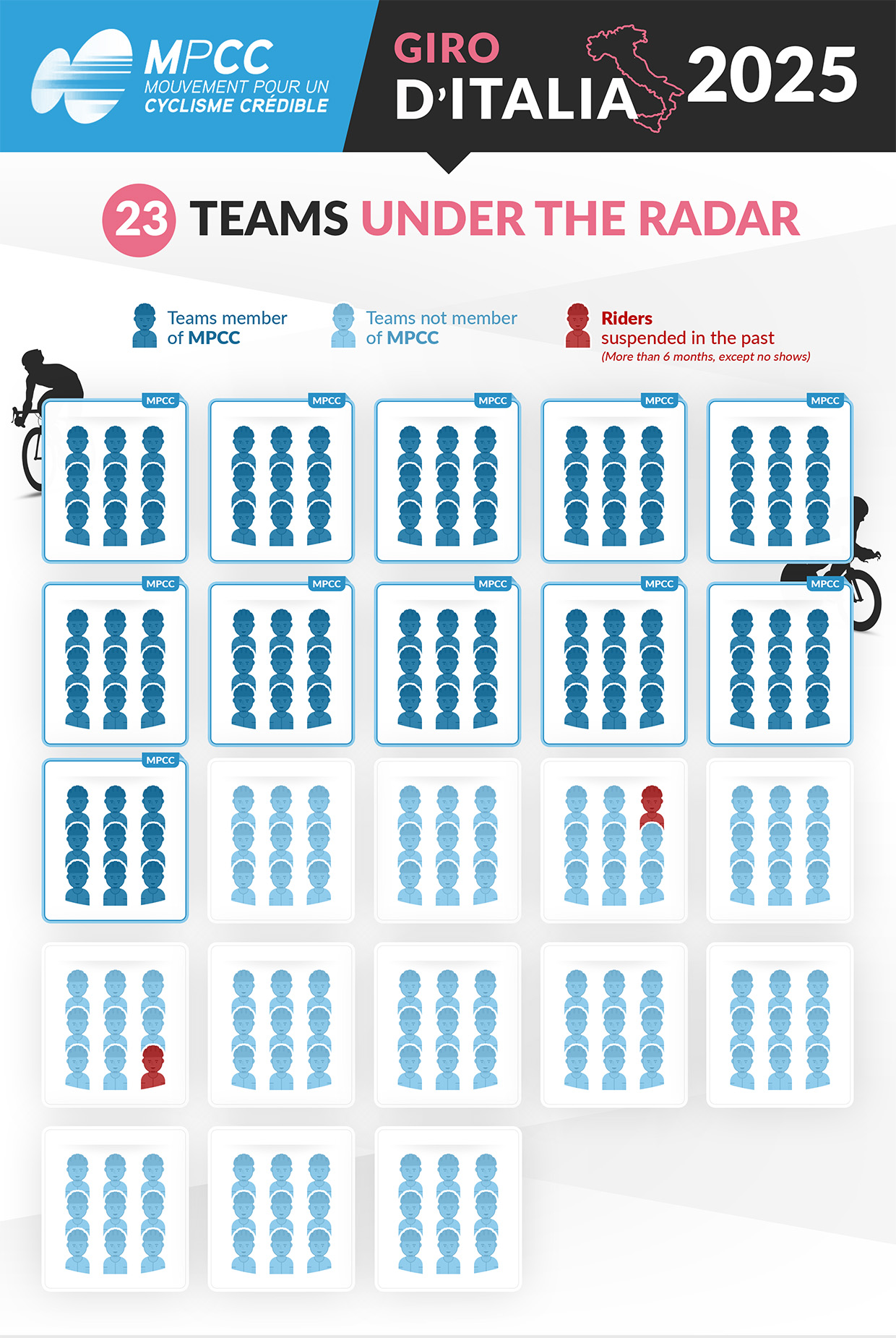
On Friday, the 108th men's Giro d'Italia set off from Albania for three weeks of intense racing that is likely to be wide open in the absence of the two big names in this type of event : defending champion Tadej Pogaçar and two-time Tour de France winner Jonas Vingegaard. At the start, the MPCC gathers 43 individual members of our movement, representing 15 of the 23 participating teams and 12 nationalities.
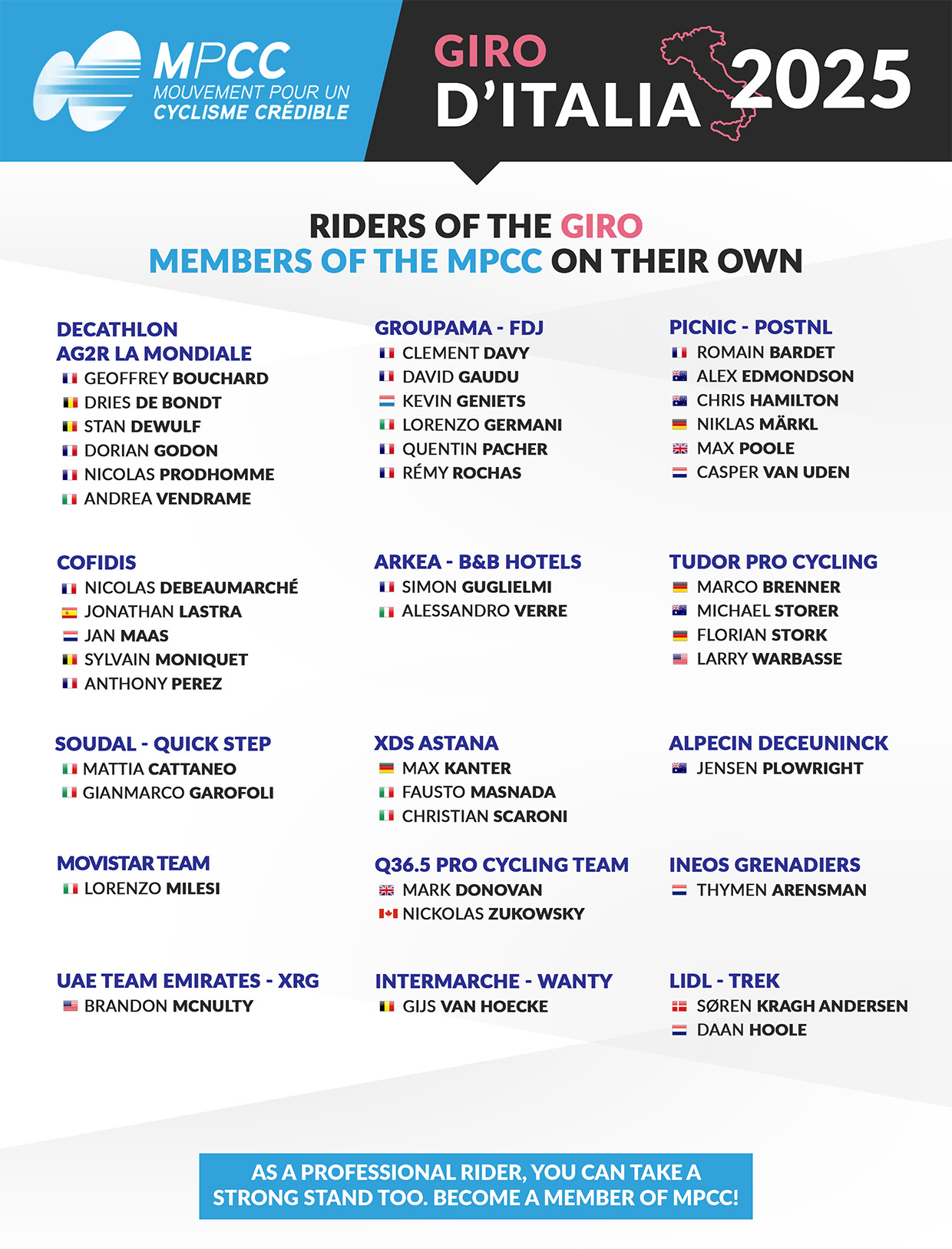
RCS Sport, the company ruling the Giro, has chosen to invite the only ProTeam that is not yet a member of the MPCC. We therefore encourage this team to join us, as its membership would send out a strong signal of the commitment of sports entities to fight doping. Finally, two riders that started the Giro have served a suspension of more than six months in the past for an antidoping rule violation. They race for teams that are not members of the MPCC. We therefore hope that the MPCC member teams, and also non-members, will encourage other riders to join our ranks in order to strengthen our commitment to a sport that cares about their health, both physical and mental, and their integrity.
Cycling and the MPCC need riders and their teams
Having been involved in the fight against doping for almost two decades, the MPCC position is not a facade. At the time it was founded, our movement was operating in a very difficult environment, buffeted by doping scandals at the highest level of our sport. Since its inception, the MPCC has taken strong decisions to restore credibility, notably through the 10 fundamental rules adopted by all teams wishing to become members of our association (no hiring of a suspended rider two years after the end of the sanction, immediate withdrawal of a rider tested positive, etc.), but also through an extremely cautious attitude towards some performance-enhancing methods that border on legality.
The recent decisions taken by the MPCC and its member teams to warn against the use of ketones, pending the publication of a UCI impact assessment on the subject, and to reject the misuse of carbon monoxide illustrate the philosophy of our movement : "being active in the fight against doping". We therefore need the riders and their teams to defend credible cycling.
Commit to MPCC, join us
Be players in the fight against doping !
Vuelta Femenina : Riders and teams should take a stance !
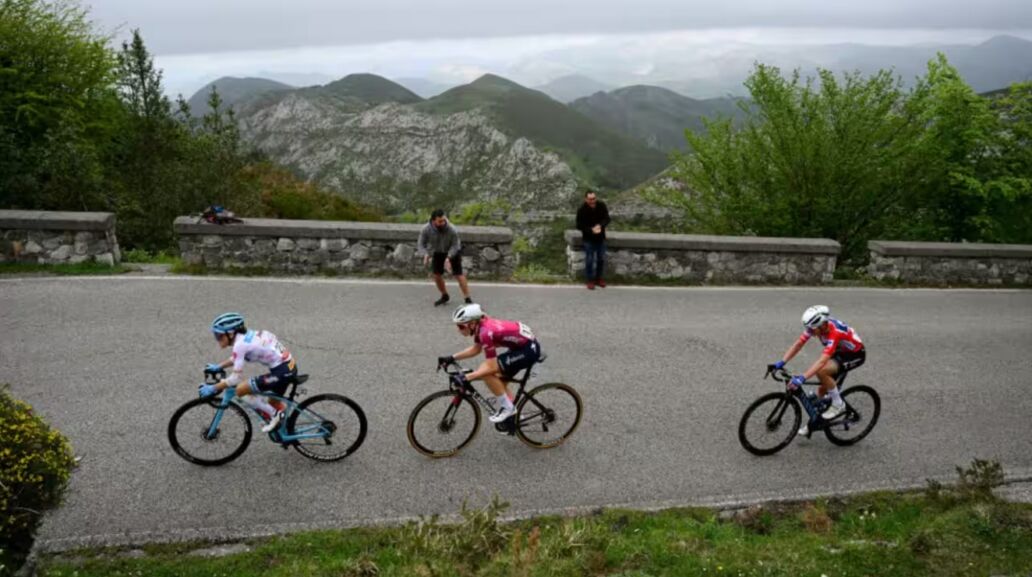
Part of the Women's World Tour calendar since 2018, the Vuelta Femenina will kick off the season for major stage races on Sunday, culminating in the Tour de France Femmes at the end of July. The MPCC is committed to ensuring that men's cycling is credible, and also insists that women's cycling takes the same path, involved in the fight against doping. Our movement is delighted by the ever-increasing visibility and popularity of women cyclists, and hopes that they will also make a commitment to their credibility in an increasingly competitive circuit.
The election at the end of 2024 of Emily Brammeier (Team Picnic-POSTNL) as vice-president of the MPCC, dedicated to women's cycling, is a step in this direction. Emily Brammeier is the point of contact for all those, whether racers or sports managers, and all those, particularly in the support teams, who wish to join us in the fight against doping.
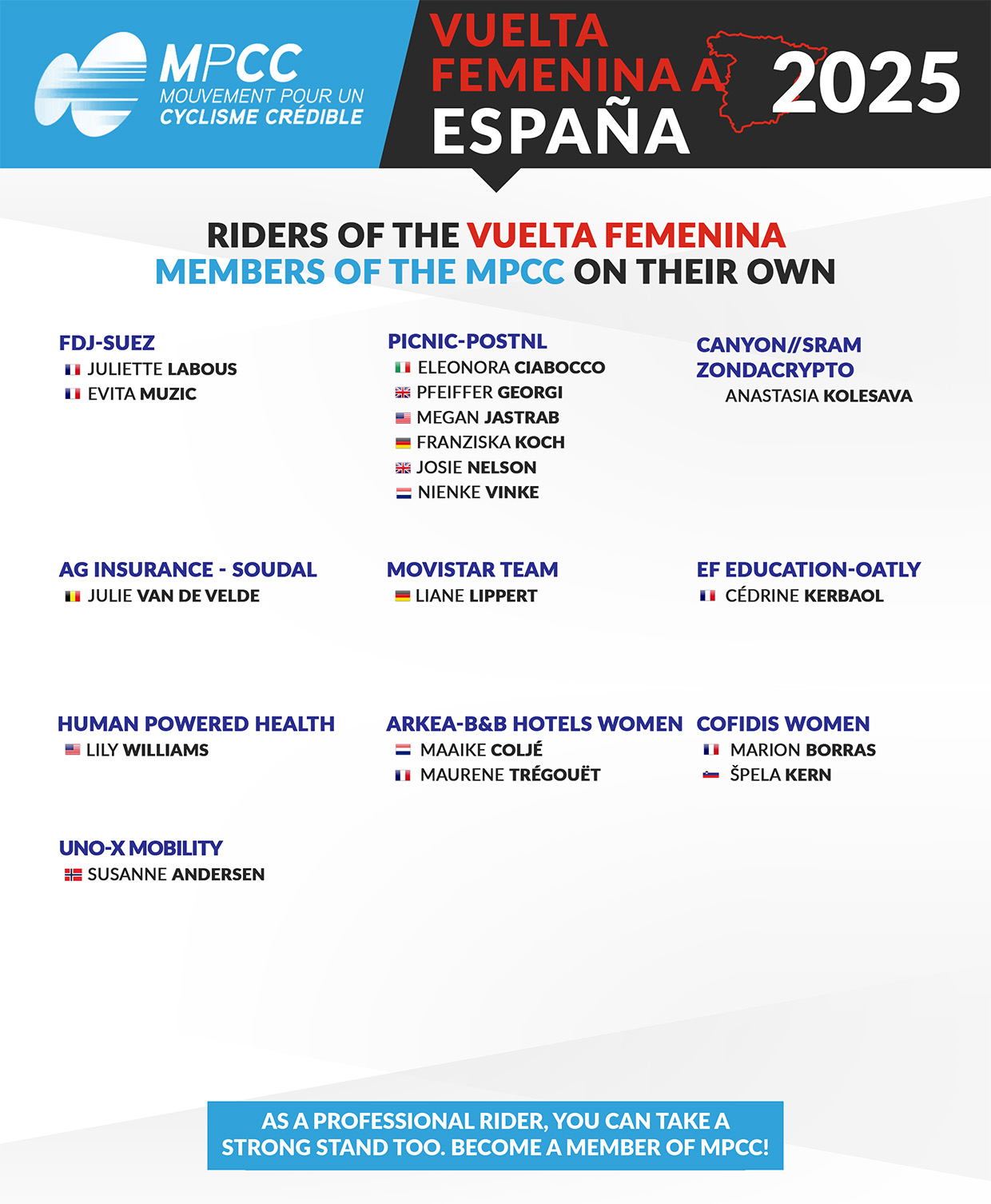 Open on a voluntary basis to both individual riders and teams, membership of the MPCC is a bellwether of this commitment to fighting the scourge of doping. Before the start of the Vuelta Femenina, our movement had 18 individual members participating in the race and 10 teams out of the 21.
Some MPCC members, such as stage race specialist Juliette Labous and Tour de France Femmes stage winner Liane Lippert, are among the 147 starters. We encourage other riders from MPCC and non-MPCC teams to join us and « keep the lights on ».
Commit to MPCC, join us
Be players in the fight against doping !
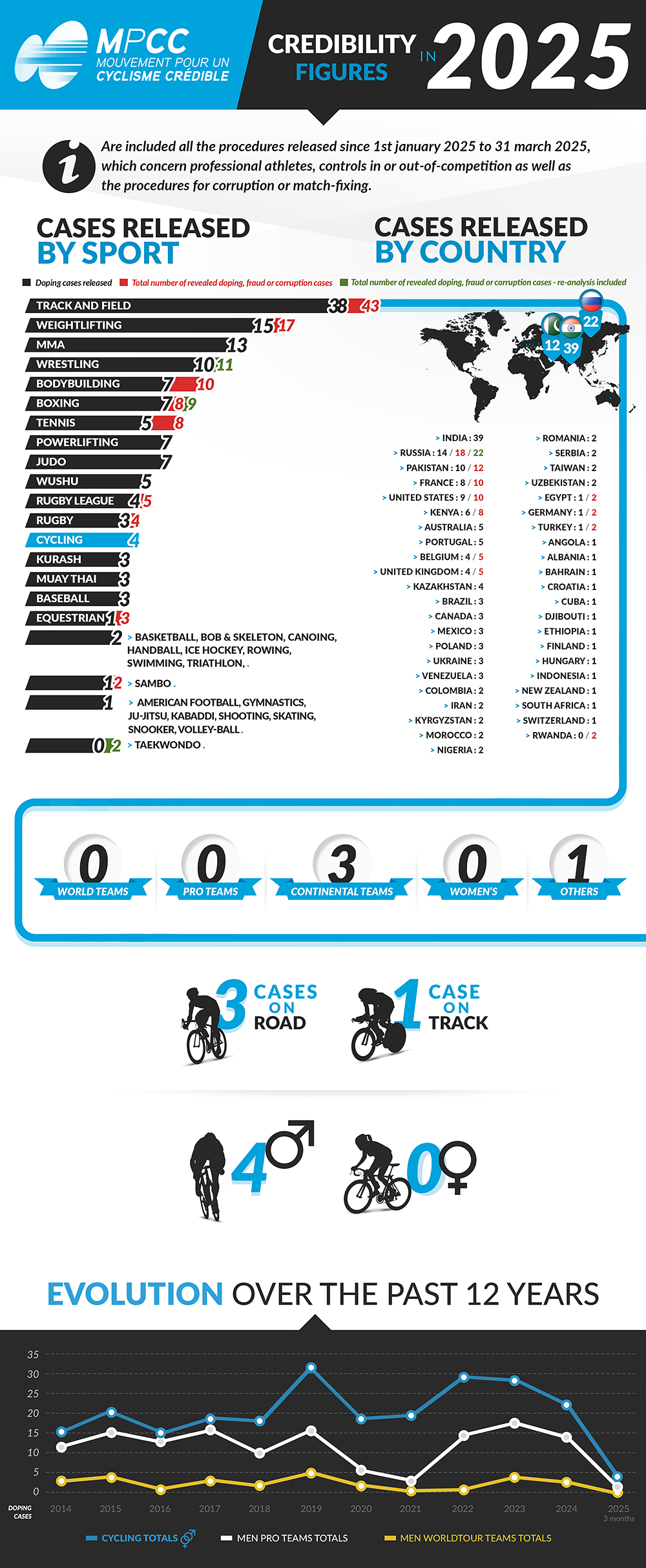
CREDIBILITY FIGURES : STAYING THE COURSE AGAINST DOPING
At the end of the first quarter, the MPCC found out only 4 cases of doping in professional cycling, most of which were detected at Continental level. Faced with new doping techniques, our movement also hopes that all the stakeholders in our sport will remain active in the fight against this scourge.
After an eventful 2024 for the anti-doping stakeholders, from the positive tests of world tennis leaders Jannik Sinner and Iga Swiatek to the political tensions between the World Anti-Doping Agency (WADA) and its American counterpart (USADA), the 2025 first quarter have witnessed a relative calm. WADA is in the midst of an elective process for its presidency - Poland's Witold Banka is the favourite to succeed himself - and at the same time has to deal with the US administration's refusal to pay its share (3.6 million $) of the governing body's budget, which was around 52 million $ in 2024. Even though the anti-doping control body insists that its work will not be jeopardised, this tension reflects the difficulty of maintaining unity in a battle that is key to the credibility of sport.
On its side, the International Olympic Committee (IOC) has elected a woman, for the first time in its history, coming from Africa : the former swimmer olympic champion Kirsty Coventry. With her background as a top-level athlete, the Zimbabwean had already made a commitment to athletes and against doping by joining the IOC Athletes' Commission before becoming its Chair between 2018 and 2023. The youngest president in the institution's history has often spoken of responsibility, particularly towards young athletes. ‘’It's so important to have those conversations with young athletes to say 'you are good enough by yourself, you don't need to take extra’ ’’, she said a few months after winning the presidency of the Athletes' Commission.
PROVIDING THE MEANS AGAINST DOPING
The election of Kirsty Coventry as head of the IOC may therefore raise hopes of a change in the world of sport : for the benefit of women athletes, in a still very male-dominated field, for young people, with the aim of practising sport in a healthy way, whatever the level, but also for the African continent, where sport is a powerful fuel for social advancement and the promotion of countries through their champions.
Funding controls means playing a part in the fight against doping. Taking a stand on the physical and mental health of athletes, especially the youngest, is also being a player in the fight against doping. The MPCC has never ceased to do so since its foundation in 2007, and has maintained a constant state of vigilance by communicating frequently with the bodies that govern professional cycling (UCI, ITA, WADA, among others), by taking actions (cortisol tests at races) and by speaking out against doping.
Reveal - Blow the whistle
ONLY 4 DOPING CASES IN CYCLING
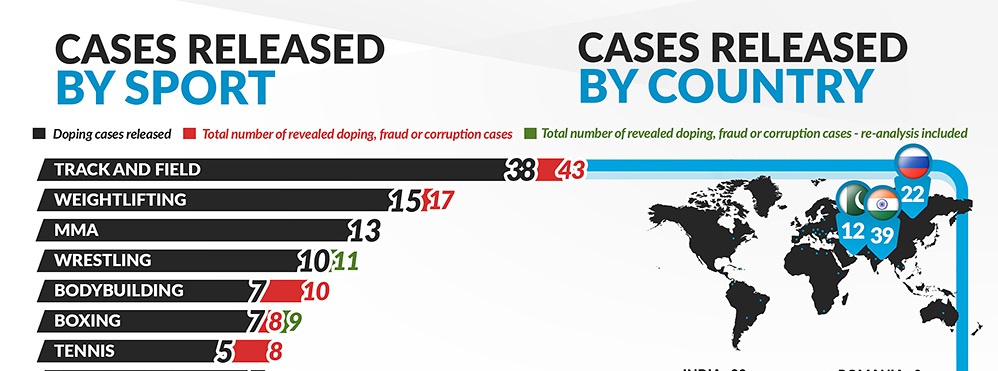
The Credibility Figures are some sort of this monitoring in cheating, not only in cycling but in sport in general. In the first quarter of the year, we identified more than 180 cases of doping and sporting fraud (doping control refusals, corruption of athletes or officials, etc.) reported in the press, by national anti-doping agencies and international federations. Nearly a quarter of these cases concerned athletics (43) and the first quarter of 2025 confirmed the growing importance of MMA (13). For cycling, only 4 cases were reported among professionals, 3 of which were linked to the establishment of a biological passport extended to Continental riders by the Portuguese Federation (UVP-FPC).
Keeping the light on
Within six months, the Adop - the Portuguese anti-doping agency - has already convicted six riders of doping, but most of the time well after the period in question, thus exposing the limits of the battle. This is a proof that the fight against doping must not stop, but rather be strengthened. In this respect, the MPCC was delighted with the UCI's reaction regarding the ban on carbon monoxide inhalation and now hopes that WADA will take over and extend this decision to all sports, considering the major health risk. Our movement also hopes that the ITA, which monitors most of the controls in our sport and has investigative powers, will look into these new doping methods and ensure that the teams comply with the UCI rule against the use of carbon monoxide.
Aware of these realities, those involved on the sports field - teams, riders, representatives, support staff and race organisers - must step up their commitment to the fight against doping and to the safety for riders, through preventive action and a responsible attitude and discourse. Those of us who are members of the MPCC should encourage our colleagues to join us, so that we can work towards greater credibility for our sport.