
General meeting of 10/22 : report
"I'M CLEAN !"
MPCC have known a radical turning point the last 12 months, as MPCC is now recognized as an interlocutor by all the stakeholders of the professional cycling. It is the first time that the MPCC General Assembly met in Paris with such a large number of members: 68 members at the end of this year, when there were only seven members in the previous year. The different cases of the past 15 years, especially the "Armstrong case", led some forty professional sports groups to join the rules of MPCC. After stating loud and clear in 2013: "Doping, that's enough," in 2014, our riders will communicate on the basis of a new message: "I'm clean" because the Movement is convinced that today, cycling became the sport of anti-doping !
"IT'S THE FRIST TIME IN SPORT THAT EVERY COMPONENTS OF CYCLING GATHERED IN A FORMAL WAY TO CONSIDER THE FUTURE IN A CREDIBLE MANNER" R. LEGEAY
In 2013, MPCC was open to other components of professional cycling: not only the organizers of cycling races but also the national federations and the sponsors, which number (higher to ten) now enables them to vote in General meeting. Thierry Huguenin, Head of Sponsorship at FDJ, notes : "It is not a coincidence to see many historical sponsors present in cycling for 15, 20 or 30 years (LCL Belgian national Lottery, Cofidis, FDJ, AG2R-La Mondiale, PMU ... joined by Argos Oil, Belisol, Endura, IAM, NetApp), being among the first sponsors getting involved with MPCC." Roger Legeay, President of MPCC, also welcomed the presence of several presidents of National Federation during this meeting: "It’s the first time in sport that every components of cycling gathered in a formal way to consider the future in a credible manner."
During the General Meeting, six teams were confirmed as full members of the MPCC after a secret ballot. They were on probation so far, for their first year of membership within MPCC. Moreover, after the temporary suspension of the team Europcar, General Meeting voted to reinstate the team within MPCC, with a probation period to be observed until next General Meeting. After this one year period, the team will regain its full membership in MPCC. Health, ethics and the image of cycling are the main values promoted by MPCC. It is noticed that our movement is based on the basic principle of volunteering.

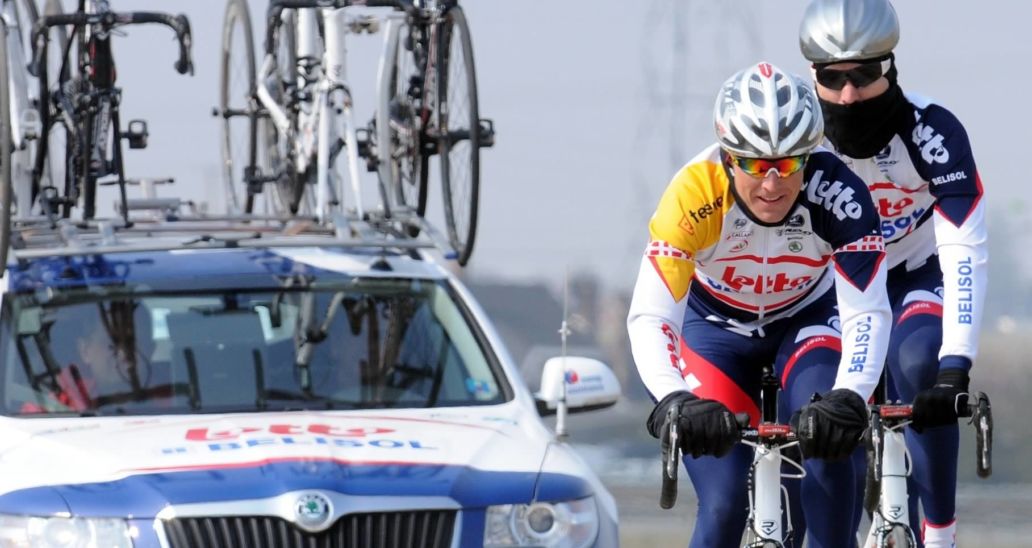
Marc Frederix : "The future of cycling is shaped now !"
"Thanks to MPCC, sponsors have been asked to join in the debate for the first time."
Many teams are MPCC members and in some cases, the sponsor is also a full member of MPCC. What differentiates them within MPCC?
In the case of the Belgian National Lottery, the team and the sponsor are both members but with different interests. Teams are involved with the sporting aspect, wishing for all teams to comply with the same antidoping rules, while sponsors are more concerned with media exposure and how cycling is perceived by the public.
The involvement of sponsors that are MPCC members go beyond the scope of a simple commercial partnership with the team.
The Belgian National Lottery has been involved in cycling since 1985: the partnership with the team has been built on common values. Underlining these values is extremely important to us, it represents a way to help building the future of cycling. This sport can be perceived with negativity in some countries. Maybe its organization has not been professional enough, and the interests of riders, sponsors and the public have not been considered enough in the past. Thanks to MPCC, sponsors have been asked to join in the debate for the first time.
What will help building this future of cycling?
Greater credibility, obviously, but also considering all cycling's stakeholders. We, sponsors, had never been heard by governing bodies before.
"We want to focus on riders development. Today, more and more sponsors follow this path."
Specifically, what does the Belgian National Lottery do for the future of cycling?
As a sponsor, what is important for us is detection and guidance of young talents. We want to focus on riders development. Today, more and more sponsors follow this path, as Francaise des Jeux for instance. In our case, developing young talents is favoured over bringing in riders from other teams. We attach great importance to giving young riders the chance to develop their talent and qualities and guide them in their further development as cyclists.
A general assembly of MPCC will take place on Tuesday: what is the role of sponsors during those meetings?
We are less involved in medical issues than in matters of public relations. We have a role to play when it comes to communication and marketing. Very often, governing bodies are more concerned with what happens in their sport while we tend to be more interested in how cycling is perceived from the public perspective. Our expertise contributes to have a better perception of cycling.
MPCC request WADA to include Tramadol in the list of prohibited products
"A significant number of samples containing Tramadol"
Following a general meeting of the doctors in charge of the teams members of MPCC, World Anti-Doping Agency (WADA) have been asked, in June, to include Tramadol into the list of banned substances in competition in 2014. WADA responded that the statute relating to the use of this substance would be considered by its experts at the next meeting, which was the case on the 22nd and 23rd of August. WADA confirm that "the number of samples containing Tramadol is significant" and that "a majority of them come from cyclists." However, it was decided to extend the monitoring program for the substance for one more year. The program began in 2012 and aims to be a prerequisite for any entry on the banned list.
Collaboration with the pharmaceutical industry is essential
Nevertheless, WADA point out to MPCC that "Tramadol remains on the priority actions list" of the experts. The sharing of information with the Pharmaceutical Industry and the anti-doping authorities, including WADA, becomes fundamental because of misuse and abuse of drugs, newly developed and commercially available. In the case in point, Tramadol has significant addictive side effects. MPCC suggested "that these new molecules that can be diverted from their use, are marked by the pharmaceutical industry before being placed on the market."
Read the letter of MPCC - Read the answer of WADA
An Post - ChainReaction applies to MPCC membership
A few days after Veranclassic-Doltcini, another belgian Continental team, An Post - ChainReaction, applies to MPCC membership.
Veranclassic-Doltcini applies to MPCC membership
Member of the Continental division, the Belgian team Veranclassic-Doltcini (Doltcini-Flandres in 2013) formally applies to MPCC membership. This is the 41st team to join MPCC.
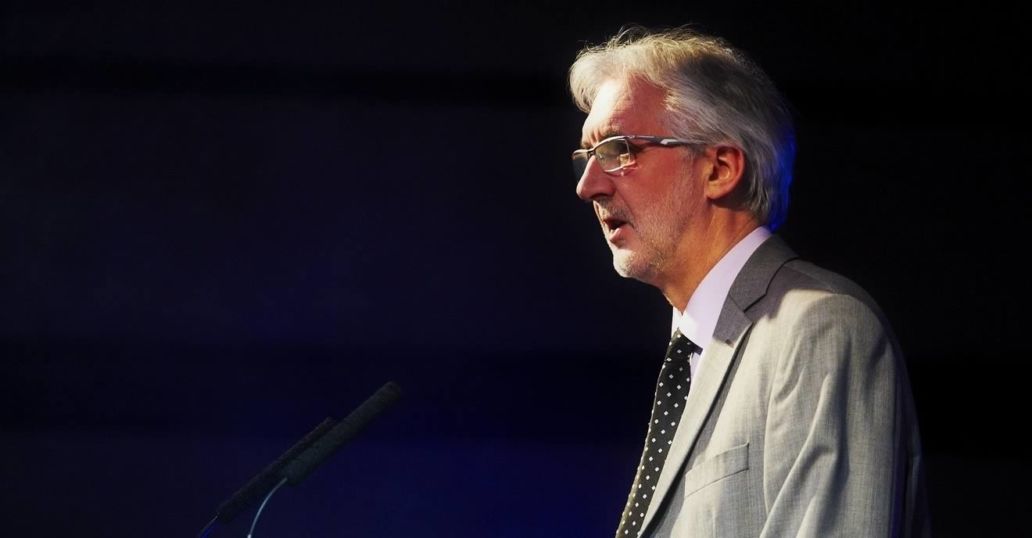
Cookson : "MPCC, a priority partner"
"I will not fail to consider the MPCC as a priority partner and to have a dialogue with the association on how best we could work together. It is with pleasure that I intend to cooperate with you and your organization and I plan to organize a meeting very soon." New UCI President, Brian Cookson has reached out to MPCC for future joint actions. "MPCC is now an indispensable interlocutor in order to find again all the credibility of our sport", responds the President Roger Legeay.
The candidates were questioned about various proposals:
- Sanction of 4 years for a first infraction regarding « heavy » doping substances
- Team auto-suspension in the event of several anti-doping controls within the team
- Common set of rules for steroid use
Brian Cookson reports that he "has long supported the proposal of the World Anti-Doping Agency (WADA) to increase the duration of the suspension of two to four years", and stressed the need to "ensure that the fight against doping is fully and truly independent of UCI in order to restore full confidence of the public towards our sport.” That goes in the same direction as the MPCC "wants to see the image of cycling become a priority from now."
The next general meeting of MPCC will be held on Tuesday, October 22nd in Paris, on the eve of the Tour de France presentation. Brian Cookson was invited to join in : "Your presence would be a formal token that the values defended by MPCC are well heard."
Read the letter of Brian Cookson (in french)
MPCC open letter to candidates for UCI presidency
On September 27, the UCI Congress will elect its President. Pat McQuaid, current UCI President, and Brian Cookson are the two candidates. MPCC wrote an open letter on September 9 to the candidates, detailing its core values, insisting on members making a voluntary commitment, reminding the significant number of members (40 teams, 11 sponsors, 9 organizers and 7 federations) and the key points of its internal set of rules.
On several occasions, MPCC has brought solutions for professional cycling instances :
- In March, the UCI has strengthened its rules on corticosteroids use, extending the period of inactivity from 2 to 8 days for a rider who had to receive local steroid injections, aligning with the strict rules implemented by MPCC.
- In June, the UCI approved the decision of AG2R La Mondiale to auto-suspend the team for one week (during the Criterium du Dauphine), according to MPCC rules, after two positive antidoping controls in less than 12 months.
- In 2012, the UCI adopted a rule stating that returning riders from a significant doping ban (2 years and more) cannot earn « sporting value » points for his team during 2 years. This decision followed a proposition from MPCC, supported by the AIGCP and the CPA.
 Today, MPCC is pleased to see that WADA is considering to strengthen its Anti-Doping Code, with rules that have been asked for, for several years :
- Implement steroid passport in the antidoping fight
- Introduce tramadol in the list of prohibited products
- Increase the length of sanctions, from 2 to 4 years, in the case of the use of heavy doping substances
Two weeks before the election, MPCC asks the two candidates for UCI Presidency to state on several measures, aiming at reinforcing cycling credibility :
- Sanction of 4 years for a first infraction regarding « heavy » doping substances
- Team auto-suspension in the event of several antidoping controls within the team
- Common set of rules for steroid use
Such dispositions, if they were to be adopted by the UCI – and not only by MPCC members – would make all the riders and teams equal in the eye of the public, with a goal : make cycling more credible.
Pictures : Unipublic, MPCC
MPCC's next appointments
General meeting program : on the first day, team doctors meeting and board of directors ; on the second day, ordinary general meeting and sponsors meeting.
"Cycling need more efficiency"
Anti-doping was a major topic of discussion in the past few days, after the presentation of the report of the Inquiry Commission of the French Senate. From your perspective, what is the key lever to fight doping?
The main problem of anti-doping fight is that laboratories don't have enough funds. We need to give them the means to catch up with the cheaters, so that they are able to sanction them today and not in 15 years. And then, they need to act accordingly. An ideal solution would be to focus investments in a laboratory or two. If France wants to remain a key country in the anti-doping fight, we need to drastically increase resarch funds.
What about doing more controls?
There are already a lot of controls. The Senate report states that implementing more thorough controls induces spending more money on them, which means the number of controls would have to be reduced. But cycling need more efficiency (same number of controls, improved controls), and for that, there is no other solution than increasing funding. In summary: appropriate measures, increased financial means and more appropriate penalties.
MPCC requested WADA to implement 4-years suspensions.
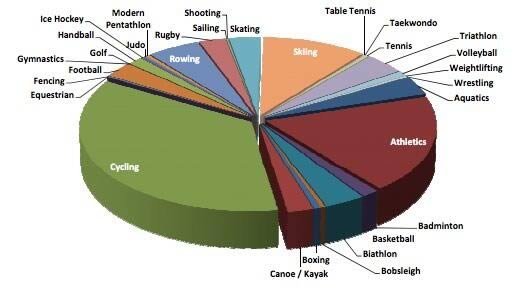 As many players, we insist on sanctions being more severe. We also asked WADA to make tramadol part of the list of banned products. We were told that this matter was to be debated in August. We need WADA to move forward with everybody: extended suspensions to at least 4 years, bring back cortisol level tests... WADA is the supranational government of the anti-doping fight. After the Festina case, we wanted an independent organization aiming at harmonizing rules between the different sports. Did it work? The answer is no. Rules are not the same for everybody. In some sports, there is no geolocation and even no biological passport. The mission today is to have a common set of rules and sanctions in every sport.
(see opposite the distribution of the anti-doping tests in different sports, © WADA)
A request was also made to the French Ministry for Sports to bring back cortisol level tests. What is the status of that request?
The French Minister for Sports is a member of the WADA Board: she needs to work as an intermediary and messenger. When we write to the Ministry, we are told to go directly through WADA... The Ministry is in accordance with our position and says: WADA needs to act. We took notice of their position. In the meantime, MPCC, in collaboration with the French Cycling National League and French Federation, implemented cortisol level controls in Paris-Nice, at the 4 Days of Dunkirk, at the Criterium du Dauphine, and twice during the Tour de France, in the context of health and based on a voluntary basis. So it is definitely possible.
The French Senate released a list 1998 and 1999 Tour de France dopers. How useful is it for the anti-doping fight?
This is not fresh news that riders took EPO in 1998. The real question is what we need to do now. Today, we need to be aware that the efficiency of antidoping measures is way higher than fifteen years ago. In 1998, there were only urinal controls. Jean-Marie Leblanc, Daniel Baal and myself then asked for blood samples. Then came the unannounced controls, out-of-competition controls, geolocation, biological passport, EPO screening tests and other products. All the set of has changed. Cycling is by far the most controlled sport by now. On the Tour de France, there were more than 500 controls made by UCI and AFLD and 116 by MPCC. The 14 teams members of MPCC on the Tour supported our process and our rules. Our close collaboration allowed us to measure cortisol levels in a quiet and efficient way. The future must be different. With commitment from teams, managers and riders, it will be different.
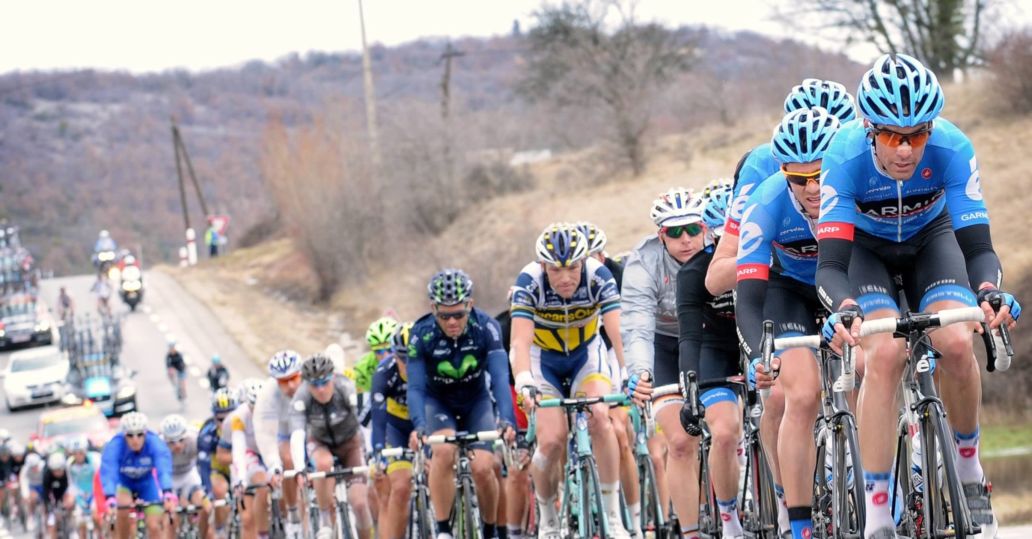
Cortisol Levels : 114 riders controlled on the Tour de France
The French Cycling Federation (FFC), Movement for a Credible Cycling (MPCC) and French National Cycling League (LNC) have decided that they will keep controlling randomly cortisol levels of members of the MPCC's riders. This medical examination comes with the Reglementary Medical Supervision, as it is stated by the medical rules of the French Cycling Federation. Whenever the cortisol levels are underneath the laboratory limit, a medical contraindiciation with immediate effect must be delivered. FFC, LNC and MPCC have agreed to apply the french medical rules. This sanitary examination is part of the measures aiming at protecting the riders' health, and is not part of the disciplinary antidoping measures.
In 2013, blood samples were taken on Paris-Nice, 4 Days of Dunkirk, the Criterium du Dauphiné and the Tour de France. On the Tour de France, the samples were taken on Juliy 12nd in Tours and July 18th in the morning of the Alpe d'Huez stage. This examination related to all the riders of the 5 french teams (Foreign and French riders from AG2R, Cofidis, Europcar, FDJ.fr and Sojasun), all the french riders from foreign teams and all the riders fro the 9 foreign teams of the Tour de France which are members of MPCC (Argos, Astana, Belkin, Garmin-Sharp, Katusha, Lampre Merida, Lotto Belisor Orica-Greenedge and Vacansoleil). 61 samples were taken on July 12nd and 53 on July 18th. In the end, 114 riders were controlled, and no low cortisol levels has been noticed.
Made in l'Alpe d'Huez, Thursday, July 18th
David LAPPARTIENT, president of FFC
Marc MADIOT, president of LNC
Roger LEGEAY, president of MPCC
Dr Armand MEGRET, expert