
Giro d'Italia women : The MPCC needs commitment from race organisers
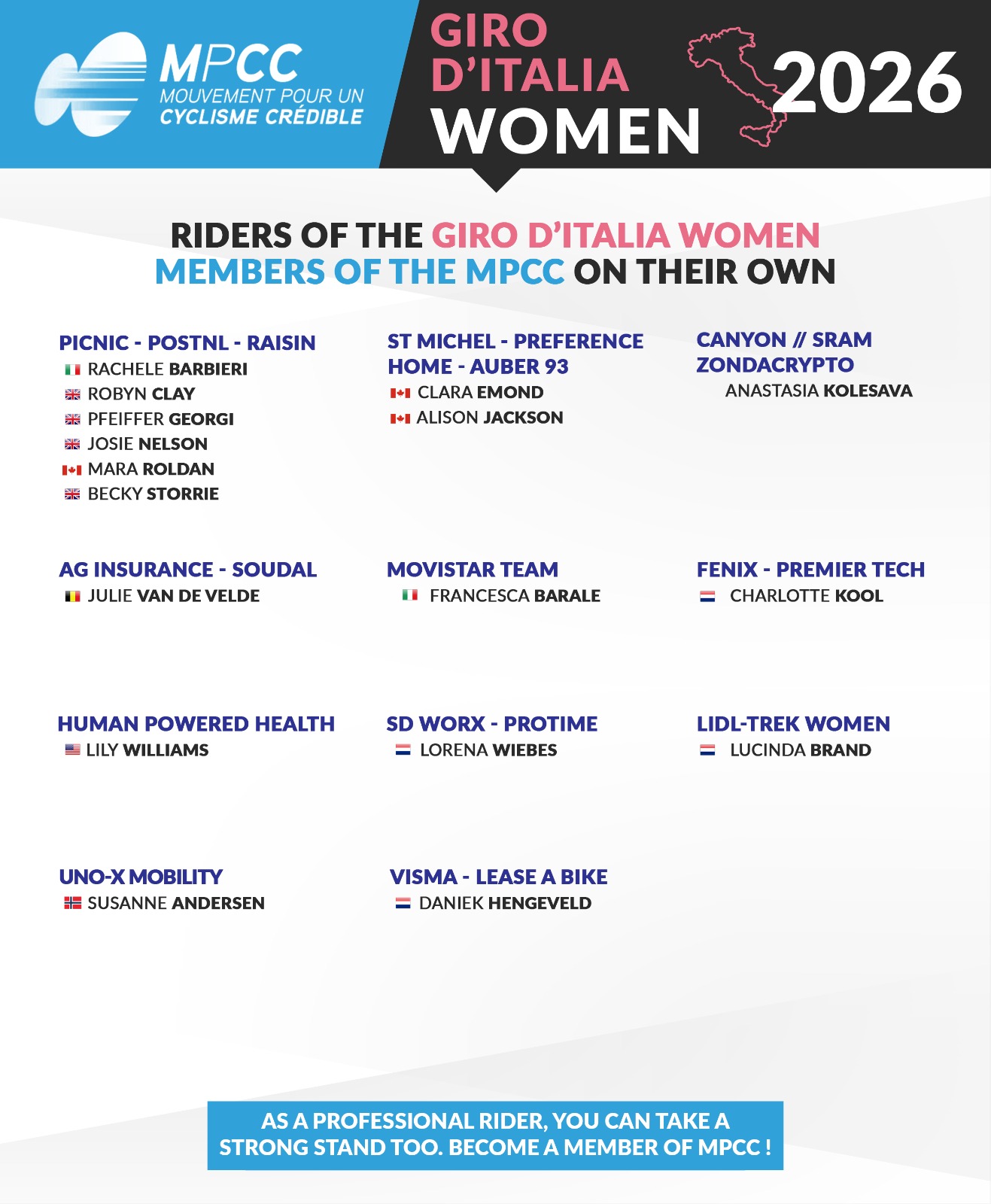
The Giro d’Italia Women, second Grand Tour on the Women’s World Tour calendar, will start on Saturday with just under twenty riders, members of MPCC on their own, and seven teams which committed to our movement. The invitation process for the race also provides an opportunity to reflect on race organisers’ commitment to the fight against doping.
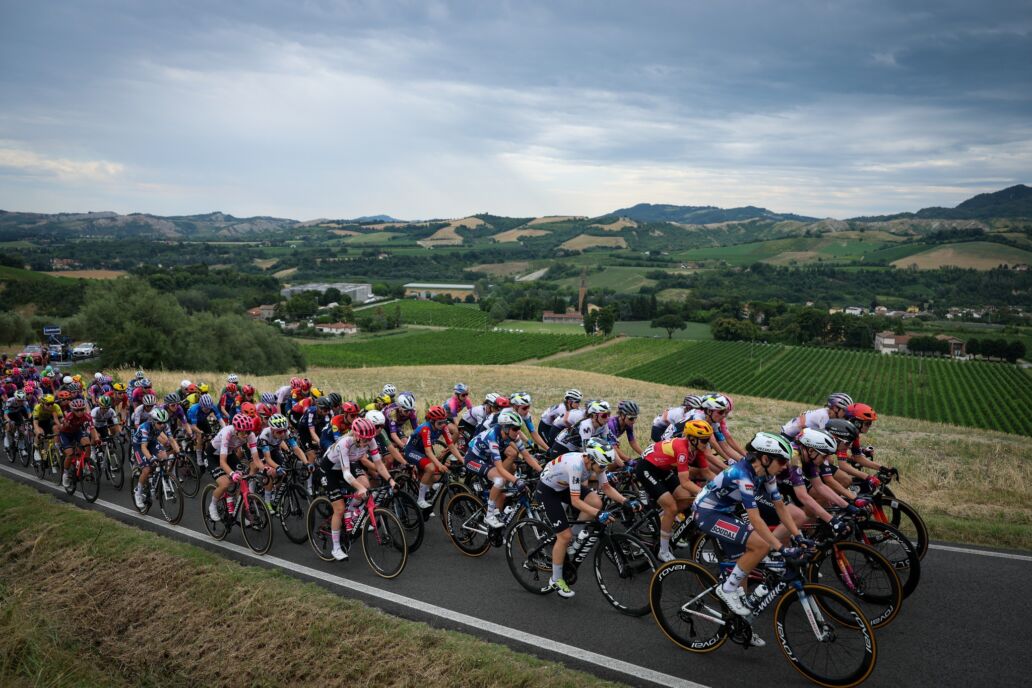
With the stage race season in full swing since the Vuelta Femenina, which took place in early May, the women’s peloton is already heading towards the second of the three Grand Tours of the women’s season, the Giro d’Italia. Held in the wake of its men’s counterpart, which concludes on Sunday in Rome, the Giro Women returns to its nine-day format, after having been shortened to eight stages in 2024 and 2025. The complete route stretches over 1,177.7 kilometres, making it the longest edition of the race in 25 years.
The Giro d’Italia Women will feature, much like the Angliru in the Vuelta Femenina, its showpiece climb : the Colle delle Finestre, a modern giant, which will be the key climb on the penultimate stage. Starting from Cesenatico, the peloton will include 17 riders who are individual members of our movement, representing 11 of the 21 participating teams. Among these riders are two of the world’s best sprinters : Lorena Wiebes (SD Worx – Protime) and Charlotte Kool (Fenix – PremierTech).
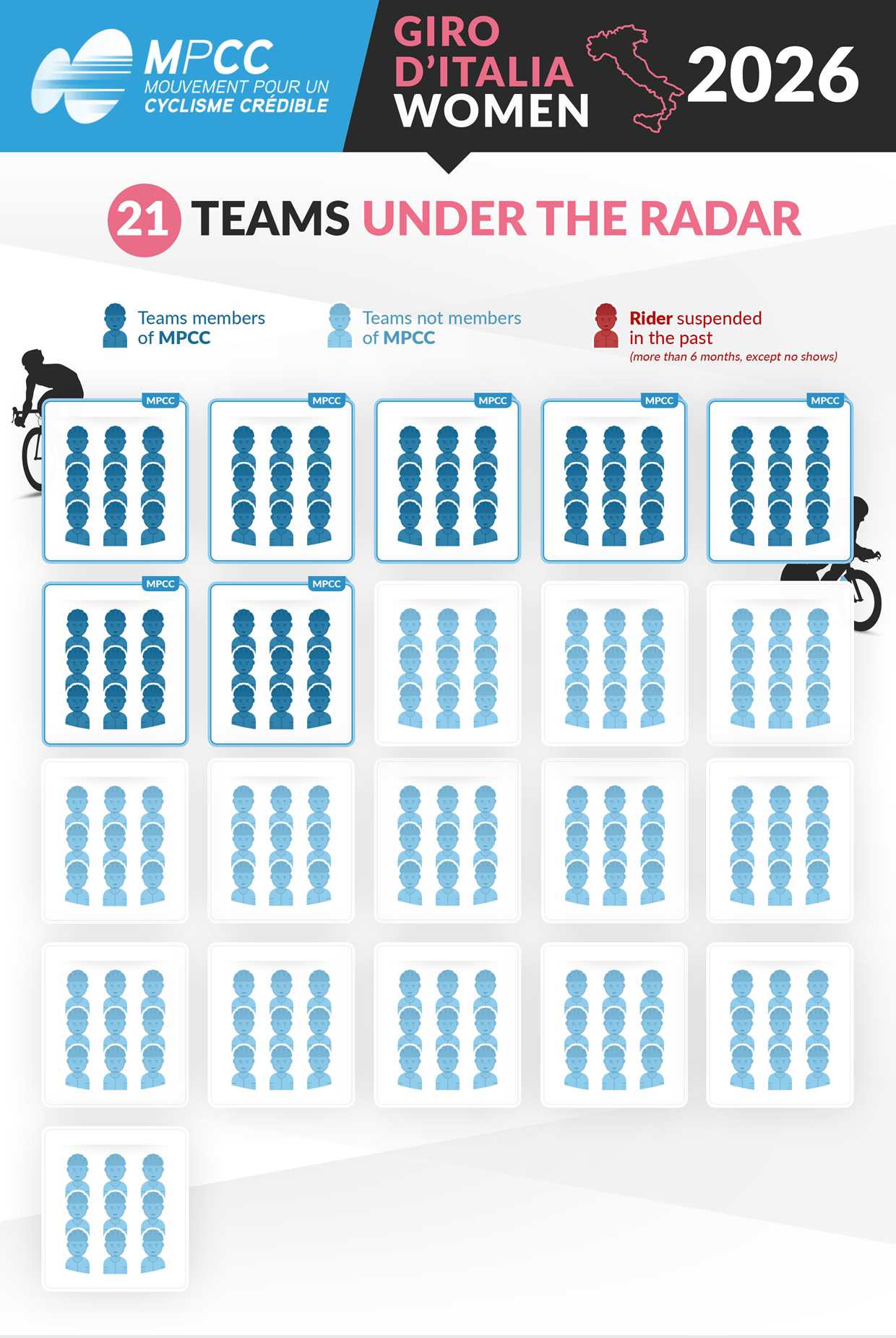
However, only 7 of the 21 teams in this Giro d’Italia are members of the MPCC, whilst all the Pro Team-level squads – the world’s second tier – have joined us in the fight for credible cycling. We therefore hope that, in the future, the race organiser, RCS Sport, will take the initiative to grant wild-cards only for MPCC member teams, as a sign of a strong commitment to credible cycling. This is a position already held by ASO, organiser of the Tour de France. We therefore strongly enthrust RCS Sport to join us, and commit to a cleaner sport. This is the responsibility of everyone involved in our sport, from riders to sponsors and race organisers.
The MPCC is also open to other teams, whether World Teams or Continental teams, to join us in supporting the rapid growth of women’s cycling – a growth that must never overlook the issue of doping.
Commit to MPCC, join us
Be players in the fight against doping !


Modern Adventure Pro Cycling joins the MPCC
Last October, Modern Adventure Pro Cycling applied to join the Mouvement pour un Cyclisme Crédible (MPCC). Following the team’s official recognition as a UCI ProTeam, the MPCC Board of Directors has reviewed the application and decided to grant the team provisional membership.
Joining the MPCC is a voluntary step. Teams choose to commit to standards that go beyond the minimum rules set by the authorities, with the shared aim of protecting rider health, fairness, and the credibility of cycling. Membership is therefore not automatic, and each application is considered on its own merits.
As part of this process, the Board considered the fact that team manager George Hincapie and sporting director Bobby Julich publicly admitted anti-doping violations during their racing careers more than a decade ago. Although these events are in the past, they remain relevant given cycling’s history and the importance of rebuilding trust in the sport. As a result the MPCC board undertook additional due diligence in which team owner George Hincapie elaborated on his reasoning for their membership request:
“Joining the MPCC is important to me because it’s about more than just our team—it’s about the future of cycling. The sport has been damaged by doping scandals, and we have an opportunity to be part of rebuilding that trust. I witnessed firsthand the cultural shift in the sport many years ago, and I’ve seen both the damage that comes from turning a blind eye and the progress that’s possible when athletes choose integrity. By committing to the MPCC’s enhanced transparency standards, we’re proving that clean athletes can compete at the highest level and that credibility matters more than shortcuts. I want our team to stand for integrity and show the next generation of cyclists—one of whom happens to be my son—that there’s a better way forward for this sport we love.”
Team General Manager, Rich Hincapie also said: “We are fully committed to abiding by the rules and ethical principles set forth by the MPCC. As both an organization and a family, we are deeply motivated to do our part in advancing the sport of cycling with integrity and transparency. The Modern Adventure Pro Cycling Team represents our next venture into the business side of the sport—an opportunity to contribute meaningfully to its continued growth and positive evolution.”
After discussion, the Board decided to accept the team on a probationary basis, as all new member teams are. Modern Adventure Pro Cycling has committed to fully respecting MPCC rules and to operating with a high level of transparency. The MPCC will follow this membership with particular attention to ensure these commitments are upheld in practice.
The MPCC continues to believe that progress comes from responsibility and collective effort. By choosing to adhere to stricter standards and working together in an open and constructive way, teams can play an active role in strengthening the integrity of cycling.

The MPCC appeals to the UCI to establish firm rules to stop the escalating medicalisation of the sport
The MPCC is becoming increasingly concerned about an excessive use of medicine in the sport and calls upon its governing body to take action against the expansion of the so-called grey area.
This grey area includes substances and medical treatments not yet banned by WADA, but which raise serious ethical questions when used by healthy athletes, rather than the sick patients they were developed to treat. Cycling needs the UCI to act quickly and decisively to protect both the sport’s credibility and the health of the peloton – so that no athlete feels forced to take questionable products merely to keep up.
The lengthy timelines of anti-doping processes without quick and concrete action leave space for various substances to be debated each year, allowing athletes to continue using them despite the unanswered questions surrounding their health or performance enhancing effects. Is a safer approach to ban a product during its investigation and then when it’s safe, allow its use?
The most recent example is the topic of ketones, which has been a part of cycling’s credibility debate since 2017 when the first scientific research on the subject was published. The MPCC brought a clear position that their members would not use the product and then nearly two years later, the UCI issued a “notice of non-recommendation” until further analysis was completed. Many teams and riders ignored this advice, with some even forming partnerships with ketone suppliers.
On October 25th, 2025 the UCI published a press release reaffirming its position of not recommending ketone use. This remains a recommendation, rather than the introduction of a formal medical rule or anti-doping regulation to ban (or permit) this specific product, which unfortunately does not close the debate or discussion.
The so-called “Finishing Bottle” rumours are back writhe in the peloton, with multiple borderline substances said to be mixed and passed into the peloton to prepare riders ready for the final. Next to this, we face other potential substance abuse with medicine such as Tapendatol, which is up to ten times stronger than Tramadol (banned in competition by WADA after 12 years of lobbying from MPCC). The UCI now has this specific substance under monitoring, but must we wait for the result of another lengthy analysis while riders’ health is at risk and crashes are becoming even more prominent?
The authorities are clearly able to move quickly in decision-making: take the example of non-diagnostic use of carbon monoxide (CO), which after coming to light during the 2024 Tour de France will be listed by World Anti‑Doping Agency (WADA) as a prohibited method from 2026.
What is clear is that, as long as the grey area remains, the credibility of cycling will continue to suffer and riders health is at risk.
The MPCC’s position has not changed: the endless medicalization of riders is a major problem and requires action. The MPCC urges the UCI to establish a clear and regulated position on a range of (medical) products in the grey area or other specific products (such as ketones). The MPCC stands ready to work closely with the UCI and support progress in this crucial area for the future of our sport.
As far as ketones are concerned, the position of the MPCC members, shared by the majority at its Annual General Meeting in Paris on October 22nd, is that the debate on this product must now be brought to an end. MPCC members will echo UCI’s recommendation to not use ketones and MPCC members will not accept sponsorship in this region.